

3 Ways to Design With Containers
Use these easily adaptable strategies to enhance your landscape with pots
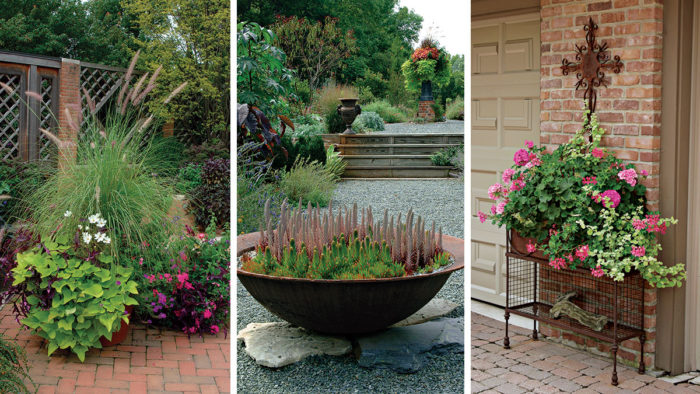
Planting a container garden is a lighthearted way to garden. Container gardening requires less time, space, and energy than in-ground planting and is just as much fun. In terms of plant material, the only limitation is your budget. As for the planters themselves, you will find pots of every size, shape, and material, along with less-conventional vessels at garden centers, antique shops, and hardware stores. After all, a container can be anything that holds soil and provides drainage.
If you are unsure about how to design a container garden, feel free to dive right in. Much of the fun of playing around with containers is that there are so many different ways to use them. And a pot’s portability makes it easy to correct poor placement. No matter where you live, containers can add pizzazz to the ordinary, create color and pattern against a blank wall, and provide high points in the landscape.
1. Create a vignette with your containers

A triangle always works
Containers can be grouped into vignettes the same way plants can. A triangular arrangement of pots will produce quick, pleasing results. In design terms, a triangle consists of a dominant central element flanked by components of smaller stature. This form is a staple of all art forms for good reason: It always works. The colorful hibiscus (above) serves as the apex of a triangular composition completed by subordinate elements placed slightly in front and to the side.

Allow one pot to dominate
A container grouping will quickly fall into place if the tallest element is placed at the rear of the composition with the other pots on either side. Plant the tall container with something appropriately commanding so it will dominate the grouping. If you have two containers of similar stature, raise one on a pedestal to give it prominence.
Take it as far as you want
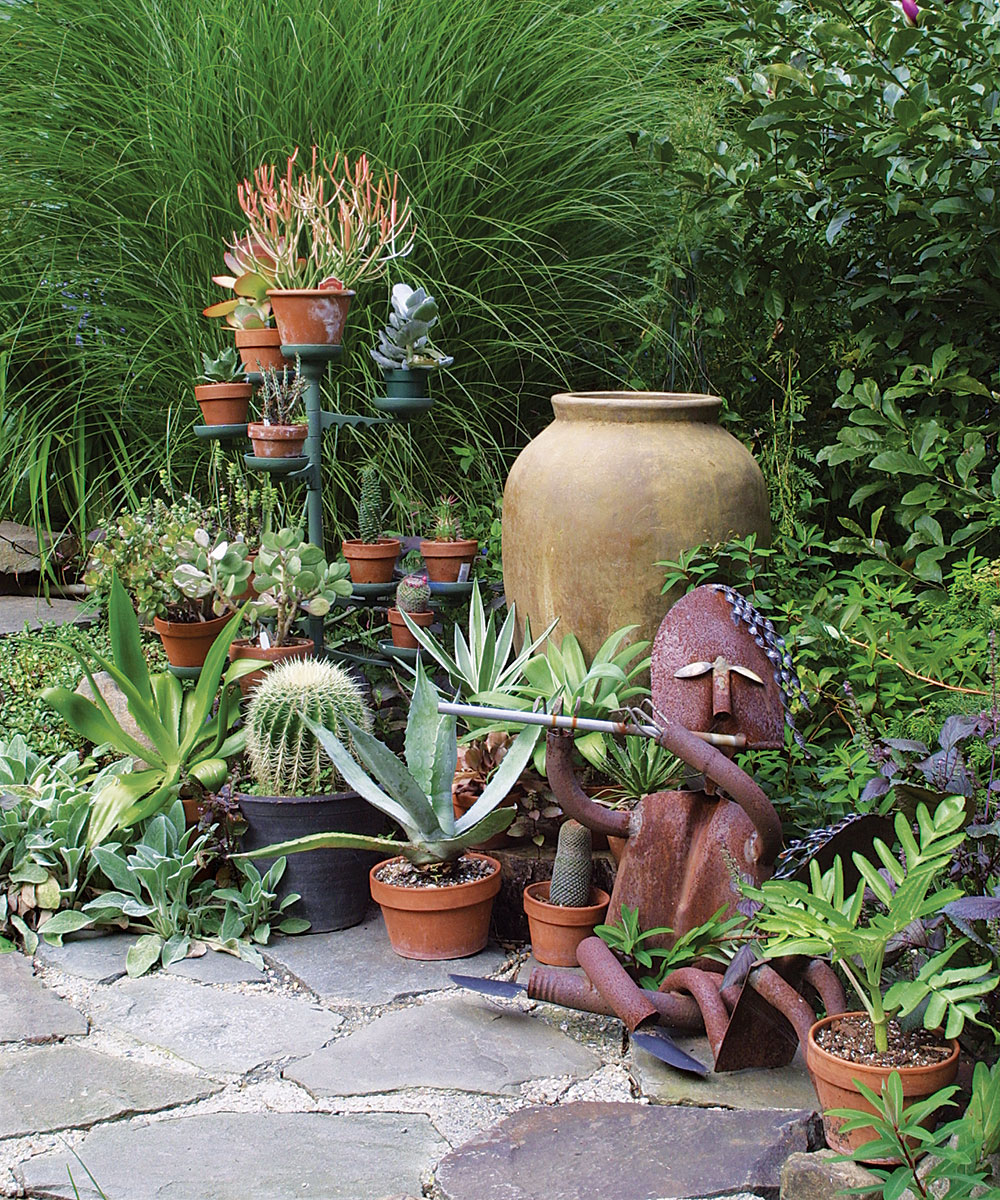
To expand on the classic triangle grouping, simply add more subordinate pots. While no hard-and-fast rules exist concerning how many to use, it is easier to arrange uneven numbers into a pleasing pattern. This complex grouping creates an irregular triangle and includes pots of all sizes, a plant stand, and a whimsical sculpture.
2. Make your container a focal point
Provide something to look at
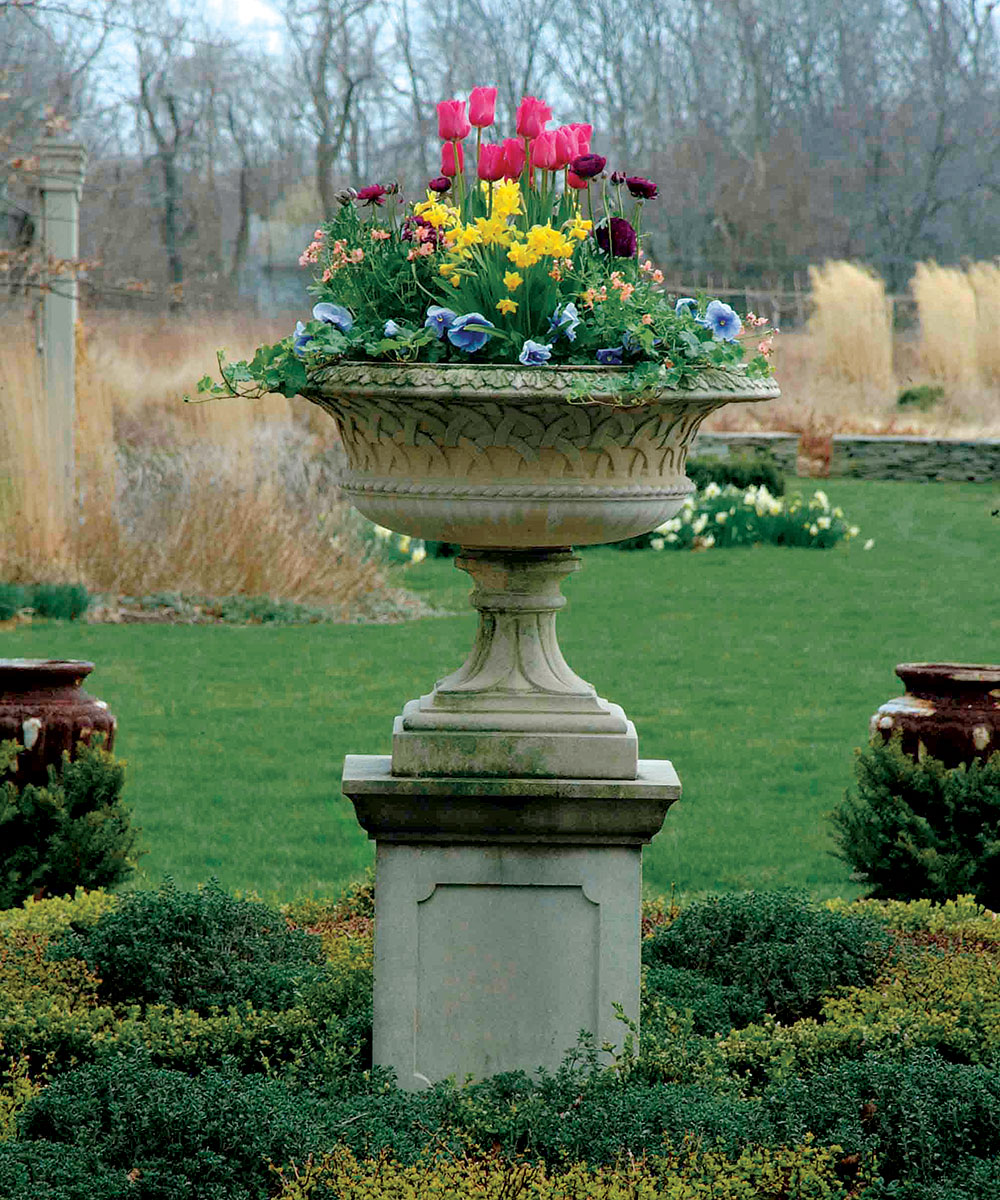
The purpose of a focal point is to attract attention. If you are burdened with an area where nothing adequately does this job, a container will quickly fill the void. Because they can be planted and replanted with colorful, eye-catching plants, containers have an advantage over in-ground combinations. This composition provides a burst of spring color to keep things lively until the rest of the garden comes to life.
Create coherence in mixed plantings
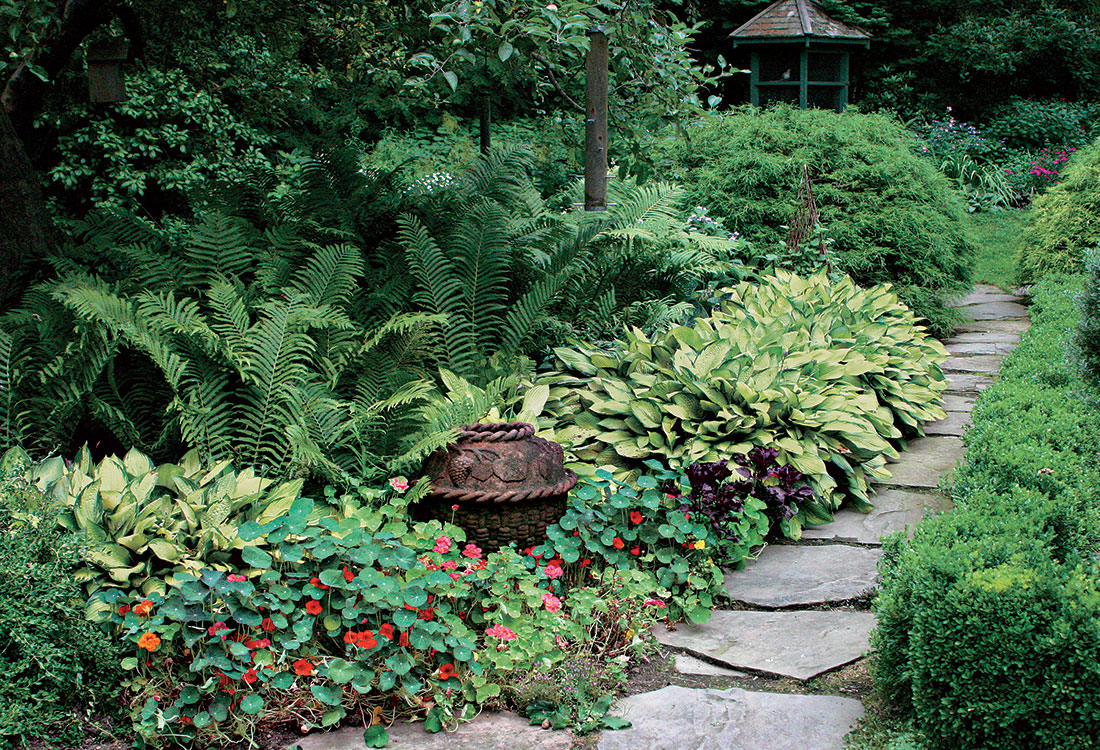
The opposite of having nothing to look at is having too much to look at. Often in a mixed border, there can be so much going on that one isn’t sure where to look first. Adding a focal point provides a sense of order to such scenes. The unplanted urn grabs our attention first and helps us make sense of the shady planting surrounding it.
3. Dress up a blank wall with your pots
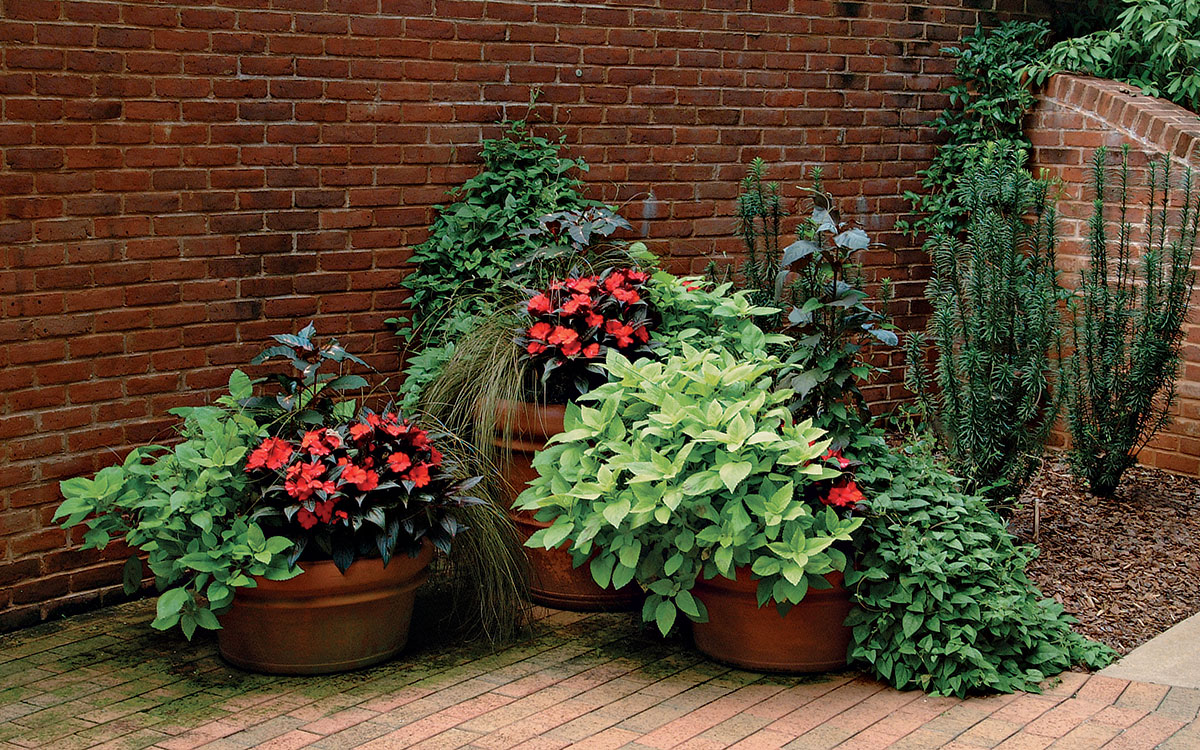
Masses calm a busy background
The rigid, repetitive pattern of a brick wall can be tiring on the eye. But when blurred by lush masses of foliage and colorful flowers, the lines of mortar recede. Lush mounds of foliage soften the dizzying lines of the wall and hardscape. The terra-cotta pots echo the warm color of the brick. The clusters of bright red flowers contrast with the darker orange and the greens of the foliage, bringing the whole scheme to life.
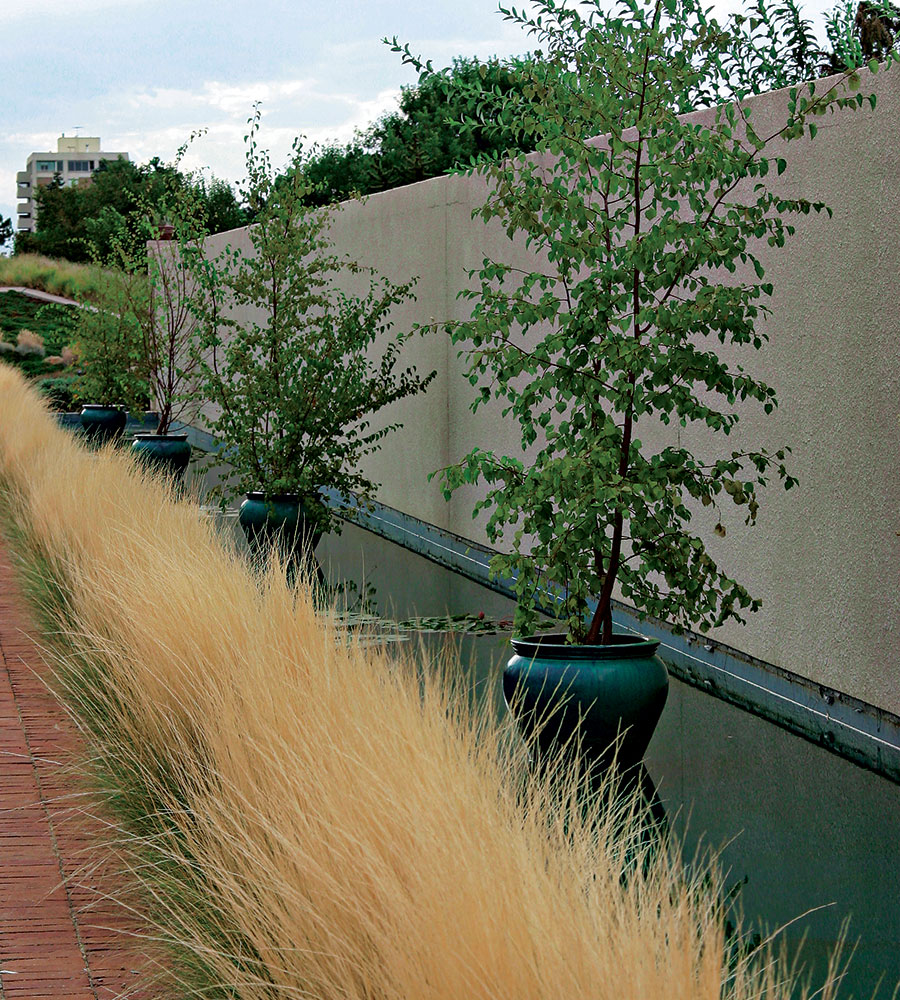
Fine texture stands out against a plain wall
A plain, unadorned wall can dominate an area with its monotony and mass. One can take advantage of these features by using them as a backdrop for fine-textured foliage that can often get lost on a large scale. The photo above shows how simple means can achieve a beautiful effect. Large pots of small trees with fine foliage are evenly spaced along a perfectly plain wall. A border of wispy ornamental grass reinforces the container plantings so that, together, they hold their own against the bulk of the wall. The movement of the small leaves and the grass stands out against the immobile wall, turning what could have been an imposing view into something breathtaking.
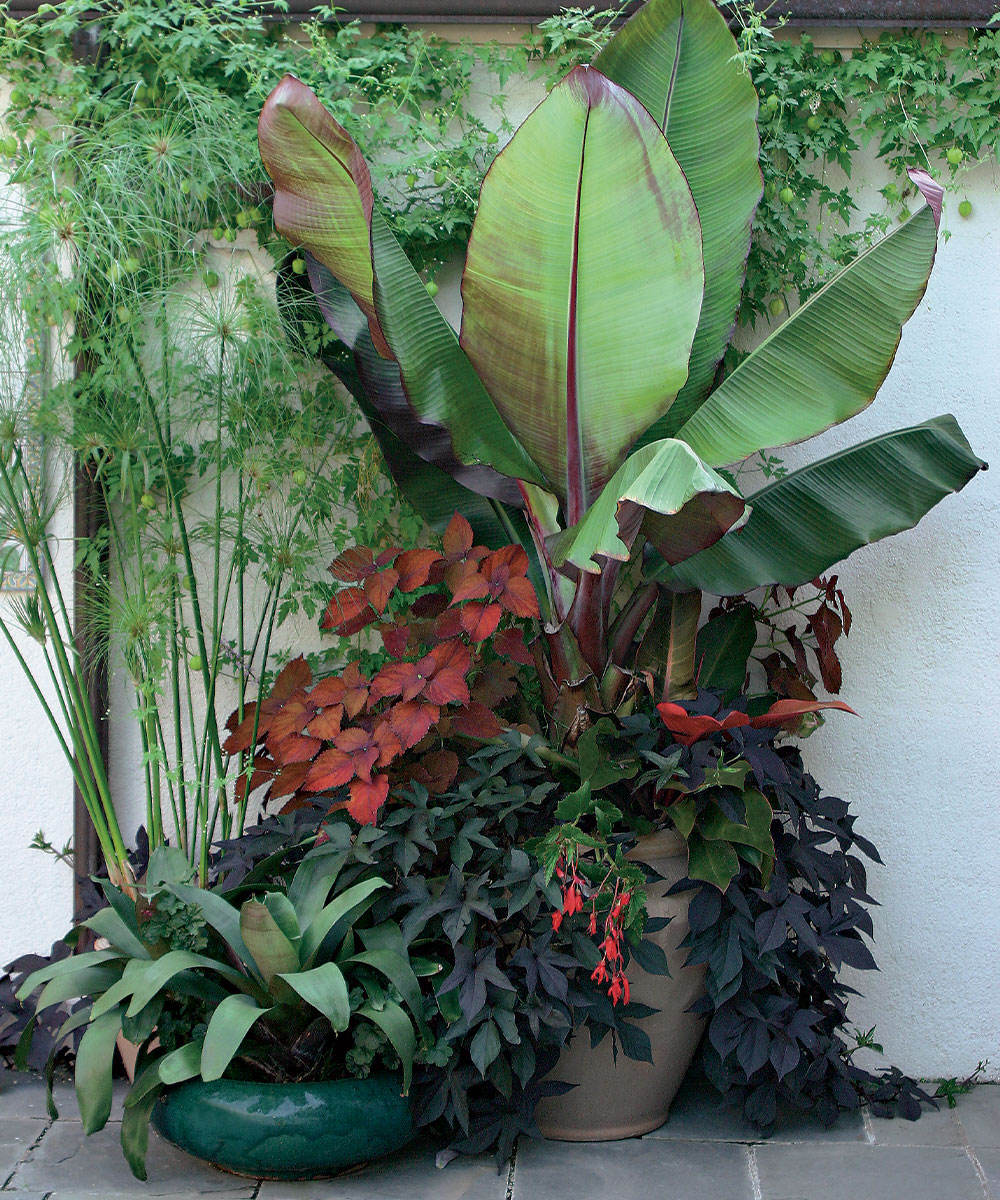
Saturated colors work with a light backdrop
Unadorned with plants, this white wall would dominate the area with glaring brightness. But as the background for a dense, complex arrangement of forms and colors, it is perfect.
Sydney Eddison is the author of several books, including Gardens to Go. She gardens in Newtown, Connecticut.
Photos, except where noted: Todd Meier



Comments
What is the succulent in the first picture round iron bowl?
great 1v1 lol
Log in or create an account to post a comment.
Sign up Log in