previous
  • Designing with Curved Terraces
    Designing with Curved Terraces
  • Comfortable Alfresco Dining
    Comfortable Alfresco Dining
  • Building a Compost Bin
    Building a Compost Bin
  • Homegrown / Homemade
    Homegrown / Homemade
  • Fast-Growing Trees for Impatient Gardeners
    Fast-Growing Trees for Impatient Gardeners
  • Indeterminate or Determinate Tomatoes?
    Indeterminate or Determinate Tomatoes?
  • Lawn Alternatives
    Lawn Alternatives
  • Plants that Spark!
    Plants that Spark!
  • Fragrant Plants for Pathways
    Fragrant Plants for Pathways
  • Pretty in Pink
    Pretty in Pink
  • Containers as Focal Points
    Containers as Focal Points
  • In Pursuit of the Perfect Potting Shed
    In Pursuit of the Perfect Potting Shed
  • 6 Tips for Weed Control
    6 Tips for Weed Control
  • Elephant's Ears
    Elephant's Ears
  • Colorful Selections for Shade
    Colorful Selections for Shade
  • Save Money by Growing Your Own
    Save Money by Growing Your Own
  • Mulch for a Healthy Garden
    Mulch for a Healthy Garden
  • Stylish Shady Containers
    Stylish Shady Containers
  • Make a Succulent Topiary
    Make a Succulent Topiary
  • Slideshow: Beautiful Clematis
    Slideshow: Beautiful Clematis
  • Plant an Easy-to-Water Strawberry Jar
    Plant an Easy-to-Water Strawberry Jar
  • Thoughts From a Foreign Field
    Thoughts From a Foreign Field
  • NEW Video Series: There's a Better Way
    NEW Video Series: There's a Better Way
  • Garden Confidential: A Plant Walks into a Bar
    Garden Confidential: A Plant Walks into a Bar
  • Dwarf Citrus Trees
    Dwarf Citrus Trees
next

Parrotia persica (Persian parrotia tree, Persian ironweed)

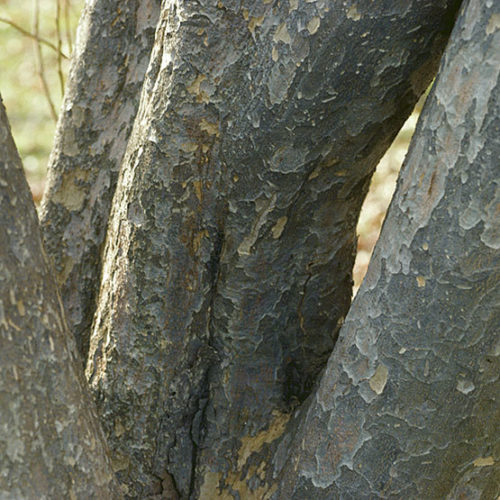
Parrotia persica Photo/Illustration: Andrew Bunting

(Based on 3 user reviews)

Rate this plant

Plant Showcase - from our advertisers


Hardiness Zones: 1 2 3 4 5 6 7 8 9 10 11
Botanical Name: Parrotia persica par-ROE-tee-ah PER-sih-kah Common Name: Persian parrotia tree, Persian ironweed Genus: Parrotia
Parrotia persica has one of the most beautiful foliage displays, in addition to year-round eye appeal and ease of maintenance. Reddish-purple when unfolding in spring, the leaves are a lustrous dark green in summer, and yellow to orange or scarlet in fall. Leaves hold their color for a long period. Older branches and trunks develop an exfoliating gray, green, white, and brown color that is a welcome asset in the winter garden. It grows successfully in Zones 4 to 8, tolerates sun and partial shade, and is easy to transplant. Often, vegetatively propogated forms offer more reliable fall color.
Noteworthy characteristics: Easy to grow. Nice foliage spring through fall, often with great color in the autumn. Bark exfoliates with age. Tiny red flowers in winter.
Care: For best autumn color, grow in acidic soil. It also needs deep, fertile, moist soil in full sun or part shade. Prune minimally—simply remove crossing branches or those that are growing in an unattractive direction.
Propagation: Sow seed in a cold frame in the autumn; take greenwood cuttings in early summer, or semi-ripe cuttings in mid- and late summer.
Problems: Infrequent.
Height 15 ft. to 30 ft.
Spread 15 ft. to 30 ft.
Growth Habit Spreads
Growth Pace Moderate Grower
Light Full Sun to Part Shade
Moisture Medium Moisture
Maintenance Moderate
Characteristics Interesting Bark; Showy Fall Foliage; Showy Foliage
Bloom Time Early Spring
Flower Color Red Flower
Uses Specimen Plant/ Focal Point
Style Woodland Garden
Seasonal Interest Winter Interest, Spring Interest, Summer Interest, Fall Interest
Type Trees

Plants you might also like

Chamaecyparis obtusa 'Aurea' Chamaecyparis obtusa 'Aurea'
(Hinoki cypress)
Be the first to rate this plant
Hardiness Zones: 1 2 3 4 5 6 7 8 9 10 11

Hinoki cypress is a conical, evergreen, coniferous tree with leaves that are actually minute scales on tiny branches in the form of fans. The outer foliage of 'Aurea' is golden and the inner is green. Growth can be slow. Use as a specimen or use several as screening.

Cercis canadensis and cvs. Cercis canadensis and cvs.
(Eastern redbud)
Be the first to rate this plant
Hardiness Zones: 1 2 3 4 5 6 7 8 9 10 11

Bright purplish-pink blooms are borne in clusters, before the leaves, along smooth gray branches. Heart-shaped leaves emerge bronze, turning green, then yellow in autumn. Cultivars are available with white ('Royal White') or pink flowers ('Tennessee Pink'), purple foliage ('Forest Pansy'), and weeping form ('Covey'). Grows 15 to 25 feet tall with a slightly wider spread.

Pinus densiflora 'Oculus Draconis' Pinus densiflora 'Oculus Draconis'
(Dragon's-eye Japanese red pine)
Be the first to rate this plant
Hardiness Zones: 1 2 3 4 5 6 7 8 9 10 11

This pine's needles are marked with bands of yellow and green. The buttery yellow variegation on the 3- to 5-inch needles is present year-round, but intensifies as summer turns to fall and persists into winter. The scaly, fissured bark is lovely, ranging in color from gray to rich rusty orange. This is a graceful tree when mature, with an irregular branching habit and tilted trunk.

Acer griseum Acer griseum
(Paperbark maple)
(2 user reviews)
Hardiness Zones: 1 2 3 4 5 6 7 8 9 10 11

This slow-growing understory tree has highly ornamental, peeling orange-cinnamon bark. Its dark green, three-lobed leaves turn a brilliant orange-red in autumn.

Cercidiphyllum japonicum f. pendulum Cercidiphyllum japonicum f. pendulum
(Weeping katsura)
Be the first to rate this plant
Hardiness Zones: 1 2 3 4 5 6 7 8 9 10 11

This deciduous small tree initially has a pyramidal form, and later rounded. Cercis-like, opposite, heart-shaped blue-green leaves are borne on stiff, slender, pendulous branches that fan out from the crown and sweep the ground. Caramel-scented foliage emerges bronze or purple-red, turns blue-green, then fades to gold or apricot in autumn. Tiny red flowers emerge in late March or early April before the leaves.