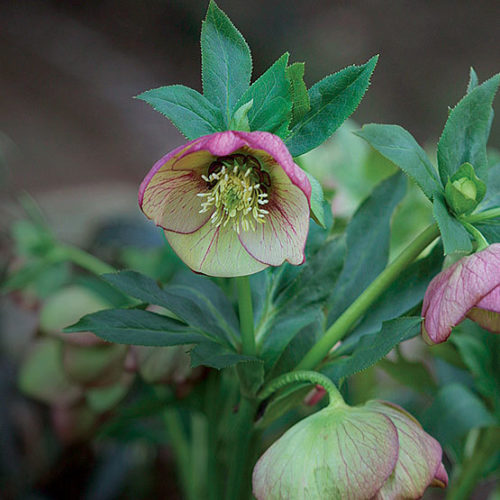
From late fall through winter, the leathery leaves of hellebores stay glossy, cheery, and green. Hybrids of H. orientalis and other species have a clump-forming habit and leathery leaves. They begin blooming in February or March in a range of shades, adding much needed color very early in the season. The blooms last for a very long time, especially if the weather stays cool. Hellebores are tolerant of summer heat and humidity. -Marty Hair, Regional Picks: Upper Midwest, Fine Gardening issue# 127
Noteworthy CharacteristicsCan bloom when the temperature is below freezing, even amidst the snow. Avoid ingestion of all plant parts and contact with the sap.
CareBest grown in humus-rich, neutral to alkaline, medium moisture, well-drained soils in light to moderate shade. Remove the previous season’s leaves in late winter before new growth appears and cut back flowering stems after bloom to promote new foliage growth. Protect from cold winter winds, especially when not insulated by snow, to avoid damaged foliage.
PropagationDivide after flowering, or sow seeds in containers in a cold frame as soon as ripe. (Named cvs. will not come true from seed.)
ProblemsSlugs, snails, aphids, leaf spot, and black rot.
- Genus : Helleborus
- Plant Width : 1 to 3 feet
- Plant Height : 1 to 3 feet
- Zones : 4, 5, 6, 7, 8, 9
- Tolerance : Frost Tolerant
- Flower Color : Green, Pink, White, Yellow
- Maintenance : Low
- Moisture : Medium Moisture
- Growth Rate : Moderate
- Light : Partial Shade to Full Shade
- Plant Type : Perennials
- Uses : Shade
- Bloom Time : Spring, Winter
- Plant Seasonal Interest : Spring Interest