

How to Grow Tomatoes in Containers
Don’t let adverse conditions prevent you from growing this coveted vegetable
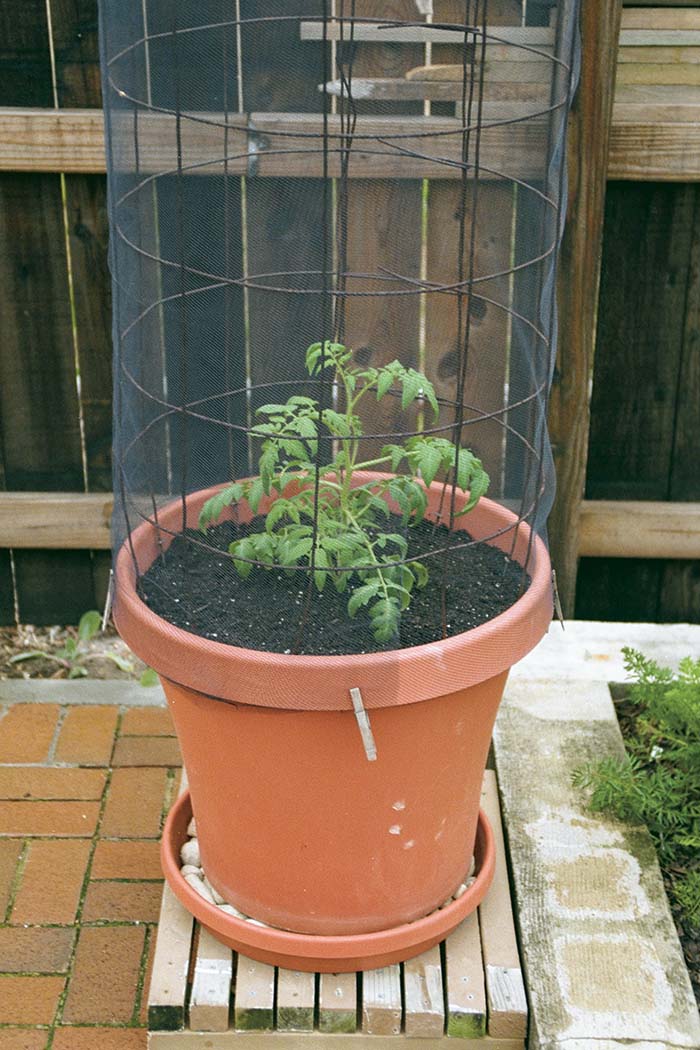
When my husband retired from the Navy and we set about gardening on Florida’s panhandle, tomatoes were high on our list of things to grow. We tried valiantly to rise above our soil—highly acidic and wormless sand. We built raised beds, added organic fertilizers, and spread rock powders. We made compost as fast as we could gather leaves and grass clippings.
We planted our tomatoes and tended them carefully. They grew, sometimes to astounding size. But they always fell victim to the bacterial wilt endemic to our soil. The tomatoes of our dreams, meaty and juicy with a balance of sweet and acid, always eluded us.
We knew that growing tomatoes in the usual way would never produce anything but frustration. Thus we began to experiment with growing tomatoes in pots. The work came to involve not just soil but also tactics to fend off high humidity, broiling heat, frosts, and insects, insects, insects. Our efforts evolved into a system that works well in our small space.
Find the right container for your tomato
We began with terra-cotta pots and whiskey barrel halves. Both proved impractical. Clay pots large enough to retain water for more than an hour in late July were too heavy to move and big trouble to sanitize at the end of the season. The half-barrels were even more unwieldy. They provided a haven for wood roaches, which like tomatoes almost as much as we do, and they were also susceptible to termites.
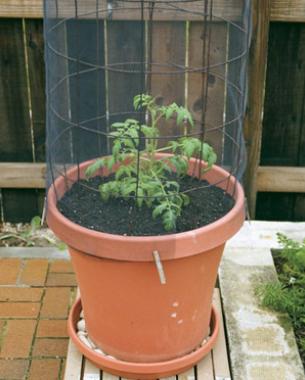
When the barrels fell apart in the third year, we sighed with relief and purchased 20-in. plastic pots and saucers. They are colored and styled to look like old fashioned terra-cotta. At the end of each year, we scrub them to remove most of the dirt, mold, and algae, and then drop them into our heavily chlorinated swimming pool for cleaning. Dollies my husband made allow us to move the potted tomato plants around the patio with ease.
Drainage comes first when filling the pot
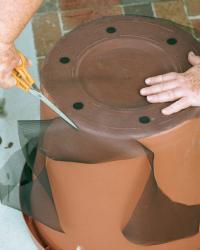
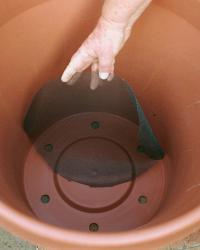
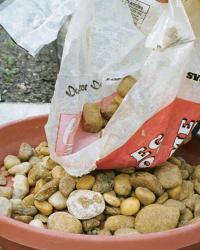
Good drainage and healthy roots go together. At first, we tried to achieve the goal by layering pebbles in the bottom of each pot. However, at the end of the season, we wanted to dump the exhausted potting mix into our raised-bed vegetable garden. Deliberately adding rocks to our garden beds seemed perverse.
So we moved the river rock into the saucer instead. But we also line the bottom of each pot with a layer or two of plastic window screening, cut to fit. Our soil stays put and drains well.
In heavy rains, we siphon the nutrient-saturated liquid from the saucers with a turkey baster demoted from the kitchen. We recycle the liquid, conserving nutrients and getting rid of the standing water mosquitoes’ love for breeding.
Add a proper mix of nutrients to every pot
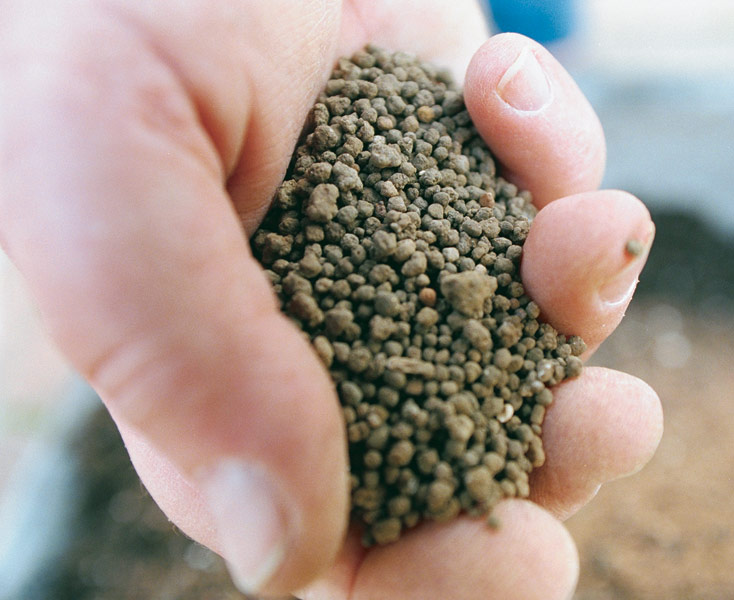
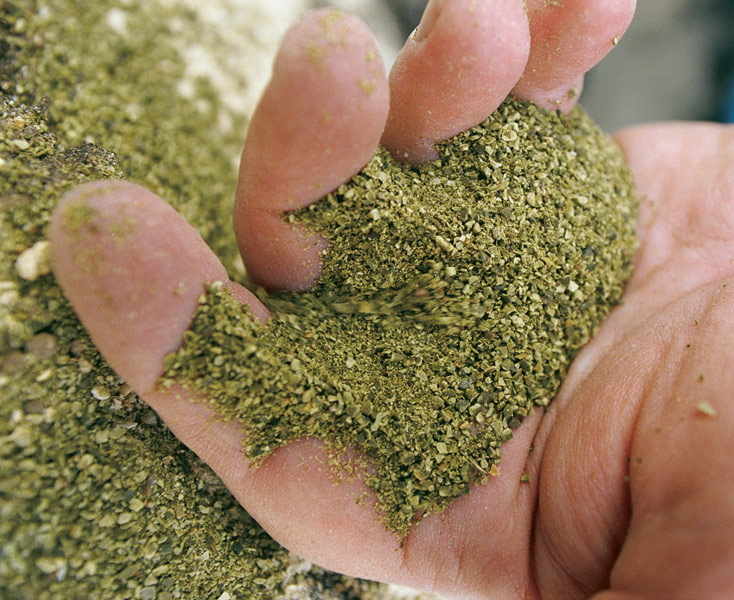
Early in the year we purchase our potting mix and begin to improve it. We want to provide the tomatoes with the calcium and magnesium they will need later, so we thoroughly blend 1 cup of dolomitic limestone into each 40-quart bag of potting mix. In addition, we stir in a half cup of iron and trace elements, supplied by a product called Perk. We store the mixture in covered trash cans to mellow.
For the next several months, we turn our attention to growing our seeds to transplant size, with a stocky stem and four to six true leaves.
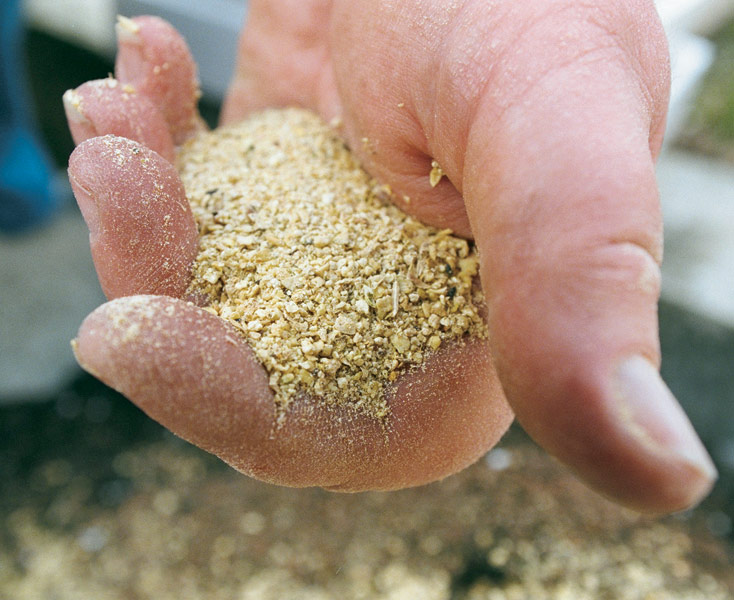
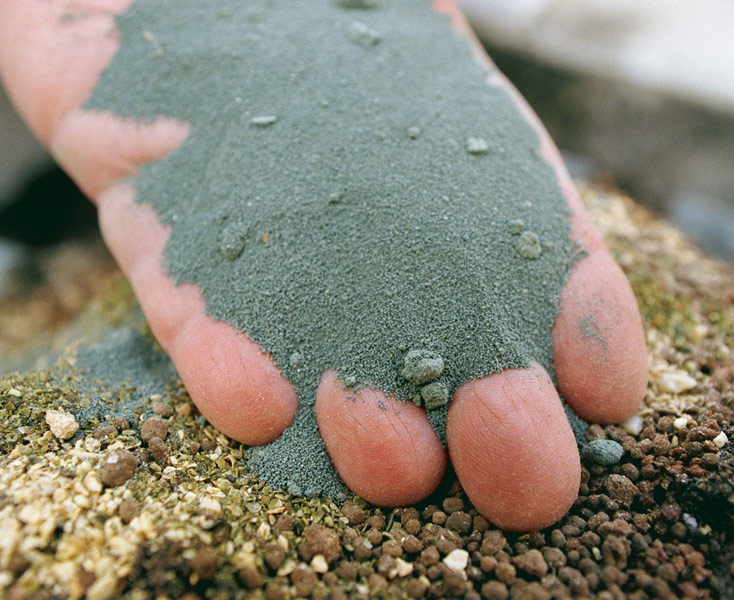
At planting time, we improve the potting mix again, drawing on a balanced organic fertilizer we’ve already prepared and stored. The recipe calls for 4 cups of soy meal and 2 cups of blood meal for nitrogen; 3 cups of bone meal for phosphorous; 2 cups of kelp meal and 4 cups of greensand for potassium. This homemade blend provides slow-release nutrition. We add 2 cups to each 40-quart bag of potting mix. We improve the potting mix in two stages because the dolomitic limestone can prematurely activate the nitrogen.
Fill the pots with soil as the tomato plant grows
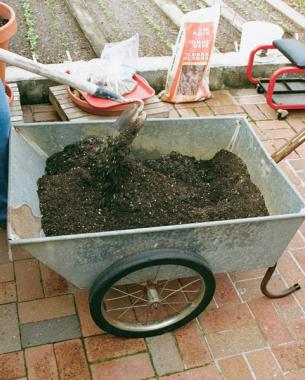
We fill each pot with 6 in. to 8 in. of potting soil and set a transplant at the bottom of the pot. As the tomatoes grow, we trim the leaves from the stem and add more of the enriched soil mix until the pot is filled. This practice helps build root mass along the stem as it is buried, which is similar to laying the stem in a trench.
This method also allows us to plant earlier. Since the plants stay below the pot rim for a couple of weeks, we can cozy the plants in old mattress pads if there’s a cold snap or cover them with old shower curtains if there’s a deluge. Best of all, we can tie layers of nylon netting over each pot to keep early insect marauders at bay.
Netting keeps insects out of range
When the pots are filled with soil, we insert a cylinder cage made of concrete reinforcing wire. For the final touch, we use black nylon netting as a defense against bugs. We buy two 72-in.-wide yards for each pot and enclose the cage with netting, clipping it in place with clothespins around the rims. Heavy rubber bands keep the top closed.
Whiteflies and aphids can still get through the netting, but really voracious predators like tomato worms and stink bugs are kept out. This slight edge can mean the difference between success and disappointment.
We learned this lesson the hard way when we took a week off to visit our son. We could arrange for watering, but nothing could protect our plants from the ravages of caterpillars during our absence. We found hundreds chewing away when we returned, and even quick action with Bacillus thuringiensis (Bt) could not undo the damage. The netting also helps keep the sun’s rays from scalding the fruit.
Some vigilance is still required, for an occasional enterprising moth will succeed in laying an egg or two. The damage becomes apparent when mysterious holes show up in a leaf here and there. We then act to remedy problems. Insecticidal soaps and Bt can be applied through the netting. We need only unclip the clothespins to sidedress our plants, prune, or pick the fruit.
Never mind the work involved here and hang the expense. Every time we sit down to a bowl of bright red fruit, sun warm and gently seasoned with salt and pepper, oil and vinegar, basil, and a whisper of oregano, it’s Florida sunshine in a bowl.
Cut-and-come-again tomatoes
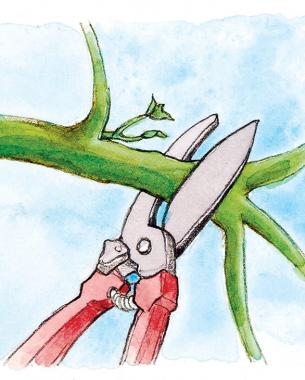
I found an alternative to rooting tomato plant suckers for a late-season crop. When the plants seemed exhausted about the end of July, I pruned them to a few short stem sprouting suckers. This removed the flea-beetle- and fungus-infested old growth. Because it seemed impossible to improve the weary soil in each pot with my preferred organic amendments, I dissolved magnesium sulfate crystals in water, along with several tablespoons of calcitic lime, and poured a gallon of the solution into each pot. A week later, I used a liquid commercial product with an N-P-K ratio of 20-20-20 to get the plants moving again.
In less than a month, small tomatoes formed on new growth. And soon there was another crop, though not as tasty as the first. Cutting weather-weary plants back is practical, however, only if the plant’s vascular system is healthy. The magnesium and calcitic lime treatment may need to be repeated if leaves lose color or growth seems slow. If this doesn’t work, try pounding on their chests.



Comments
I'm going to try this. After 10 years of trying to grow healthy tomatoes here in Central Alabama, I'm about to give up on growing them in the ground. Although I don't have a lot of problems with pests other than the occasional hornworm due to a very healthy bird and beneficial insect population, the wilts and blights are another matter. I'm even trying grafted plants this year, having heard they're more resistant to such, but I can still see the beginnings of early blight.
we always planted marigolds along with our tomatoes i don't know if it helped i read that someplace it helps tomatoes to do good
Marigolds attract pests away from your value plants.
thank you for the great information really helps with the garden
I lived in southwest florida and my plant is about 4 ft tall and no tomatoes... only one tiny flower? Can someone tell me what to do? Also, a few leaves seem to have been eaten by bugs creating lacy leaves... Most of the plant appears healthy?
Possibly temperature. If your soil temp goes too high, the plant will drop blossoms. Other things can also make the plant drop blossoms. But it can alsobe due to poor pollination. Tomato plants are self pollinators and thus you need wind or isnects to help with the distribution of pollin before fruiting can take place. High humidity can cause poor pollination, too. Night temperatures above 70 deg can be detrimental to pollination.
I have been gardening in large plastic pots for the past 10 years. The pots are situated inside a 20 x 20 ft chain link dog kennel to keep the deer out. We plant a large variety of vegetables. Just rotate your crops on a yearly basis. Also amend your soil each year. We donate lots of fresh vegetables to our local food bank when we have more than we can use.
Just buy an earth box
So committed! :)
talking of tomatoes growing in pots or ground it doesn't matter if the substrate used is abundant in micro-nutrients. We used Atovi Technology to make the plant resistant to any bacteria or insects attacks. Thru technology the plant produces its own defense mechanism which is called phytochemicals. It also promotes proper absorption and utilization so that the plant grows faster and bare so much and delicious fruits that is free from antibiotic and chemical residue.
Where do you purchase it, I went on their site and it says a lot and yet no way to purchase.
Just came across this wonderful link. Going to try growing tomatoes at home now
http://www.garden365.com/container-gardening/growing-tomatoes-in-pots/
explicit, thanks
Regarding the anti-bug netting - keep in mind tomatoes will not produce fruit unless there are bees to pollinate the blossoms. Sometimes flies do the job too. Or you can play "bee" by pollinating yourself between plants using a Q-Tip.
Tomato plants do not necessarily need insects to pollinate the blossoms. A gentle shake of the stems will loosen pollen and the blossoms will self pollinate. No need for q tips!
We live in San Diego. The soil here is not so great for growing tomatoes. We purchased Two large, black plastic pots at Home Depot. Each of these pots hold an entire large bag of Miracle Grow Moisture Control Potting Mix as well as, half of a normal sized bag of organic compost I work into the potting mix well. I start my tomato plants from last year's seed in small containers but, not too small. I like to get the plants nice and hardy before they are, transplanted into the large outdoor containers which enjoy, full southern exposure to the sun atop our large car port, as well as, very nice airflow beneath the containers, which keeps them nice and warm in the early spring, and during the cool California nights. I remove the lower stems of the plant, leaving only the top of the plant, I take a heaping handful of Epsom Salt and dump it into my large, and deep planting hole. Our plants always have thick, tremendously strong main stems, with large root systems. We use 1 Gallon milk jugs to catch the water whenever we are using the kitchen sink. We use this water to water our Cherokee Purple Heirloom tomato plants. We change our soil every year. We consistently harvest beautiful tomatoes every growing season, and believe me, they are delicious! Best BLT tomato there is!
Try adding eggshells to the soil the tomatoes are growing in.
Why Epsom Salt?
Tomatoes are easy to grow in general but like this author I spend more time on pest and blight control than I do feeding them.
A good hint for pot gardeners. Don;t throw away eggshells. Add them to your potsoil and you will be amazed how well your veggies grow. They are pure calcium to the plants. Especially for Tomatoes.
true
Can a lone potted tomato plant bloom tomatoes without other tomato's around for pollination?? Thanks..
Yes since tomato plants self pollinate. It's recommended to shake the plants daily to increase pollination
Great tips! Thank you!
Putting fish heads or fish parts in the hole before planting will give you 6/8 foot plants. With a huge tomato harvest. Been doing this for years and has never failed me. Goodluck
can tomatoes grow in balcony planter boxes?
Log in or create an account to post a comment.
Sign up Log in