Sedum ‘Autumn Joy’ (Stonecrop)

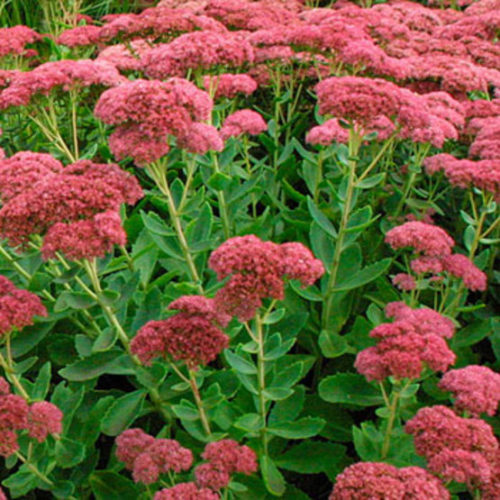
Sedum ‘Autumn Joy’ Photo/Illustration: Jennifer Benner

(Based on 12 user reviews)

Rate this plant

Hardiness Zones: 1 2 3 4 5 6 7 8 9 10 11
Botanical Name: Sedum ‘Autumn Joy’ SEE-dum Common Name: Stonecrop Synonyms: 'Herbstfreude' Genus: Sedum
This plant is as dependable and adaptable as they come. Its flowers bloom from August into November; they open pink and mature to a copper befitting of autumn. It is 2 feet tall and wide, with succulent stems and leaves. 'Autumn Joy' looks great with ornamental grasses.  
Noteworthy characteristics: The long-blooming flowers change from deep pink to copper. Attracts butterflies.
Care: Sedum prefers moderately fertile, moist soil in full sun, but can take it drier. 'Autumn Joy' can be tip pruned at 6 to 8 inches to shorten the plant, but this will also delay flowering.
Propagation: Take softwood cuttings or root leaves in early summer. Start seed of hardy species in fall. Divide in spring.
Problems: Fairly trouble free, but watch for mealybugs, scale insects, slugs, and snails, as well as bigger critters, including deer.
Height 1 ft. to 3 ft.
Spread 1 ft. to 3 ft.
Growth Habit Clumps
Growth Pace Moderate Grower
Light Full Sun to Part Shade
Moisture Medium Moisture
Maintenance Low
Characteristics Attracts Butterflies; Showy Flowers; Showy Seed Heads
Bloom Time Early Fall; Fall; Late Summer; Summer
Flower Color Brown Flower; Pink Flower; Red Flower
Uses Beds and Borders, Cut Flower, Dried Flower
Style Cottage Garden
Seasonal Interest Summer Interest, Fall Interest
Type Cacti and Succulents,Perennials

Plants you might also like

Nepeta × faassenii 'Walker's Low' Nepeta × faassenii 'Walker's Low'
(Catmint)
(8 user reviews)
Hardiness Zones: 1 2 3 4 5 6 7 8 9 10 11

This mound of lavender-blue flowers and aromatic, grayish green leaves up to 2 feet tall and 3 feet wide is great as edging or in a border, herb, or rock garden. It is an easy to grow, prolific bloomer that seems to be deer resistant. It blooms the whole summer and tolerates some shade. It also looks great with roses or on walls.

Agastache foeniculum Agastache foeniculum
(Anise hyssop)
(1 user review)
Hardiness Zones: 1 2 3 4 5 6 7 8 9 10 11

A classic plant for both herb gardens and borders, anise hyssop is composed of erect branches of mint-and-licorice-scented, medium green leaves ending in fuzzy spikes of small lavender flowers. The plant grows to 3 to 5 feet tall and 1 foot wide and reseeds freely. The flowers are edible and are charming crumbled into salads. The flowers are highly attractive to bees, butterflies, and hummingbirds.

Ratibida columnifera Ratibida columnifera
(Mexican hat, Prairie coneflower, Long-head coneflower)
(1 user review)
Hardiness Zones: 1 2 3 4 5 6 7 8 9 10 11

This perennial coneflower, sometimes grown as an annual, has a long season of flowers on thin, branching stems. The flowers resemble small hats, with yellow reflexed ray florets and large greenish-brown columnar centers.

Dianthus deltoides Dianthus deltoides
(Maiden pink)
(1 user review)
Hardiness Zones: 1 2 3 4 5 6 7 8 9 10 11

This mat-forming species with dark green leaves is one of the easiest to grow.  Blossoms range from white to red and are usually single and without fragrance. Use as bedding or in rock gardens.

Hemerocallis 'Cool Jazz' Hemerocallis 'Cool Jazz'
(Daylily)
Be the first to rate this plant
Hardiness Zones: 1 2 3 4 5 6 7 8 9 10 11

Daylilies are classic, extremely popular garden plants. They feature long, arching, strappy leaves and long stems of generally 6-petaled flowers, though double flowers are popular as well. Each flower lasts only one day, hence the plant’s common name. Daylilies come in a wide range of colors, from cream and cheery yellow to peach, orange, fiery red, deep burgundy, pink, and purple. Some have contrasting throats and "eye-zones." Daylilies are ideal for a mixed herbaceous perennial border.