previous
  • How to Start a Vegetable Garden
    How to Start a Vegetable Garden
  • How to Grow Raspberries
    How to Grow Raspberries
  • The Only Shrubs You Need to Grow
    The Only Shrubs You Need to Grow
  • Variegated Plants Create Drama
    Variegated Plants Create Drama
  • Find the Perfect Tomato
    Find the Perfect Tomato
  • Soil Testing is Worth the Effort
    Soil Testing is Worth the Effort
  • A gardener's checklist for early summer
    A gardener's checklist for early summer
  • Free Download: Rose Pruning and Bed Prep
    Free Download: Rose Pruning and Bed Prep
  • Bold and Beautiful Zinnias
    Bold and Beautiful Zinnias
  • Off With Their Heads: Deadheading Perennials
    Off With Their Heads: Deadheading Perennials
  • Make Your Own Hypertufa Container
    Make Your Own Hypertufa Container
  • All About Starting Seeds
    All About Starting Seeds
  • Big Flowers from Bigleaf Hydrangeas
    Big Flowers from Bigleaf Hydrangeas
  • Enchanting Japanese Maples
    Enchanting Japanese Maples
  • 15 Deer-Resistant Plants
    15 Deer-Resistant Plants
  • Backyard Makeover Game
    Backyard Makeover Game
  • Viburnums are Versatile Shrubs
    Viburnums are Versatile Shrubs
  • Lilacs: Time for a Fresh Look
    Lilacs: Time for a Fresh Look
  • Building a Compost Bin
    Building a Compost Bin
  • Friendly Ways to Battle Garden Pests
    Friendly Ways to Battle Garden Pests
  • 25 Robust Summer Bloomers
    25 Robust Summer Bloomers
  • 10 Perennials Easily Grown from Seed
    10 Perennials Easily Grown from Seed
  • Video: Make a Straw-Bale Garden
    Video: Make a Straw-Bale Garden
  • Perfect Edges for Your Beds and Borders
    Perfect Edges for Your Beds and Borders
  • Garden Catalog Collector
    Garden Catalog Collector
next

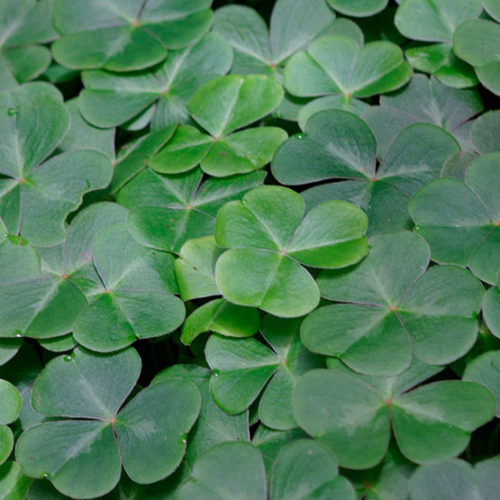
Oxalis oregana (Redwood sorrel)

Oxalis oregana Photo/Illustration: Michelle Gervais


Be the first to rate this plant

Plant Showcase - from our advertisers


Hardiness Zones: 1 2 3 4 5 6 7 8 9 10 11
Botanical Name: Oxalis oregana Common Name: Redwood sorrel Genus: Oxalis
Redwood sorrel is a creeping native perennial with shamrock-shaped leaves and cup-shaped pink, lilac, or white flowers over a long period from spring to fall. It makes a nice groundcover.
Noteworthy characteristics: Native to the Northwestern U.S. and California. Long-blooming. Attractive shamrock-shaped leaves. Good substitute for English ivy (Hedera helix).
Care: Grow in moist, fertile, humus-rich soil in full or part shade.
Propagation: Sow seed at 55° to 64°F in late winter or early spring. Divide in spring. Small sections root easily if provided with bottom heat.
Problems: Rust, seed smut, powdery mildew, and fungal leaf spots are common, while leaf miners and spider mites are less common.
Height 6 in. to 12 in.
Growth Habit Runs
Growth Pace Moderate Grower
Light Part Shade to Full Shade
Moisture Medium Moisture
Maintenance Moderate
Characteristics Native; Showy Foliage
Bloom Time Fall; Spring; Summer
Flower Color Pink Flower; Purple/ Lavender Flower; White Flower
Uses Ground Covers, Naturalizing
Style Woodland Garden
Seasonal Interest Spring Interest, Summer Interest, Fall Interest
Type Perennials

Plants you might also like

Ophiopogon planiscapus 'Nigrescens' Ophiopogon planiscapus 'Nigrescens'
(Black mondo grass)
(1 user review)
Hardiness Zones: 1 2 3 4 5 6 7 8 9 10 11

Black mondo grass has straplike, shiny black foliage and grows in little tufts. The grasslike foliage looks good with  chartreuse foliage, variegated woodland plants, and with its own flowers, which bloom in midsummer. Young leaves start out with a greenish hue that soon turns to black. The flowers are bell shaped and can be pink, pale violet, or white, and are followed by fleshy black seeds that may remain on the plant all winter. This perennial is evergreen in mild winters or in the warmer portions of its range. It looks stunning in a shady container planting.

Vinca minor 'Illumination' Vinca minor 'Illumination'
(Common periwinkle, creeping myrtle)
(1 user review)
Hardiness Zones: 1 2 3 4 5 6 7 8 9 10 11

Like other creeping myrtles, 'Illumination' is a tough evergreen ground cover for shade that will grow in almost any soil. Its hallmark is its bright gold leaves that are edged with a border of irregular green. Periwinkle-blue flowers appear in spring. Use 'Illumination' as a shade ground cover or in hanging baskets.

Darmera peltata Darmera peltata
(Indian rhubarb, Umbrella plant)
Be the first to rate this plant
Hardiness Zones: 1 2 3 4 5 6 7 8 9 10 11

Darmera's flower stalks emerge from the ground on naked stems in spring, and are followed by cupped, rounded but indented leaves up to 24 inches across. The foliage forms a lovely, vase-like clump, 4 feet tall and 3 feet wide. The flower clusters are composed of many 5-petaled, starry, pink or white florets with conspicuous stamens. This native of the western U.S. is found growing along woodland stream banks, and helps to add a tropical look to temperate gardens. Darmera makes a distinct and long-lasting foliage statement in moist conditions, and exhibits autumn color also. 

no image available Euphorbia 'Helena’s Blush™'
Be the first to rate this plant
Hardiness Zones: 1 2 3 4 5 6 7 8 9 10 11

This hybrid has petite green-and-cream variegated foliage with a hint of pink on the undersides. It produces chartreuse and apple green bicolored bracts on airy stems.

Podophyllum peltatum Podophyllum peltatum
(American mandrake, Mayapple)
Be the first to rate this plant
Hardiness Zones: 1 2 3 4 5 6 7 8 9 10 11

Mayapple is a rhizomatous, native woodland perennial with leaves in the shape of an umbrella. They may form large colonies. In spring, white or pale pink waxy flowers are mostly hidden under the leaves. The greenish "mayapple" follows and is often eaten by wildlife. When fully ripe, the fruits may be used to make preserves or jellies, but they are toxic when unripe. Leaves and roots are poisonous. Plants often go dormant in the summer. Grow in a woodland garden.