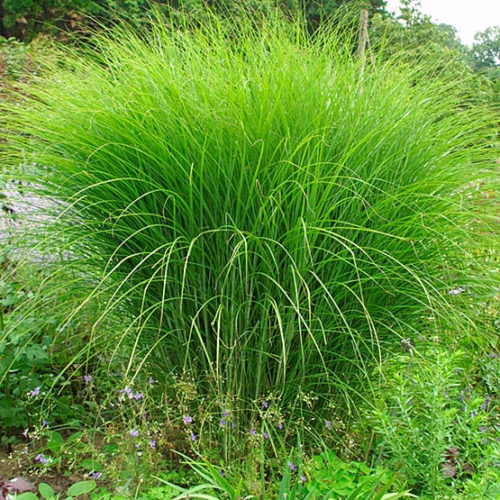
Miscanthus sinensis ‘Gracillimus’ (Eulalia grass, Maiden grass)

Miscanthus sinensis ‘Gracillimus’ Photo/Illustration: Michelle Gervais


Be the first to rate this plant

Hardiness Zones: 1 2 3 4 5 6 7 8 9 10 11
Botanical Name: Miscanthus sinensis ‘Gracillimus’ mis-KAN-thus sih-NEN-sis Common Name: Eulalia grass, Maiden grass Genus: Miscanthus
This elegantly shaped grass has narrow leaves with white mid-ribs and a vase-like form to 6 feet tall. It shows bronze autumn color and can stand throughout winter to provide architectural interest. Tassel-like inflorescences appear in fall and can be used as cut or dried flowers.
Noteworthy characteristics: Elegant form; four-season interest.
Care: Adaptable, but best in moderately fertile, moist but well-drained soil in full sun. Does not tolerate excessive winter moisture. Cut to the ground by early spring. Needs space to grow.
Propagation: Sow seed in a cold frame in spring. Divide young plants in spring (older plants are difficult to divide). Pot on divisions or grow seedlings in a cold frame until established.
Problems: Infrequent.
Height 6 ft. to 10 ft.
Spread 3 ft. to 6 ft.
Growth Habit Clumps
Growth Pace Invasive/Aggressive Grower;Moderate Grower
Light Full Sun to Part Shade
Moisture Medium Moisture
Maintenance Low
Characteristics Attracts Birds; Showy Flowers; Showy Foliage; Showy Seed Heads
Bloom Time Fall
Foliage Color Variegated Foliage
Flower Color Brown Flower
Uses Beds and Borders, Cut Flower, Dried Flower, Screening, Specimen Plant/ Focal Point, Waterside
Seasonal Interest Winter Interest, Spring Interest, Summer Interest, Fall Interest
Type Grasses

Plants you might also like

Miscanthus sinensis ‘Morning Light’ Miscanthus sinensis ‘Morning Light’
(Eulalia grass)
Be the first to rate this plant
Hardiness Zones: 1 2 3 4 5 6 7 8 9 10 11

This beautiful grass has an "inner light" that emanates from the white midribs of its fine-textured leaf blades and the threads of white around their edges. A graceful shape usually between 5 and 6 feet tall, ‘Morning Light’, turns golden in November and fades to beige in winter.

Muhlenbergia lindheimeri Muhlenbergia lindheimeri
(Lindheimer's muhly)
Be the first to rate this plant
Hardiness Zones: 1 2 3 4 5 6 7 8 9 10 11

This beautiful warm-season grass produces attractive, pale purplish-gray plumes in autumn and goes dormant in the cold season. It forms a neat, upright clump with fine blue-gray foliage.

Pennisetum alopecuroides Pennisetum alopecuroides
(Fountain grass)
Be the first to rate this plant
Hardiness Zones: 1 2 3 4 5 6 7 8 9 10 11

This species produces 2- to 5-foot-tall mounds of narrow green foliage and bottle brush-like silvery-pink to purple flowers, both of which mature to shades of brown. It is the parent of numerous cultivars with notable flowers that range from purple to gray/black. It and some of its cultivars self-sow plentifully in warm climates. It is marginally hardy in Zone 5.

Saccharum ravennae Saccharum ravennae
(Ravenna grass)
Be the first to rate this plant
Hardiness Zones: 1 2 3 4 5 6 7 8 9 10 11

This large, clump-forming grass has linear leaves with central white stripes. In late summer it bears huge, purplish-bronze flower clusters, which eventually fade to silver. It resents high fertility and shows considerable drought tolerance.

Schizachyrium scoparium Schizachyrium scoparium
(Little bluestem, Prairie beard grass)
Be the first to rate this plant
Hardiness Zones: 1 2 3 4 5 6 7 8 9 10 11

Little bluestem is a tidy, finely textured clumping grass with a blue-green summer color. Its silvery seed heads rise to a height of nearly 2 feet in late summer and are at their best when backlit in the morning or afternoon sun. In fall, the grass turns a rosy rust color that lasts all winter.