
previous
  • Plants that Spark!
    Plants that Spark!
  • Colorful Selections for Shade
    Colorful Selections for Shade
  • Garden Confidential: A Plant Walks into a Bar
    Garden Confidential: A Plant Walks into a Bar
  • Save Money by Growing Your Own
    Save Money by Growing Your Own
  • Mulch for a Healthy Garden
    Mulch for a Healthy Garden
  • 6 Tips for Weed Control
    6 Tips for Weed Control
  • Lawn Alternatives
    Lawn Alternatives
  • Make a Succulent Topiary
    Make a Succulent Topiary
  • Designing with Curved Terraces
    Designing with Curved Terraces
  • Indeterminate or Determinate Tomatoes?
    Indeterminate or Determinate Tomatoes?
  • In Pursuit of the Perfect Potting Shed
    In Pursuit of the Perfect Potting Shed
  • Fragrant Plants for Pathways
    Fragrant Plants for Pathways
  • Building a Compost Bin
    Building a Compost Bin
  • Slideshow: Beautiful Clematis
    Slideshow: Beautiful Clematis
  • Fast-Growing Trees for Impatient Gardeners
    Fast-Growing Trees for Impatient Gardeners
  • Dwarf Citrus Trees
    Dwarf Citrus Trees
  • Pretty in Pink
    Pretty in Pink
  • Homegrown / Homemade
    Homegrown / Homemade
  • Containers as Focal Points
    Containers as Focal Points
  • Stylish Shady Containers
    Stylish Shady Containers
  • Thoughts From a Foreign Field
    Thoughts From a Foreign Field
  • Elephant's Ears
    Elephant's Ears
  • Comfortable Alfresco Dining
    Comfortable Alfresco Dining
  • NEW Video Series: There's a Better Way
    NEW Video Series: There's a Better Way
  • Plant an Easy-to-Water Strawberry Jar
    Plant an Easy-to-Water Strawberry Jar
next

Genus Epimedium (Barrenwort)

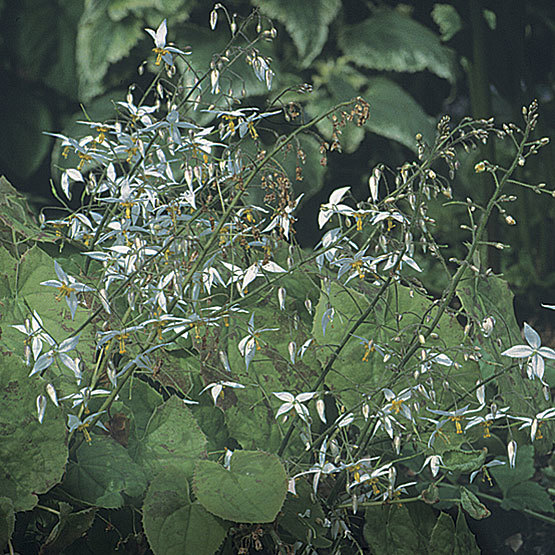
Epimedium Epimedium stellulatum 'Wudang Star' Photo/Illustration: C. Colston Burrell
ep-ih-MEE-dee-um Common Name: Barrenwort
The genus Epimedium is characterized by 4-petaled flowers hanging in clusters in shades of yellow, beige, pink, lavender, purple, red, or white, borne in racemes from spring to early summer. New leaves emerge with bronzy pink edges before turning green in summer. There are evergreen and deciduous species.
Noteworthy characteristics: Epimedium ranges from the Mediterranean to temperate East Asia, occurring in woodland, scrub, and shady, rocky places. Mainly basal, 2- or 3-ternate, sometimes pinnate leaves with leathery texture. Heart- or lance-shaped leaflets.
Care: Thrives in full to partial shade with rich, well-drained soil but will grow well (although slower) in dry conditions.
Propagation: Divide in autumn or after flowering. Root rhizome cuttings under glass in winter; plant out after danger of frost has passed.
Problems: Vine weevil and mosaic virus.

Species, varieties and cultivars for genus Epimedium

Epimedium × rubrum Epimedium × rubrum
(Red epimedium, red barrenwort, bishop's hat)
(1 user review)
Hardiness Zones: 1 2 3 4 5 6 7 8 9 10 11

Early in the season, the thin, heart-shaped leaves of this plant have a red tinge, which turns to bronze in fall. Plant red epimedium along a path, where its delicate foliage and tiny spring flowers can be admired. -Marty Hair, Regional Picks: Upper Midwest, Fine Gardening issue #127

Epimedium grandiflorum cvs. Epimedium grandiflorum cvs.
(Longspur barrenwort, Bishop's hat)
Be the first to rate this plant
Hardiness Zones: 1 2 3 4 5 6 7 8 9 10 11

Longspur barrenwort is a clump-forming, deciduous, rhizomatous perennial. Leaves, light green and flushed bronze when young, are heart-shaped with spiny margins. Four-petaled white, yellow, pink, or purple flowers, hanging in clusters, appear in mid- and late spring.

Epimedium stellulatum 'Wudang Star' Epimedium stellulatum 'Wudang Star'
(1 user review)
Hardiness Zones: 1 2 3 4 5 6 7 8 9 10 11

'Wudang Star' is a clump-forming, evergreen perennial with spiny, glossy foliage. New leaves emerge with bronzy pink edges before turning green in summer. Loose spikes of star-shaped white flowers, borne in spring, have prominent yellow stamens.


