OR Browse All Plants
Be the first to rate this plant
Click on a thumbnail to see a full sized image
Blackhaw Viburnum is a large shrub or small tree with clusters of creamy white flowers followed by pink-rose berries, which birds love to eat. Its distinctive bronze-green foliage on reddish purple stems turns blue-black in the fall. Blackhaw grows to 12 to 15 feet high and 8 to12 feet wide.
Lemon-lime foliage, fuzzy stems, and intense fall color make this sumac cultivar a standout. It grows into an upright, rounded form about 6 feet tall and as wide. New growth emerges chartreuse. Fall brings leaves of yellow, scarlet, and orange. Flowers are yellowish green and followed, on female plants, by hairy, dark red fruit. This plant spreads by suckers and can be invasive. The species is native to North America.
Because it is a relative of the immensely popular burning bush (E. alatus), it isn't surprising that eastern wahoo has great fall color. This North American native grows as a small tree in the southern part of its range and as a large shrub on the Plains. The bright red of its fall foliage is amplified and extended by abundant clusters of scarlet fruits that persist after the leaves have fallen, providing color even into midwinter. Eastern wahoo is effective as an accent plant or when massed wherever a bold, surprising splash of color is desired.
This dogwood can be classified as either a deciduous shrub or small tree. Appealing creamy white flowers appear in late spring and become attractive clusters of milky white fruit in fall. The first cold front often turns the leaves a dark burgundy, and the winter stem tips have a glossy mahogany hue.
This cross of the European smoke bush (C. coggygria) and the American smoke tree (C. obovatus) is a gem in the garden thanks to its multiseason interest. Its iridescent spring foliage is green overlaid with red; then its large pink clouds of blooms in summer are followed by brilliant autumn foliage that ranges from red to orange. 'Grace' combines well with just about anything; asters, ornamental grasses, and Japanese maples are good places to start.
Viburnum prunifolium
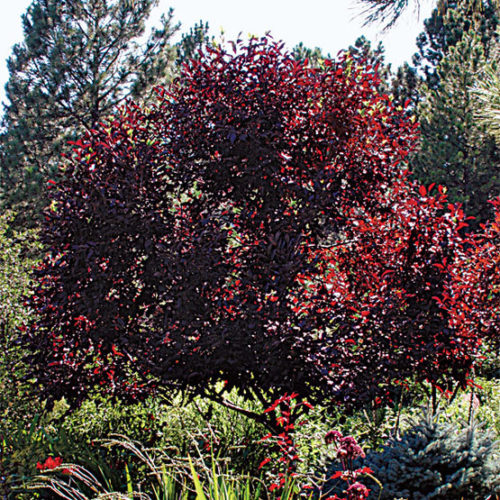
Prunus virginiana 'Schubert'
Pieris japonica
Pieris japonica 'Dorothy Wyckoff'
Tsuga canadensis
Great Plants, Vol.2Learn how to choose and use the best plant varieties for your gardenMore Info
Great Gardens, Vol. 2An insider's look at America's most beautiful gardensMore Info
Creating Beds and BordersCreating Eye-Catching Island Beds and BordersMore Info