previous
  • Soil Testing is Worth the Effort
    Soil Testing is Worth the Effort
  • How to Grow Raspberries
    How to Grow Raspberries
  • Make Your Own Hypertufa Container
    Make Your Own Hypertufa Container
  • 10 Perennials Easily Grown from Seed
    10 Perennials Easily Grown from Seed
  • Viburnums are Versatile Shrubs
    Viburnums are Versatile Shrubs
  • Backyard Makeover Game
    Backyard Makeover Game
  • 25 Robust Summer Bloomers
    25 Robust Summer Bloomers
  • Perfect Edges for Your Beds and Borders
    Perfect Edges for Your Beds and Borders
  • Big Flowers from Bigleaf Hydrangeas
    Big Flowers from Bigleaf Hydrangeas
  • A gardener's checklist for early summer
    A gardener's checklist for early summer
  • How to Start a Vegetable Garden
    How to Start a Vegetable Garden
  • Free Download: Rose Pruning and Bed Prep
    Free Download: Rose Pruning and Bed Prep
  • 15 Deer-Resistant Plants
    15 Deer-Resistant Plants
  • Friendly Ways to Battle Garden Pests
    Friendly Ways to Battle Garden Pests
  • Garden Catalog Collector
    Garden Catalog Collector
  • Lilacs: Time for a Fresh Look
    Lilacs: Time for a Fresh Look
  • Enchanting Japanese Maples
    Enchanting Japanese Maples
  • Bold and Beautiful Zinnias
    Bold and Beautiful Zinnias
  • Variegated Plants Create Drama
    Variegated Plants Create Drama
  • Building a Compost Bin
    Building a Compost Bin
  • Off With Their Heads: Deadheading Perennials
    Off With Their Heads: Deadheading Perennials
  • Find the Perfect Tomato
    Find the Perfect Tomato
  • All About Starting Seeds
    All About Starting Seeds
  • Video: Make a Straw-Bale Garden
    Video: Make a Straw-Bale Garden
  • The Only Shrubs You Need to Grow
    The Only Shrubs You Need to Grow
next

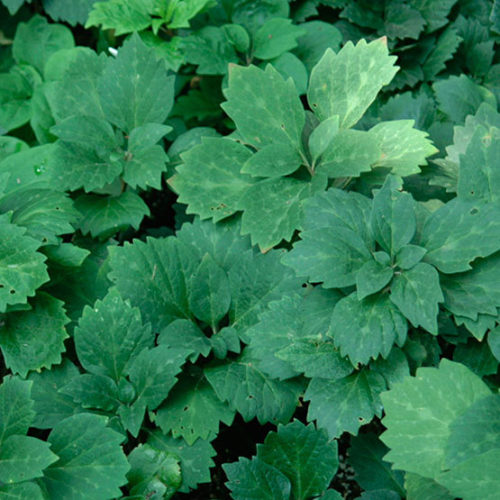
Pachysandra procumbens (Allegheny spurge)

Pachysandra procumbens Photo/Illustration: Jennifer Benner


Be the first to rate this plant

Plant Showcase - from our advertisers


Hardiness Zones: 1 2 3 4 5 6 7 8 9 10 11
Botanical Name: Pachysandra procumbens pak-ih-SAN-drah pro-KUM-benz Common Name: Allegheny spurge Genus: Pachysandra
This clump-forming, semi-evergreen perennial has long prostrate stems and pewter-green foliage. Fragrant, bottlebrush-like white flowers are borne on 2- to 4-inch-long spikes in spring, as the foliage appears.
Noteworthy characteristics: This native of the eastern U.S. is useful as a groundcover in a shrub border or massed in the woodland garden.
Care: Grow in any soil, except very dry.
Propagation: Divide in spring. Root softwood cuttings in early summer.
Problems: Leaf spot, dieback, and stem rot. May be damaged by slugs and snails.
Height 6 in. to 12 in.
Growth Habit Spreads
Light Part Shade to Full Shade
Moisture Adaptable
Maintenance Low
Characteristics Fragrant Flowers; Native; Showy Foliage
Bloom Time Spring
Flower Color White Flower
Uses Beds and Borders, Ground Covers
Style Woodland Garden
Seasonal Interest Spring Interest, Summer Interest
Type Perennials

Plants you might also like

Tiarella cordifolia Tiarella cordifolia
(Eastern foam flower)
(1 user review)
Hardiness Zones: 1 2 3 4 5 6 7 8 9 10 11

This native North American species has pale green heart-shaped leaves which develop bronze highlights in the autumn. In summer, it produces a profusion of starry white flowers on 4- to 12-inch spikes. It self-sows freely.

Polygonatum biflorum Polygonatum biflorum
(Small Solomon's seal, Solomon's seal)
Be the first to rate this plant
Hardiness Zones: 1 2 3 4 5 6 7 8 9 10 11

From late spring into summer, this species bears tubular greenish-white flowers that dangle underneath the arching stems. The foliage is smooth; in autumn it turns to clear yellow, contrasting with the blue-black berries this plant produces. Its height varies wildly from 1.5 to 6 feet tall.

Podophyllum peltatum Podophyllum peltatum
(American mandrake, Mayapple)
Be the first to rate this plant
Hardiness Zones: 1 2 3 4 5 6 7 8 9 10 11

Mayapple is a rhizomatous, native woodland perennial with leaves in the shape of an umbrella. They may form large colonies. In spring, white or pale pink waxy flowers are mostly hidden under the leaves. The greenish "mayapple" follows and is often eaten by wildlife. When fully ripe, the fruits may be used to make preserves or jellies, but they are toxic when unripe. Leaves and roots are poisonous. Plants often go dormant in the summer. Grow in a woodland garden.

Tiarella 'Black Snowflake' Tiarella 'Black Snowflake'
(Foam flower)
Be the first to rate this plant
Hardiness Zones: 1 2 3 4 5 6 7 8 9 10 11

This clump-forming variety has very dramatic, deeply cut foliage with wide black veins that looks like a black snowflake when new. The dark color is more pronounced in cool weather. Plants produce a profusion of starry white flowers on numerous spires up to 12 inches high and grow to about a foot wide. Tiarellas are at home in moist woodland environments. In the garden they make wonderful carpets of intricate leaves. For a long period from spring into summer, the profusion of foamy flowers can be appreciated up close or from a distance. Grow 'Black Snowflake' as a groundcover or edger in a shady border or woodland garden. It is a great foil to early spring bulbs.

Tiarella 'Neon Lights' Tiarella 'Neon Lights'
(Foam flower)
Be the first to rate this plant
Hardiness Zones: 1 2 3 4 5 6 7 8 9 10 11

This clump-forming variety has exquisitely textured, bright green maple-like leaves emblazoned with chocolate centers. In spring, its large pink-kissed-white flowers rebloom lightly on 16-inch stalks. Leaf coloration is best in cool weather. Plants grow to about a foot wide.