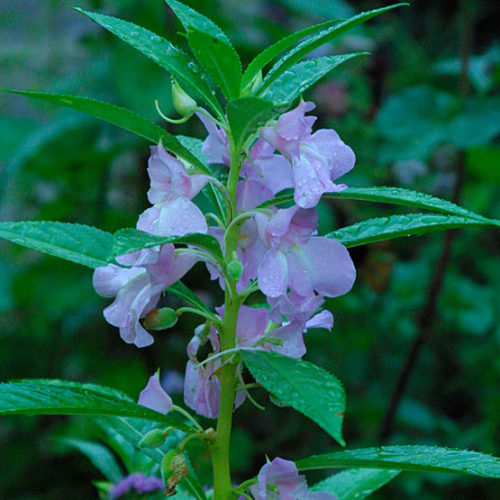
Impatiens balsamina and cvs. (Rose-balsam, Touch-me-not)

Impatiens balsamina and cvs. Photo/Illustration: Jennifer Benner

(Based on 1 user review)

Rate this plant

Plant Showcase - from our advertisers


Botanical Name: Impatiens balsamina and cvs. im-PAY-shenz ball-SAM-in-ah Common Name: Rose-balsam, Touch-me-not Genus: Impatiens
This plant has a sparsely branched form and narrow lance-shaped, pale green leaves. Cup-shaped hooded flowers 1-2 inches across, either singly or in clusters, are followed by explosive seed capsules. A variety of colors are available, including rose, lilac, and creamy yellow.
Care: Does best in partial shade and moist, well-draining loam. Add composted organic matter to the soil for optimal performance. Shelter from wind. Impatiens balsamina is free-flowering and grows well in shade.
Propagation: Sow seed in early spring.
Problems: Spider mites, flower thrips, root knot nematode, whiteflies, and aphids, especially under glass. Caterpillars outdoors. Gray mold, impatiens necrotic spot virus, fungal leaf spots, Rhizoctonia stem rot, Pseudomonas leaf spot, and Verticillium wilt.
Height 1 ft. to 3 ft.
Spread 1 ft. to 3 ft.
Light Full Sun to Part Shade
Moisture Medium Moisture
Characteristics Self Seeds; Showy Flowers
Bloom Time Fall; Spring; Summer
Flower Color Pink Flower; Purple/ Lavender Flower; Red Flower; White Flower
Uses , Beds and Borders, Container, Indoor Plant
Seasonal Interest , Summer Interest, Fall Interest
Type ,Annuals

Plants you might also like

Hibiscus trionum Hibiscus trionum
(Flower-of-an-hour)
(1 user review)
Hardiness Zones: 1 2 3 4 5 6 7 8 9 10 11

A seldom-seen annual or short-lived perennial, this easy-to-grow plant performs as the perfect filler in beds and containers. It forms a well-branched compact mound of deeply lobed, dark green leaves, which provide an interesting textural backdrop to its charming, hibiscus-type flowers. The flowers are truly stunning with their cream petals, purple-hued undersides, and deep burgundy centers. While each flower lasts only a single day, the plant blooms profusely all season and produces inflated seedpods. The flowers will not normally open on a cloudy day, but this is a small price to pay for such a gem of a plant.

Lathyrus odoratus and cvs. Lathyrus odoratus and cvs.
(Sweet pea)
(1 user review)

This annual climber has winged stems and deliciously fragrant, ruffled blossoms. Many cultivars exist with varying bloom color (solid, mixed, or bicolor), size, and climbing habit.

Viola tricolor Viola tricolor
(Heartsease, Johnny-jump-up, Love-in-idleness, Wild pansy)
(3 user reviews)
Hardiness Zones: 1 2 3 4 5 6 7 8 9 10 11

This annual, biennial, or short-lived perennial is grown for its long season of pansy flowers in shades of purple, blue, yellow, and white. Viola tricolor is pretty in containers, as edging, or as a companion for bulbs. It self-seeds readily.

Begonia grandis ssp. evansiana Begonia grandis ssp. evansiana
(Hardy begonia)
(1 user review)
Hardiness Zones: 1 2 3 4 5 6 7 8 9 10 11

This tuberous begonia bears green heart-shaped foliage with red veining and claret-stained undersides that steal the show when backlit. Pendent clusters of slightly fragrant, satiny pink or white blossoms open from midsummer until frost. It makes a good perennial companion for ferns and hostas.

Ageratum houstonianum Ageratum houstonianum
(1 user review)
Hardiness Zones: 1 2 3 4 5 6 7 8 9 10 11

There are many cultivars available of this fast-growing annual. They are best used as bedding, edging, or container plants. Panicles of blue, pink, purple, or white flowerheads arise from oval, downy leaves in midsummer and continue until frost. They have a soft, fuzzy appearance and attract butterflies.