previous
  • Fast-Growing Trees for Impatient Gardeners
    Fast-Growing Trees for Impatient Gardeners
  • Thoughts From a Foreign Field
    Thoughts From a Foreign Field
  • NEW Video Series: There's a Better Way
    NEW Video Series: There's a Better Way
  • Indeterminate or Determinate Tomatoes?
    Indeterminate or Determinate Tomatoes?
  • Plant an Easy-to-Water Strawberry Jar
    Plant an Easy-to-Water Strawberry Jar
  • Homegrown / Homemade
    Homegrown / Homemade
  • Garden Confidential: A Plant Walks into a Bar
    Garden Confidential: A Plant Walks into a Bar
  • Lawn Alternatives
    Lawn Alternatives
  • Make a Succulent Topiary
    Make a Succulent Topiary
  • Stylish Shady Containers
    Stylish Shady Containers
  • Pretty in Pink
    Pretty in Pink
  • Mulch for a Healthy Garden
    Mulch for a Healthy Garden
  • Save Money by Growing Your Own
    Save Money by Growing Your Own
  • In Pursuit of the Perfect Potting Shed
    In Pursuit of the Perfect Potting Shed
  • Elephant's Ears
    Elephant's Ears
  • Designing with Curved Terraces
    Designing with Curved Terraces
  • Comfortable Alfresco Dining
    Comfortable Alfresco Dining
  • Dwarf Citrus Trees
    Dwarf Citrus Trees
  • 6 Tips for Weed Control
    6 Tips for Weed Control
  • Slideshow: Beautiful Clematis
    Slideshow: Beautiful Clematis
  • Colorful Selections for Shade
    Colorful Selections for Shade
  • Building a Compost Bin
    Building a Compost Bin
  • Plants that Spark!
    Plants that Spark!
  • Containers as Focal Points
    Containers as Focal Points
  • Fragrant Plants for Pathways
    Fragrant Plants for Pathways
next

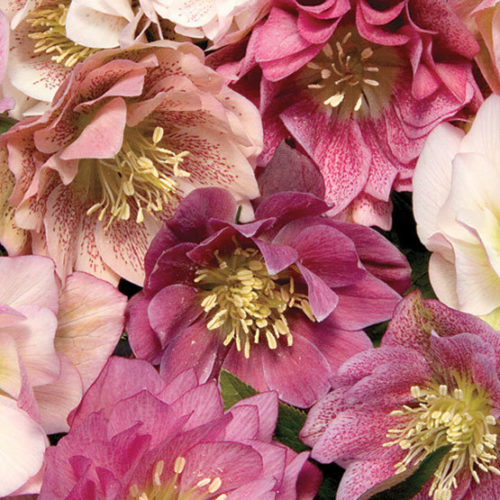
Helleborus odorus 'Double Queen' (Lenten rose, hellebore)

Helleborus odorus 'Double Queen' Photo/Illustration: Courtesy of Park Seed

(Based on 1 user review)

Rate this plant

Plant Showcase - from our advertisers


Hardiness Zones: 1 2 3 4 5 6 7 8 9 10 11
Botanical Name: Helleborus odorus 'Double Queen' hel-LEB-or-us OH-dor-us Common Name: Lenten rose, hellebore Genus: Helleborus
Hellebores begin blooming in mid-winter in a range of colors, adding much needed color very early in the season. They bloom when the temperature is below freezing, even amidst the snow. Protect from cold winter winds, especially when not insulated by snow, to avoid damaged foliage. Avoid ingestion of all plant parts and contact with the sap.
Noteworthy characteristics: Double-flowered, naturalizes well, and comes true from seed.
Care: Best grown in humus-rich, neutral to alkaline, medium moisture, well-drained soils in part shade to full shade. Prefers light to moderate shade. Tolerant of summer heat and humidity. Cut back flowering stems after bloom to promote new foliage growth. Locate plants in areas protected from cold winter winds.
Propagation:

Allow it to naturalize, divide after flowering, or sow seeds in containers in a cold frame as soon as ripe.


Problems:

 Slugs, snails, aphids, leaf spot, and black rot.


Height 1 ft. to 3 ft.
Spread 1 ft. to 3 ft.
Growth Habit Clumps
Growth Pace Moderate Grower
Light Part Shade Only;Part Shade to Full Shade
Moisture Medium Moisture
Maintenance Low
Tolerance Deer Tolerant;Frost Tolerant
Characteristics Showy Flowers
Bloom Time Early Spring; Winter
Foliage Color Evergreen
Flower Color Pink Flower; White Flower
Uses Beds and Borders, Shade, Cut Flower, Naturalizing
Style Rock Garden, Woodland Garden
Seasonal Interest Winter Interest, Spring Interest
Type Perennials

Plants you might also like

Helleborus × hybridus cvs. Helleborus × hybridus cvs.
(Hellebore)
Be the first to rate this plant
Hardiness Zones: 1 2 3 4 5 6 7 8 9 10 11

From late fall through winter, the leathery leaves of hellebores stay glossy, cheery, and green. Hybrids of H. orientalis and other species have a clump-forming habit and leathery leaves. They begin blooming in February or March in a range of shades, adding much needed color very early in the season. The blooms last for a very long time, especially if the weather stays cool. Hellebores are tolerant of summer heat and humidity. -Marty Hair, Regional Picks: Upper Midwest, Fine Gardening issue# 127

no image available Solidago caesia
(Goldenrod, Wreath goldenrod, Blue-stemmed goldenrod)
Be the first to rate this plant
Hardiness Zones: 1 2 3 4 5 6 7 8 9 10 11

In early autumn, this species produces elegant, wand-shaped flowerheads atop wiry stems with blue-green, linear leaves. It is found in open woods and along woodland edges, and prefers some shade. It responds well to rich soil, but can tolerate dry soil also. 

Solidago nemoralis Solidago nemoralis
(Goldenrod, Gray goldenrod)
Be the first to rate this plant
Hardiness Zones: 1 2 3 4 5 6 7 8 9 10 11

This is one of the smallest species of goldenrod, topping out at only 4 to 6 inches high in poor soils, and 2 feet high in fertile soils. It is considered a garden-worthy species, with gray-green leaves that form clumps and languid, one-sided yellow plumes. It is tolerant of both sandy and clay soils.

Solidago flexicaulis Solidago flexicaulis
(Goldenrod, Zigzag goldenrod)
Be the first to rate this plant
Hardiness Zones: 1 2 3 4 5 6 7 8 9 10 11

This species is aptly named for its distinctive crooked stems that bend back and forth at 45° angles between nodes. It bears starry, medium-yellow flowers atop 1- to 3-foot tall stems. 

Salvia pratensis Salvia pratensis
(Meadow clary)
Be the first to rate this plant
Hardiness Zones: 1 2 3 4 5 6 7 8 9 10 11

This woody-stemmed perennial produces sticky spikes of deep violet or, rarely, white to pink flowers. It blooms from early summer to autumn; reblooming is most reliable if spent flowers are deadheaded promptly. It has wrinkled leaves and forms an upright clump 3 feet tall by 1 foot wide. This salvia is most noted for its many hybirds with S. nemerosa.