
Genus Festuca (Fescue)

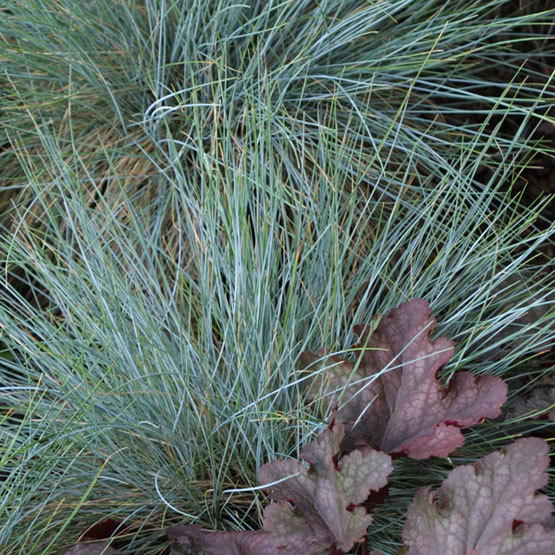
Festuca Festuca glauca 'Elijah Blue' Photo/Illustration: Jennifer Benner
fess-TOO-kah Common Name: Fescue
Festuca are notable ornamental (and cultivated pasture) grasses with densely tufted, evergreen foliage in shades ranging from chalky blue to deep green. These compact tufts are well suited for edging and naturalizing in the rock garden. Some species are native to the U.S.
Noteworthy characteristics: Great colored foliage on compact tufts.
Care: Grow in full sun and poor to moderately fertile soil. Divide every few years to maintain vigor and color.
Propagation: Sow seed in a cold frame from fall to spring; divide plants in spring.
Problems: Ergot, powdery mildew, rust, smut, brown patch, Helminthosporium leaf spot, net blotch, pink snow mold, anthracnose, eye spot, summer blight.

Species, varieties and cultivars for genus Festuca

Festuca glauca 'Boulder Blue' Festuca glauca 'Boulder Blue'
(Blue fescue, Gray fescue)
(1 user review)
Hardiness Zones: 1 2 3 4 5 6 7 8 9 10 11

Regarded by some as the bluest blue fescue, this plant forms compact, cascading mounds of foot-tall, intensely blue, narrow leaves that are attractive in all seasons. Blooms are generally secondary to the foliage, but this cultivar blooms more heavily than most, with spikelets in summer. This cultivar is long-lived and very hardy. Grow in groups in a border or rock garden, or as a groundcover. 

Festuca glauca 'Elijah Blue' Festuca glauca 'Elijah Blue'
(Blue fescue, Gray fescue)
(1 user review)
Hardiness Zones: 1 2 3 4 5 6 7 8 9 10 11

These compact tufts of 8-inch-long powder-blue leaves are well suited for edging and naturalizing in the rock garden. 

Festuca mairei Festuca mairei
(Atlas fescue)
Be the first to rate this plant
Hardiness Zones: 1 2 3 4 5 6 7 8 9 10 11

This sturdy groundcover is fast becoming one of the most dependable grasses for creating drought-tolerant meadows. Clumping evergreen foliage is a rich khaki green and grows in an arching clump. The flowers, while noticeable, are not showy. Atlas fescue is at its best in groups and grows in all but hot, humid, and low desert climates.


