previous
  • In Pursuit of the Perfect Potting Shed
    In Pursuit of the Perfect Potting Shed
  • Pretty in Pink
    Pretty in Pink
  • Indeterminate or Determinate Tomatoes?
    Indeterminate or Determinate Tomatoes?
  • Building a Compost Bin
    Building a Compost Bin
  • Fragrant Plants for Pathways
    Fragrant Plants for Pathways
  • Make a Succulent Topiary
    Make a Succulent Topiary
  • Designing with Curved Terraces
    Designing with Curved Terraces
  • Plants that Spark!
    Plants that Spark!
  • Mulch for a Healthy Garden
    Mulch for a Healthy Garden
  • Stylish Shady Containers
    Stylish Shady Containers
  • Plant an Easy-to-Water Strawberry Jar
    Plant an Easy-to-Water Strawberry Jar
  • Elephant's Ears
    Elephant's Ears
  • Homegrown / Homemade
    Homegrown / Homemade
  • Dwarf Citrus Trees
    Dwarf Citrus Trees
  • 6 Tips for Weed Control
    6 Tips for Weed Control
  • Fast-Growing Trees for Impatient Gardeners
    Fast-Growing Trees for Impatient Gardeners
  • Garden Confidential: A Plant Walks into a Bar
    Garden Confidential: A Plant Walks into a Bar
  • Save Money by Growing Your Own
    Save Money by Growing Your Own
  • Thoughts From a Foreign Field
    Thoughts From a Foreign Field
  • Lawn Alternatives
    Lawn Alternatives
  • Containers as Focal Points
    Containers as Focal Points
  • NEW Video Series: There's a Better Way
    NEW Video Series: There's a Better Way
  • Slideshow: Beautiful Clematis
    Slideshow: Beautiful Clematis
  • Colorful Selections for Shade
    Colorful Selections for Shade
  • Comfortable Alfresco Dining
    Comfortable Alfresco Dining
next

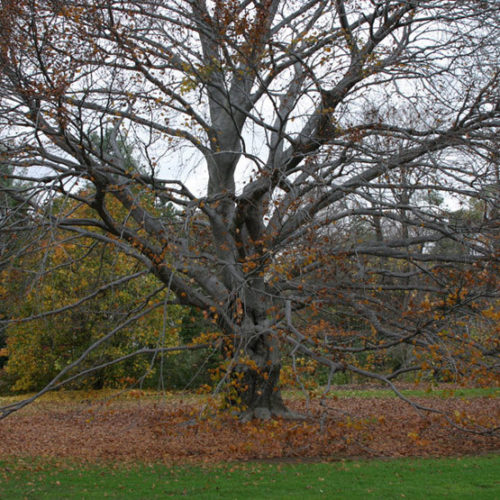
Fagus sylvatica

(European beech)

Fagus sylvatica Photo/Illustration: Janet Jemmott


Be the first to rate this plant

Plant Showcase - from our advertisers


Hardiness Zones: 1 2 3 4 5 6 7 8 9 10 11
Botanical Name:

Fagus sylvatica

FAY-gus sil-VAT-ih-kah Common Name: European beech Genus: Fagus
An excellent shade tree, this European-native deciduous tree grows to 80 feet tall and 50 feet wide and features an upright, oval form and dark shiny green leaves that turn yellow to rust-colored in fall. Its spring flowers are insignificant, though the small nuts that follow are favored by birds and squirrels. This tree is slow-growing. Several cultivars are available, including those with differing forms and foliage colors.
Care: Proovide Full sun and well-drained soil in USDA Hardiness Zones 4 to 7.
Propagation:


Problems:

 No serious problems.


Height Over 30 ft.
Spread Over 30 ft.
Growth Pace Slow Grower
Light Full Sun Only
Moisture Dry to Medium
Maintenance Low
Characteristics Showy Fall Foliage
Uses Specimen Plant/ Focal Point, Fall Interest
Type Trees

Plants you might also like

Cladrastis lutea Cladrastis lutea
(Yellowwood)
(3 user reviews)
Hardiness Zones: 1 2 3 4 5 6 7 8 9 10 11

Yellowwood is a vase-shaped spreading tree with dark green foliage that turns a delicate yellow or orange in the fall and smooth light gray bark. Breathtaking, pendulous, foot-long, wisteria-like clusters of fragrant white flowers appear in late spring and early summer, often in alternate years.

Cercidiphyllum japonicum Cercidiphyllum japonicum
(katsura tree)
Be the first to rate this plant
Hardiness Zones: 1 2 3 4 5 6 7 8 9 10 11

This spreading, deciduous tree native to Japan and China has a rounded form and rounded, redbud-like leaves. It grows to 70 feet tall and 50 feet wide and sports brilliant red, apricot, and yellow fall color. Early spring flowers are insignificant. This attractive tree makes an excellent specimen. 'Pendula', a weeping form, is this species' most popular cultivar.

Robinia pseudoacacia 'Frisia' Robinia pseudoacacia 'Frisia'
(Golden locust)
Be the first to rate this plant
Hardiness Zones: 1 2 3 4 5 6 7 8 9 10 11

This large, fast-growing tree has droopy leaves that stay sunny yellow from spring until frost, spiny shoots, and fragrant white flowers in late spring and early summer on pendent racemes. The flowers are followed by smooth brown seed pods that are also interesting. 'Frisia' is one of the cultivars that is grown more for foliage than for its flowers and it does not flower as freely as the species.

Gleditsia triacanthos Gleditsia triacanthos
(Honeylocust)
(1 user review)
Hardiness Zones: 1 2 3 4 5 6 7 8 9 10 11

Honey locust grows in the wild from Pennsylvania to Iowa and south to Georgia and Texas. In the landscape, this large, spreading, deciduous tree is valuable for its elegant form and pinnate, ferny leaves that cast a dappled shade. Flowers are generally inconspicuous, but are followed by unusual large seed pods. Fall color can be a nice yellow, but leaves sometimes fall without noticeably changing colors. The species has a thorny trunk and shoots, but thornless cultivars are available.

no image available Pinus resinosa
(Red pine)
Be the first to rate this plant
Hardiness Zones: 1 2 3 4 5 6 7 8 9 10 11

The yellow-green leaves of this pine are 4 to 6 inches long. The bark is densely branched and flaky and reddish in the upper crown, scaly and pink-gray at the base. The tree has thick orange to red-brown shoots, chestnut-brown female cones, and purple male cones.