previous
  • Fragrant Plants for Pathways
    Fragrant Plants for Pathways
  • In Pursuit of the Perfect Potting Shed
    In Pursuit of the Perfect Potting Shed
  • Mulch for a Healthy Garden
    Mulch for a Healthy Garden
  • Slideshow: Beautiful Clematis
    Slideshow: Beautiful Clematis
  • Pretty in Pink
    Pretty in Pink
  • Make a Succulent Topiary
    Make a Succulent Topiary
  • Fast-Growing Trees for Impatient Gardeners
    Fast-Growing Trees for Impatient Gardeners
  • Plant an Easy-to-Water Strawberry Jar
    Plant an Easy-to-Water Strawberry Jar
  • Colorful Selections for Shade
    Colorful Selections for Shade
  • Thoughts From a Foreign Field
    Thoughts From a Foreign Field
  • Lawn Alternatives
    Lawn Alternatives
  • Elephant's Ears
    Elephant's Ears
  • Comfortable Alfresco Dining
    Comfortable Alfresco Dining
  • Containers as Focal Points
    Containers as Focal Points
  • Homegrown / Homemade
    Homegrown / Homemade
  • 6 Tips for Weed Control
    6 Tips for Weed Control
  • Save Money by Growing Your Own
    Save Money by Growing Your Own
  • Building a Compost Bin
    Building a Compost Bin
  • Plants that Spark!
    Plants that Spark!
  • Garden Confidential: A Plant Walks into a Bar
    Garden Confidential: A Plant Walks into a Bar
  • Stylish Shady Containers
    Stylish Shady Containers
  • Designing with Curved Terraces
    Designing with Curved Terraces
  • Indeterminate or Determinate Tomatoes?
    Indeterminate or Determinate Tomatoes?
  • Dwarf Citrus Trees
    Dwarf Citrus Trees
  • NEW Video Series: There's a Better Way
    NEW Video Series: There's a Better Way
next

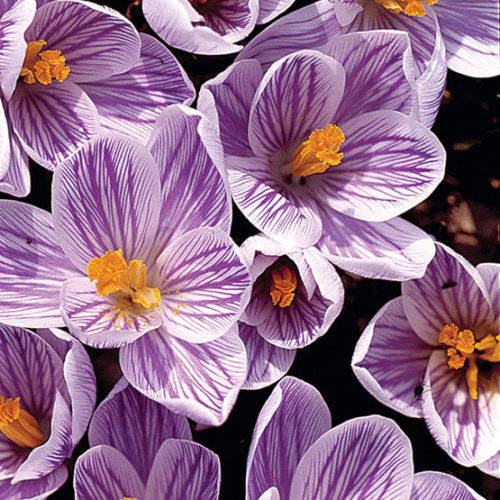
Crocus vernus (Dutch crocus)

Crocus vernus Photo/Illustration: David Cavagnaro

(Based on 1 user review)

Rate this plant

Plant Showcase - from our advertisers


Hardiness Zones: 1 2 3 4 5 6 7 8 9 10 11
Botanical Name: Crocus vernus KROW-kus VER-nus Common Name: Dutch crocus Genus: Crocus
Dutch crocus is one of the hardiest, if not the hardiest, crocus species readily available to home gardeners. A true harbinger of spring, it can be planted in borders, rock gardens, and even lawns. After flowering, the foliage must be left intact until it withers, which may cause lawn-mower anxiety in some gardeners. Often sold as "mixed crocus," cultivars of this species are typically white, lilac, or purple and white striped.
Noteworthy characteristics: Very early blooming; naturalizes in lawn.
Care: Provide full sun to light shade and average, well-drained soil. In fall, plant corms four inches deep in groups of six or more. Lift and separate them after four or five years, discarding the mother corm.
Propagation: Divide every four or five years.
Problems: Nothing serious, but squirrels and mice may eat the corms.
Height Less than 6 in.
Spread Less than 6 in.
Growth Habit Clumps
Growth Pace Moderate Grower
Light Full Sun to Part Shade
Moisture Medium Moisture
Maintenance Low
Characteristics Showy Flowers
Bloom Time Early Spring; Spring
Flower Color Purple/ Lavender Flower; White Flower
Uses Beds and Borders, Container, Naturalizing, Formal Garden, Woodland Garden
Style Cottage Garden, Rock Garden
Seasonal Interest Spring Interest
Type Bulbs

Plants you might also like

Galanthus nivalis Galanthus nivalis
(common snowdrop)
Be the first to rate this plant
Hardiness Zones: 1 2 3 4 5 6 7 8 9 10 11

Snowdrops are some of the earliest bulbs, and flowers in general, to bloom in spring. Galanthus nivalis is the most common species, and its cultivars are the most commonly grown snowdrops on the market. They are reliably hardy and perennial. They grow to 4 inches tall and wide and flower in mid- to late winter, long before most other plants. They are the first sign of spring around the corner. Flowers are nodding and white.

Galanthus elwesii Galanthus elwesii
(giant snowdrop)
Be the first to rate this plant
Hardiness Zones: 1 2 3 4 5 6 7 8 9 10 11

The giant snowdrop has larger flowers and broader leaves than the more common G. nivalis, but grows to the same 4 inches tall and wide. Its white, nodding blooms appear in late winter, signalling spring around the corner.

Narcissus 'Ceylon' Narcissus 'Ceylon'
(Large-Cupped Daffodil)
(1 user review)
Hardiness Zones: 1 2 3 4 5 6 7 8 9 10 11

This daffodil has large, long-lasting flowers that are a deep, sunny yellow with orange cups. Plant these in large groups for a specular mid-season show. Great for forcing indoors.

Narcissus 'Jack Snipe' Narcissus 'Jack Snipe'
(Daffodil)
Be the first to rate this plant
Hardiness Zones: 1 2 3 4 5 6 7 8 9 10 11

Generally speaking, daffodils perform best in full sun and well-drained soil, in areas where there is a fair amount of rainfall in the fall and spring and where the summer is relatively dry. However, cyclamineus-type daffodils seem to tolerate at least partial shade and more moisture than others do. Narcissus ‘Jack Snipe’ (pre-1951, Zones 3–8) is a charming example of this type of daffodil. Its white petals are swept back, as if it were standing in front of a fan, and its medium-length, buttercup-yellow trumpet (or nose) sticks straight out at a 90 degree angle from the stem.  ‘Jack Snipe’ is an intermediate-size daffodil, standing only 8 to 10 inches tall, and is perfect for a rock garden or the front of a flower border. This whole division of daffodils is becoming more popular not only because it tolerates some shade but also because the shape of the flower is so handsome.

Allium moly and cvs. Allium moly and cvs.
(Golden garlic, Lily leek)
Be the first to rate this plant
Hardiness Zones: 1 2 3 4 5 6 7 8 9 10 11

For long-lasting bright yellow flowers that sparkle in midsummer, try Allium moly. It is robust, hardy, and an excellent cut flower, naturalizing and increasing happily in the sun in most garden soils. The cultivar 'Jeannine' flowers earlier and produces larger umbels on sturdier stems.