previous
  • Mulch for a Healthy Garden
    Mulch for a Healthy Garden
  • Make a Succulent Topiary
    Make a Succulent Topiary
  • Elephant's Ears
    Elephant's Ears
  • Garden Confidential: A Plant Walks into a Bar
    Garden Confidential: A Plant Walks into a Bar
  • Plant an Easy-to-Water Strawberry Jar
    Plant an Easy-to-Water Strawberry Jar
  • Fast-Growing Trees for Impatient Gardeners
    Fast-Growing Trees for Impatient Gardeners
  • Indeterminate or Determinate Tomatoes?
    Indeterminate or Determinate Tomatoes?
  • In Pursuit of the Perfect Potting Shed
    In Pursuit of the Perfect Potting Shed
  • 6 Tips for Weed Control
    6 Tips for Weed Control
  • Designing with Curved Terraces
    Designing with Curved Terraces
  • Colorful Selections for Shade
    Colorful Selections for Shade
  • Homegrown / Homemade
    Homegrown / Homemade
  • Pretty in Pink
    Pretty in Pink
  • Lawn Alternatives
    Lawn Alternatives
  • Comfortable Alfresco Dining
    Comfortable Alfresco Dining
  • Save Money by Growing Your Own
    Save Money by Growing Your Own
  • Building a Compost Bin
    Building a Compost Bin
  • Stylish Shady Containers
    Stylish Shady Containers
  • Slideshow: Beautiful Clematis
    Slideshow: Beautiful Clematis
  • NEW Video Series: There's a Better Way
    NEW Video Series: There's a Better Way
  • Containers as Focal Points
    Containers as Focal Points
  • Plants that Spark!
    Plants that Spark!
  • Thoughts From a Foreign Field
    Thoughts From a Foreign Field
  • Fragrant Plants for Pathways
    Fragrant Plants for Pathways
  • Dwarf Citrus Trees
    Dwarf Citrus Trees
next

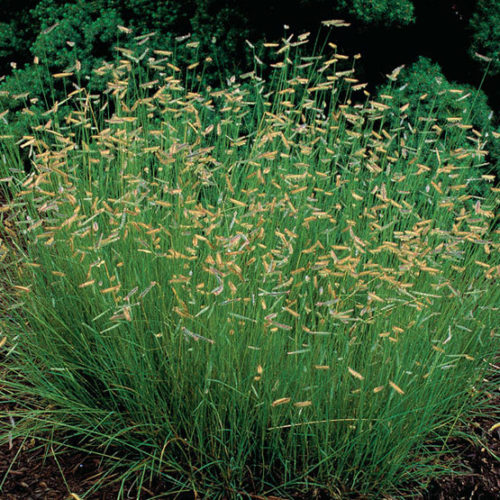
Bouteloua gracilis 'Hachita' ('Hachita' Blue Grama Grass)

Bouteloua gracilis 'Hachita' Photo/Illustration: Susan Roth

(Based on 2 user reviews)

Rate this plant

Plant Showcase - from our advertisers


Hardiness Zones: 1 2 3 4 5 6 7 8 9 10 11
Botanical Name: Bouteloua gracilis 'Hachita' boo-tel-LOO-ah grah-SIL-iss Common Name: 'Hachita' Blue Grama Grass Synonyms: B. oligostachya, Chondrosum gracile Genus: Bouteloua
'Hachita' has narrow, blue-green leaves that form dense mounds. In summer, elongated seedheads add visual interest. This tough, drought-tolerant grass thrives in sand or clay soil with full-sun exposure. It needs a setting with good drainage, as it won't thrive in wet conditions. -Scott Vogt, Native grasses, Fine Gardening issue #124
Noteworthy characteristics: Plant ‘Hachita’ with darker perennials behind to show off its interesting seed heads.
Care: Grow in well-drained soil in full sun; cannot tolerate wet winters.
Propagation: Divide from mid-spring to early summer; sow seed in cold frames in spring.
Problems: Damping off, rust, head and leaf smuts, tar spot, fungal spots, root rot.
Height 1 ft. to 3 ft.;6 in. to 12 in.
Spread 6 in. to 12 in.
Growth Habit Clumps
Growth Pace Moderate Grower
Light Full Sun Only
Moisture Dry to Medium
Maintenance Moderate
Tolerance Deer Tolerant
Characteristics Native; Showy Foliage; Showy Seed Heads
Bloom Time Summer
Foliage Color Silver/Grey
Uses Beds and Borders, Ground Covers, Dried Flower, Naturalizing
Style Meadow Garden
Seasonal Interest Winter Interest, Summer Interest, Fall Interest
Type Grasses,Perennials,Natives

Plants you might also like

Sorghastrum nutans 'Indian Steel' Sorghastrum nutans 'Indian Steel'
(Indian grass)
Be the first to rate this plant
Hardiness Zones: 1 2 3 4 5 6 7 8 9 10 11

Golden yellow plumes and a vase-like form give 'Indian Steel' a refined look. On the flower spikes, bright yellow pollen sacs stand out against the darker seed heads. Metallic blue foliage morphs to a coppery tan shade after frost. 'Indian Steel' tolerates a range of soil types, including heavy clay. -Scott Vogt, Native grasses, Fine Gardening issue #124

Panicum virgatum 'Ruby Ribbons' Panicum virgatum 'Ruby Ribbons'
(Switch Grass)
Be the first to rate this plant
Hardiness Zones: 1 2 3 4 5 6 7 8 9 10 11

Panicum Ruby Ribbons’ soft blue-green foliage emerges in the spring on upright, clumping plants. The foliage takes on a wine-red color in early summer, which intensifies as the season progresses. Flower heads appear in late summer, followed by ornamental seed heads, which, if left uncut, provide long-lasting winter interest.

Panicum virgatum 'Prairie Fire' Panicum virgatum 'Prairie Fire'
(‘Prairie Fire’ red switchgrass)
(1 user review)
Hardiness Zones: 1 2 3 4 5 6 7 8 9 10 11

'Prairie Fire' is a distinctly red form of switchgrass. Blue-green spring foliage turns shades of deep red by early summer and butter yellow in late fall. The grass persists into winter. 'Prairie Fire' has a fibrous root system that grows to more than 10 feet deep, making it drought tolerant. -Scott Vogt, Native grasses, Fine Gardening issue #124

Tripsacum dactyloides Tripsacum dactyloides
(Eastern gamagrass)
Be the first to rate this plant
Hardiness Zones: 1 2 3 4 5 6 7 8 9 10 11

In early summer, slender stems are topped with flowers that produce a crop of jointed seeds. Clumps get large and die out in the center, so division is necessary. Autumn frosts turn the leaves attractive shades of red-bronze. -Scott Vogt, Native grasses, Fine Gardening issue #124

Andropogon gerardii 'Pawnee' Andropogon gerardii 'Pawnee'
(Big bluestem, turkeyfoot)
Be the first to rate this plant
Hardiness Zones: 1 2 3 4 5 6 7 8 9 10 11

'Pawnee' has an upright habit and warm fall colors that persist into winter. This refined offbig bluestem has the bluish purple stems typical of the genus. In late summer, Purplish red flowers appear in groups of three or six, which look like a turkey foot—hence the nickname: "Turkey Foot Grass." The root system that can extend down more than 10 feet. Each year, a third of these roots die, opening up channels for water. -Scott Vogt, Native grasses, Fine Gardening issue #124