Anemone blanda (Grecian windflower)

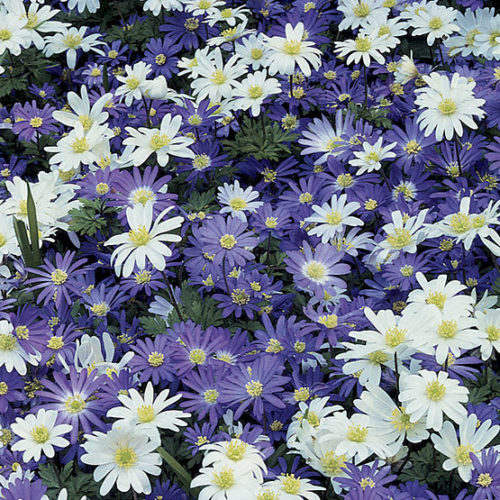
Anemone blanda Photo/Illustration: Courtesy of White Flower Farm

(Based on 1 user review)

Rate this plant

Plant Showcase - from our advertisers


Hardiness Zones: 1 2 3 4 5 6 7 8 9 10 11
Botanical Name: Anemone blanda ah-NEM-oh-nee BLAN-dah Common Name: Grecian windflower Genus: Anemone
This plant produces a great low-growing mat of flowers. The cheerful starlike blossoms come in pink, blue, and white, and the attractive finely cut leaves disappear soon after flowering.
Care: Provide full sun to part shade and moist but well-drained soil. Best planted en masse (hundreds to thousands). Requires a dry dormancy after flowering. Sandy soil is a plus.
Propagation: Sow seed in containers when ripe (germination is slow and erratic). Divide autumn flowering plants in spring or autumn (take root cuttings in spring) and grow on for one year in a pot. Separate rhizomes or rhizomatous plants in spring. Separate tubers in summer when dormant.
Problems: Leaf gall, downy mildew, leaf and stem smut, and rust are common. Caterpillars, slugs, and flea beetles.
Height 6 in. to 12 in.
Spread 6 in. to 12 in.
Growth Habit Spreads
Moisture Dry to Medium
Maintenance Low
Characteristics Showy Flowers
Bloom Time Spring
Flower Color Blue Flower; Pink Flower; White Flower
Uses , Beds and Borders, Ground Covers, Naturalizing
Style , Cottage Garden, Woodland Garden
Seasonal Interest , Spring Interest, Summer Interest
Type ,Perennials

Plants you might also like

no image available Claytonia virginica
(Spring beauty)
Be the first to rate this plant
Hardiness Zones: 1 2 3 4 5 6 7 8 9 10 11

This low-growing, spring-blooming succulent touts 5-petaled, pale-pink striped flowers with strap-like foliage that continues to grow after bloom but disappears in late spring when the plants go into dormancy. It can literally carpet the ground in early spring, giving the impression of a light dusting of snow. Its flowers open when the sun is out and close when it is cloudy.

Corydalis solida Corydalis solida
(Fumewort)
(1 user review)
Hardiness Zones: 1 2 3 4 5 6 7 8 9 10 11

This species produces mauve-pink, purple, or white flower spikes in spring over deeply divided gray-green leaves that are barely 10 inches tall. 

Aquilegia vulgaris Aquilegia vulgaris
(Granny’s bonnet)
Be the first to rate this plant
Hardiness Zones: 1 2 3 4 5 6 7 8 9 10 11

Usually this plant produces nodding blue and white flowers, but color variation is common in this species.

Corydalis lutea Corydalis lutea
(Yellow corydalis)
(3 user reviews)
Hardiness Zones: 1 2 3 4 5 6 7 8 9 10 11

This species has bluntly spurred golden yellow flowers from late spring to early fall. Its pale green, glaucous leaves form compact, ferny mounds.

Clematis integrifolia Mongolian Bells™ Clematis integrifolia Mongolian Bells™
Be the first to rate this plant
Hardiness Zones: 1 2 3 4 5 6 7 8 9 10 11

Clematis integrifolia is no longer only blue. This selection produces progeny with pink, white, and lavender blooms from midspring until late summer. The flowers are followed by attractive seed heads in fall. It has a compact, herbaceous form and grows to just 10 to 14 inches tall.