
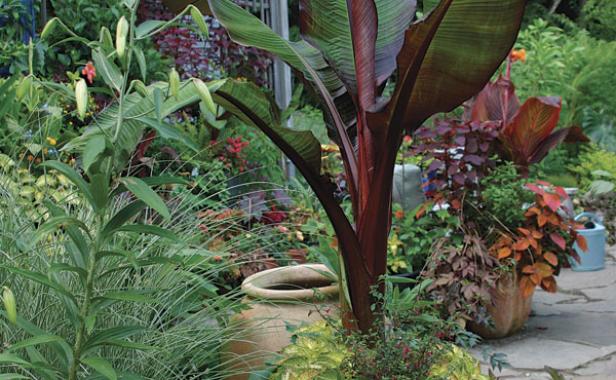
Before I ever had a garden, I was obsessed with growing tropical houseplants. When I finally started tending my own patch of earth, I turned to bolder breeds of tropicals that I could grow as annuals in my USDA Hardiness Zone 6 garden. I instantly loved their bright colors, big architecture, and sheer exuberance. It wasn’t long before I faced the challenge of bringing these robust treasures indoors during late fall to keep them alive and ready to grow even larger the following spring.
I didn’t let my lack of a greenhouse deter me. In the years since, I’ve developed three basic methods for keeping tropicals and tender perennials alive through the winter. Some I store in almost total dormancy in a cool, dark place; some stay in cool but bright conditions; and a lucky few spend winter in a warm, bright setting. None of my methods are foolproof, so I always expect a few casualties. Aside from watering plants that spend the winter in active growth, there’s not much time or work involved.
Warm, bright surroundings are a safe bet
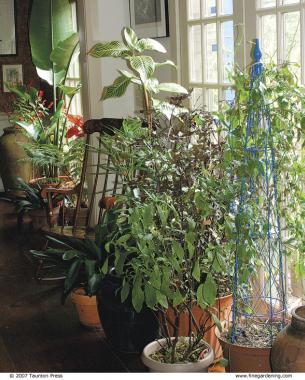
The easiest way to overwinter tender perennials and tropicals is in a warm, bright setting, such as a sunny indoor windowsill. Deciding what gets the prized space near a French door or large window is a matter of horticultural triage. The chosen few are usually plants I don’t yet have a clue how to overwinter (I usually take cuttings from these in early summer so I that can test another overwintering method on the offspring) or those that will be handsome houseplants.
Before the season’s first frost, I bring the plants indoors and place them near a bright window with an eastern, southern, or western exposure. Sometimes I cut large plants back by half to two-thirds before I bring them in the house to reduce their size and slow them down. References usually suggest moving plants to a shady spot for a week or two and checking for pests or diseases before bringing the plants indoors, but I often skip that step and opt to do battle later should problems arise.
Winter care for these plants is simple. I water them whenever the soil dries out, and I give the pots a quarter turn every few weeks so the plants don’t get too lopsided from reaching toward the light. The dry indoor air can take a toll on tropical plants, so I provide additional humidity by grouping the plants in masses and misting frequently. If possible, I put the plants atop trays filled with gravel and water. Humidifiers help, too, as does turning the thermostat down to the mid-60s. Once the days start to lengthen again, I provide an occasional taste of diluted fertilizer.

Some plants will drop many of their leaves before sprouting anew with foliage sized more appropriately for the reduced light level. If your plants struggle due to the lack of bright, natural light, consider supplementing the available light with some type of grow light.
Although I’m excited when spring finally arrives, I don’t rush to get plants outdoors. Their first prolonged exposure to direct sunlight may burn foliage and kill new growth. I slowly acclimate plants to the outdoors by setting them out on warm, cloudy days in early spring.
Once outdoor temperatures stay warm and the likelihood of frost has passed, I place plants in a shady spot for a week or so. I then spend at least two weeks gradually exposing them to full sun. When I’m finally ready to position a plant in the garden, I try to wait for several days of clouds and rain just as an added precaution. Any plants that appear leggy, I usually trim back and use the cuttings to propagate new plants.
Cool, bright conditions work for plants that can take a light frost
Learning in which indoor areas plants can overwinter has required some trials and more than a few errors, but I’ve learned to take cues from a plant’s native habitat and try my best to replicate it. It helps to know if it naturally grows in the tropics or subtropics, at high altitude, or in a place with distinct dry and wet seasons.
A cool (temperatures in the high 40s to low 50s), bright area hosts a limited range of plants, but it has proven my best bet for plants that are resistant to a light frost and native to more-temperate subtropical areas or to mountainous tropical regions. But even without a clue to a plant’s provenance, it’s worth giving almost anything a try. After all, the worst that can happen is that it will die, which it otherwise would do for certain.
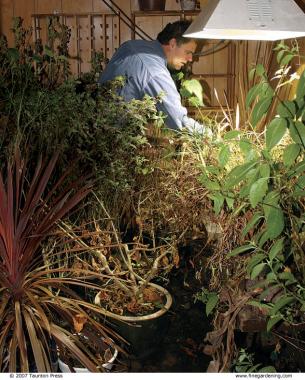
For my cool, bright conditions, I use an area in my basement that is illuminated by fluorescent lights or high-intensity discharge lamps on timers. Plants stored this way get basically the same treatment as those stored in warm, bright areas: Water them when soil is dry, turn the pots regularly to prevent uneven growth, and carefully reintroduce them to full-sun conditions in spring.
Although most plants in cool, bright settings don’t grow much at all and appear in a kind of suspended animation, a few eventually drop all their leaves. If that happens, move them right into cool, dark storage to ride out the rest of the winter. This is where I often discover which plants can enter a deep dormancy akin to that experienced by plants native to my setting.
Be prepared to fend off whiteflies and mealybugs. A dab of rubbing alcohol diluted with an equal part of water on any infestations should do the trick; a spray of horticultural oil or soap works, too.
Cool, dark settings are perfect for plants that go dormant
Overwintering tender plants in a cool, dark area is my preferred method because it requires virtually no effort during the winter months. Many tropical plants have a dormant period, triggered not by the onset of winter but by the arrival of a dry season. So if you can trick plants into thinking a dry season is coming, they’ll ease into dormancy. Over the years, I’ve discovered a host of plants that can sail through winter without light, water, and sometimes even soil.
In my house, I use my basement, where winter temperatures are cold but stay above freezing. If you don’t have a basement, you could try an unheated sunporch, attic, or garage. It is important, however, to treat bulbous plants (grown from tubers, rhizomes, or bulbs) slightly different than plants with fleshy leaves and stems.
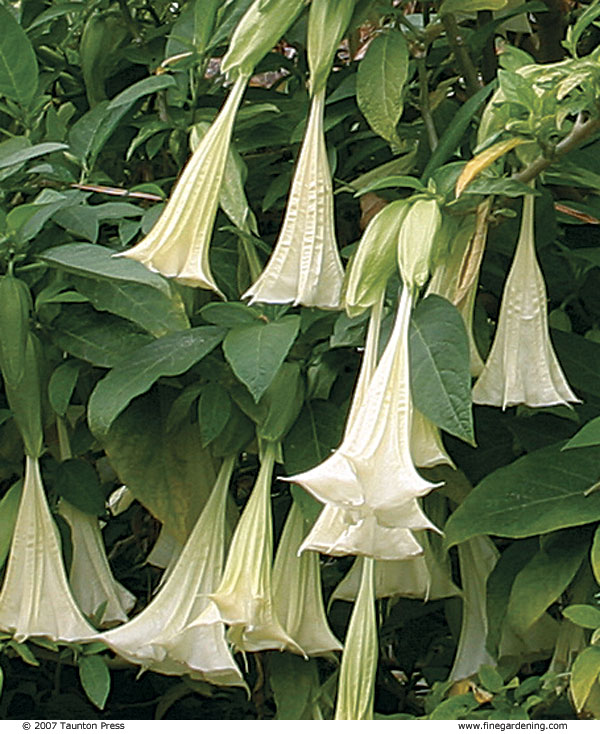
In late summer, I taper off the supplemental watering and fertilizing of shrubby plants with fleshy stems and foliage, such as angels’ trumpets or bananas, to encourage them to slow their growth. Just before the first hard frost, I cut them back gently and haul them to the basement. That’s it. A few will eventually drop their leaves, which I clean up when I get the chance.

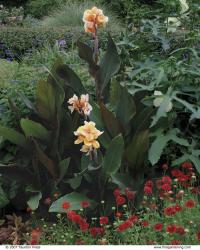
Photo: Melissa Lucas
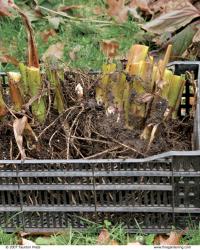
Bulbous plants receive a different treatment. After a hard frost, I cut off the blackened foliage and toss it into the compost heap. I then carefully dig up the plants using a pitchfork to avoid slicing into the bulb, tuber, or rhizome. Wounds provide entry points for diseases or fungal infection. For the same reason, I keep bulbous plants as intact as possible; spring—not fall—is the time to divide rhizomes or take offsets from bulbs and tubers.
I store and label bulbous roots in shallow plastic crates, cardboard boxes, or large empty pots. I don’t bother bedding them in damp peat or sand as many references suggest. My basic rule of thumb for storing dormant plants is the drier, the better. Rot and fungal diseases can run rampant through bulbs, rhizomes, and especially tubers if they’re stored while damp. Before setting the roots or rhizomes in their container, I shake off the soil—whatever falls off readily is enough. Then I turn the bulbs every couple of weeks in order to dry them thoroughly. Dormant plants can desiccate and die during months of storage, so if they ever look too crinkly or overly dry, I give them a heavy misting of water—just enough to keep them from shriveling.
The trickiest time of year for plants stored in cool, dark conditions is early spring. Even in a basement lair, plants seem to respond to warming temperatures and lengthening days, and a few eager beavers will put up new growth and attract aphids. Those that are most advanced, I pot up and place in a cold frame. The rest typically remain leafless and can be potted up or planted in the ground and exposed to full sun after the danger of hard frost has passed. Lately, however, I’ve been setting up a plastic portable greenhouse for a month or two in spring to give some plants a head start.
Which plants go where
There are no hard-and-fast rules when it comes to overwintering. As you experiment, you will find that you can use more than one method for a species. Here are some of the plants that I store using these techniques.
Warm and bright


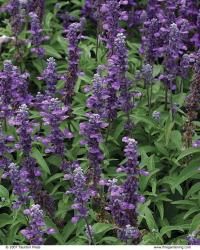
1. Alternantheras (Alternanthera spp. and cvs., Z 9–15)
2. Begonias (Begonia spp. and cvs., Z 13–15)
3. Birds of paradise (Strelitzia spp. and cvs., Z 11–15)
4. Coleus (Solenostemon scutellarioides cvs., Z 11–12)
5. Dense-flowered loosestrife (Lysimachia congestiflora
and cvs., Z 6-9)
6. Elephant’s ears (Alocasia, Colocasia, and Xanthosoma
spp. and cvs., Z 8–15)
7. Golden trumpets (Allamanda cathartica and cvs., Z 14–15)
8. Gold vein plant (Sanchezia speciosa, Z 14–15)
9. Hibiscus (Hibiscus spp. and cvs., Z 10–15)
10. Oleanders (Nerium oleander and cvs., Z 13–15)
11. Passionflowers (Passiflora spp. and cvs., Z 6–15)
12. Plectranthus (Plectranthus spp. and cvs., Z 10–15)
13. Sages (Salvia spp. and cvs., Z 5–15)
Cool and bright
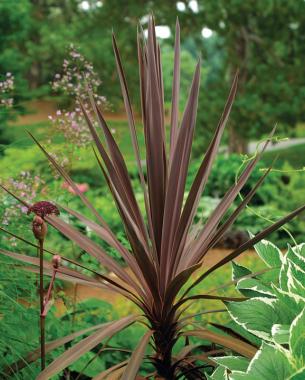

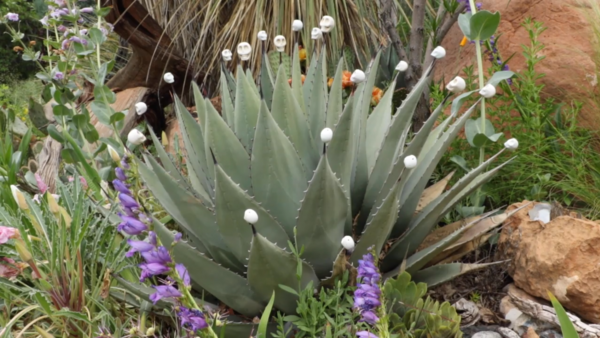
14. Agaves (Agave spp. and cvs., Z 9–15)
15. Cestrums (Cestrum spp. and cvs., Z 8–15)
16. Clivias (Clivia spp. and cvs., Z 9–15)
17. Cordylines (Cordyline spp. and cvs., Z 9–12)
18. Crinums (Crinum spp. and cvs., Z 8–11)
19. Flowering maples (Abutilon spp. and cvs., Z 8–11)
20. Honey bush (Melianthus major, Z 8–11)
21. New Zealand flaxes (Phormium spp. and cvs., Z 8–11)
Cool and dark
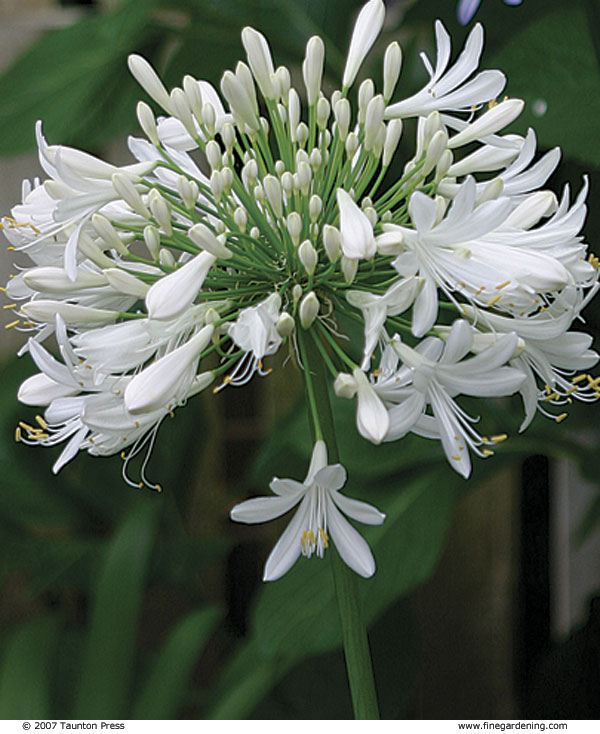

22. African lilies (Agapanthus spp. and cvs., Z 6–15)
23. Angels’ trumpets (Brugmansia spp. and cvs., Z 11–15)
24. Bananas (Musa and Ensete spp. and cvs., Z 8–15)
25. Caladiums (Caladium bicolor cvs., Z 15)
26. Calla lilies (Zantedeschia spp. and cvs., Z 8–15)
27. Cannas (Canna spp. and cvs., Z 8–11)
28. Dahlias (Dahlia cvs., Z 9–11)
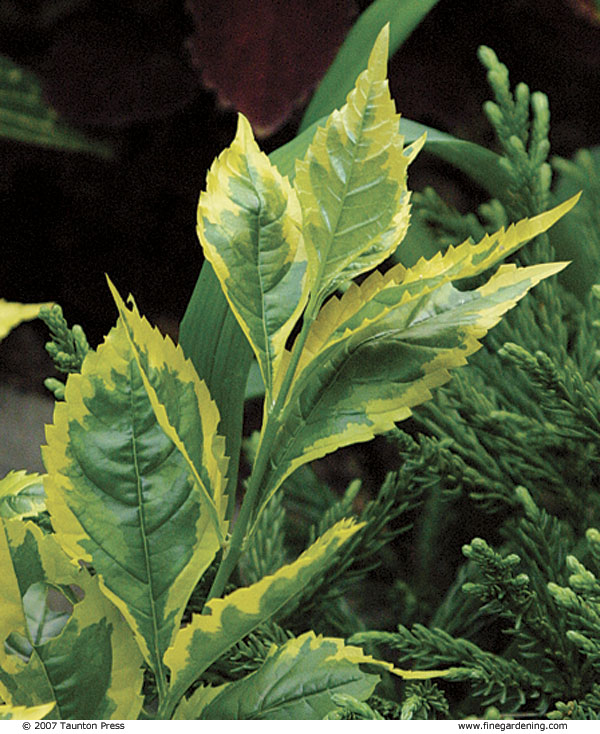
29. Durantas (Duranta erecta and cvs., Z 11–12)
30. Ginger lilies (Hedychium spp. and cvs., Z 7–15)
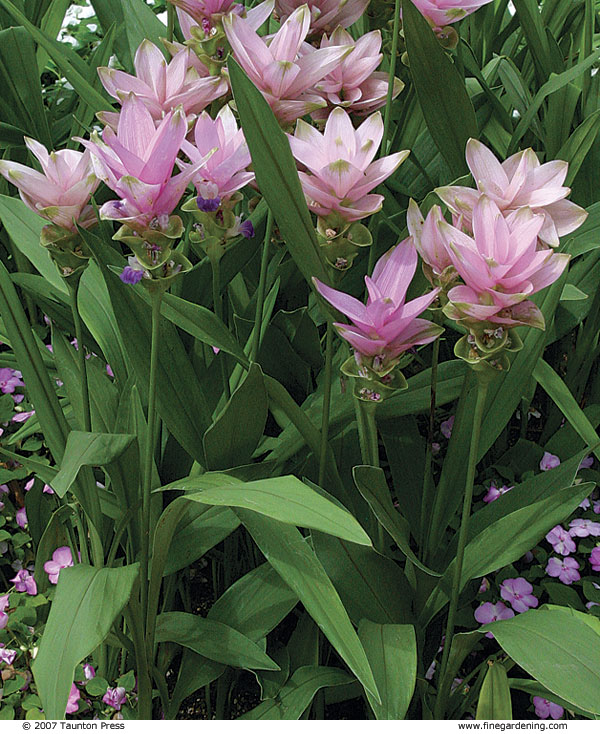
31. Gingers (Curcuma spp. and cvs., Z 11–15)
32. Glory bushes (Tibouchina spp., Z 9–15)
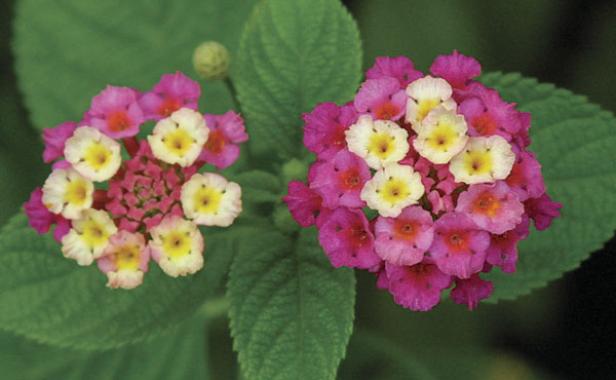
33. Lantanas (Lantana spp. and cvs., Z 9–15)
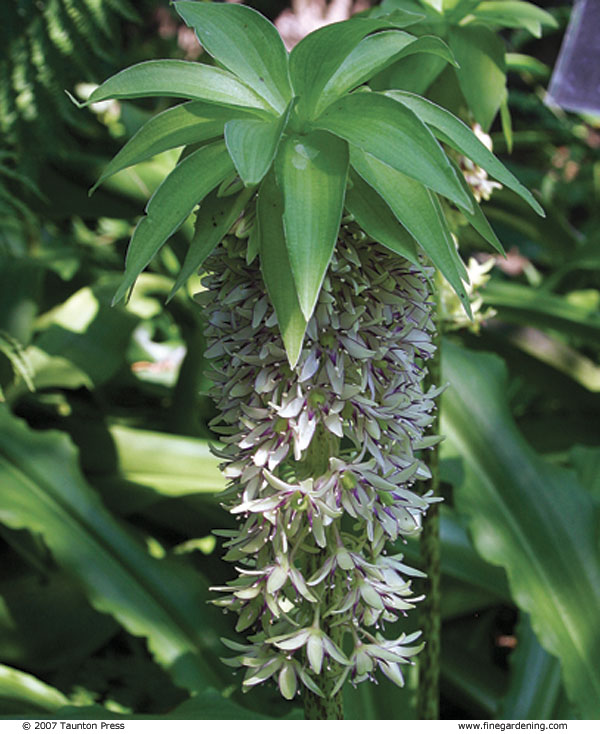
34. Pineapple lilies (Eucomis spp. and cvs., Z 8–11)
35. Tropical smoke bush (Euphorbia cotinifolia, Z 9–11)











Comments
Thank you ! you gave me some new ideas of which plants can survive in he attic - cool and dark.
never thought dahlias could do that.
anyway I will try and see what happens.. just like you said.
Can mandevill overwinter sucsessfully in an unheated garage or do I bring it indoors
Is it better to bring things in early well above their frost temperatures (like 20 degrees above -- in the 40's or 50's) or to wait until closer to the frost period of a plant so plants slow down their growth before coming in?
Log in or create an account to post a comment.
Sign up Log in