
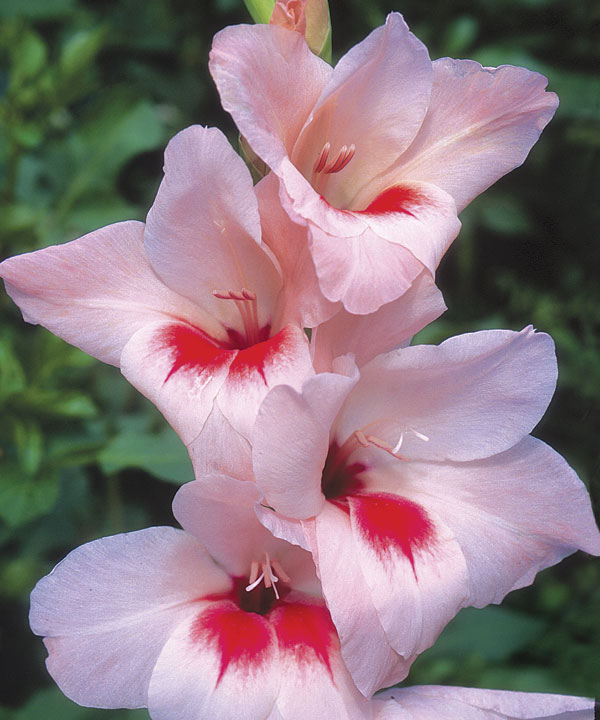
Unusual and gorgeous, antique dahlias, gladioli, and cannas deserve a place in every modern garden. These time-tested antique bulbs are tough and easy to grow. And like Grandma's quilt, Victorian houses, and 1950s Chevrolets, they connect us with our roots, add diversity to our lives, and offer complex emotional riches.
Sadly, many are also rare today, squeezed out of mainstream sources by changing fashions, mass-marketing, and our pursuit of the new. Their survival depends on gardeners like you. Plant a few in spring for fanciful flowers in summer. If you don't want to dig up the bulbs up and store them over the winter, treat these plants as annuals, as most gardeners do. Here are a few of my favorites to get you started.
Dahlia: the queen of autumn
Photo/Illustration: Jennifer Brown
'Jersey Beauty'
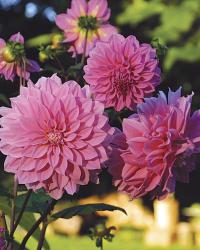
The 20th century's most celebrated dahlia is 'Jersey Beauty'. This towering, 4- to 6-foot-tall 1920s classic will produce so many lively, true-pink, classic dahlia flowers that you can cut all you want and still have a great garden display. This selection is exceptionally vigorous and beautiful.
'Kaiser Wilhelm'
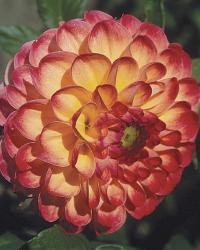
Of the maybe 10,000 named dahlias introduced in the 1800s—when dahlias ranked right up there with roses in popularity—only three survive. One of them is 'Kaiser Wilhelm', introduced in 1892. Its 3-inch flowers have neatly curled petals of soft custard-yellow brushed with burgundy, and a green button eye just like that of an old rose. The plant can grow to 5 feet.
'Kidd's Climax'
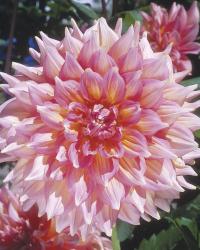
Dinner-plate dahlias are the giants of the flower garden. They're an acquired taste, for sure. The best loved of all is the pink-and-cream 'Kidd's Climax' of 1947, which has 10-inch flowers atop 4-foot-tall plants.
Canna: from subtle to wow
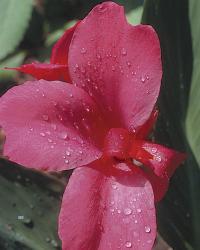
'Centenaire de Rozain-Bourcharlat'
This 3-foot-tall canna from the 1920s has impossibly deep, pure-rose flowers recalling orchids and leis.
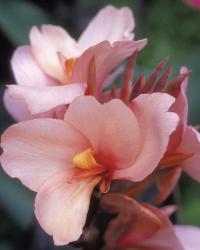
'Madame Paul Caseneuve'
A great canna to start with if you're convinced you hate them is 'Madame Paul Caseneuve', from 1902. The pearly-bronze leaves and almost purple stems of this 3- to 5-foot-tall antique beauty are the perfect foil for its elegant, sensual flowers of soft pink shading to peach and apricot.
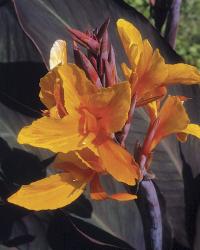
'Sémaphore'
Another canna that surprises many people is the great Victorian classic 'Sémaphore', from 1895. Growing to 6 or 7 feet, it features slender, dark-bronze leaves topped by spikes of narrow-petaled flowers of an unusual glowing color that's not quite yellow and not quite orange; perhaps flickering tongues of flame would be the best description.
Gladiolus: a farm-stand favorite
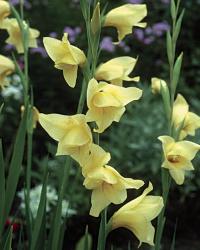
'Carolina Primrose'
This 3-foot-tall small-flowered perennial glad was originally collected from an abandoned homesite in North Carolina. Pure yellow with a wildflowery grace, it seems to be a form of a wild South African glad introduced about 1900 as Gladiolus primulinus. It has survived temperatures as cold as -22°F in my Ann Arbor garden.
'Atom'
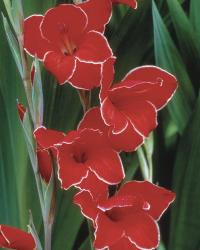
A glad for people who would normally never grow them, 'Atom' is about half the size of regular varieties, growing to maybe 3 feet tall. This 1946 classic blends easily into perennial borders, and it won't get lost because its flowers are blazing red cooled by a thin, silvery edge.
'Fidelio'
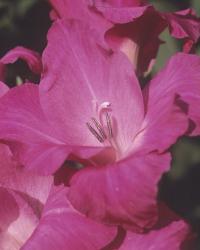
This 3- to 4-foot-tall glad has deep, luminous, purplish-rose flowers. It dates from 1959 and is called 'Fidelio' after Beethoven's joyous opera.







Comments
Log in or create an account to post a comment.
Sign up Log in