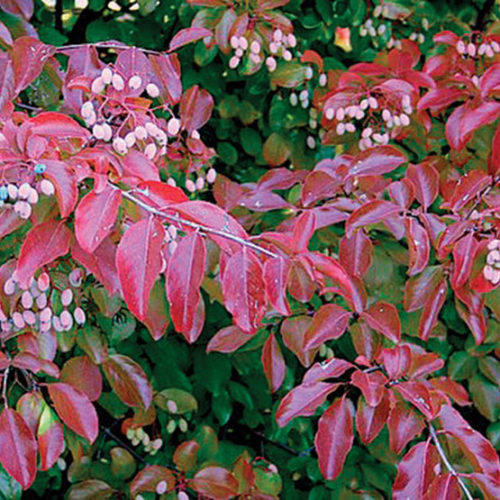
Viburnum rufidulum (Rusty blackhaw viburnum)

Viburnum rufidulum Photo/Illustration: Kristina Jensen, Nebraska Statewide Arboretum


Be the first to rate this plant

Hardiness Zones: 1 2 3 4 5 6 7 8 9 10 11
Botanical Name: Viburnum rufidulum vy-BURN-um roo-FID-yew-lum Common Name: Rusty blackhaw viburnum Genus: Viburnum
While North American native viburnums occur most commonly in the eastern United States, rusty blackhaw viburnum flirts with the edge of the Plains. One of the most drought-tolerant species in the genus, rusty blackhaw viburnum has neither the showiest floral display nor heaviest fruit production. Still, its glossy, dark green, leathery foliage is reason enough to grow it; the rich burgundy tones of its fall foliage are icing on the cake.
Noteworthy characteristics: Leathery foliage; good fall color; U.S. native.
Care: Provide full sun to partial shade and moist, well-drained soil.
Propagation: Take greenwood cuttings in summer, or start from seed.
Problems: Infrequent.
Height 10 ft. to 15 ft.
Spread 10 ft. to 15 ft.
Light Full Sun to Part Shade
Moisture Medium Moisture
Maintenance Low
Tolerance Drought Tolerant
Characteristics Attracts Birds; Native; Showy Fall Foliage; Showy Fruit
Bloom Time Spring
Flower Color White Flower
Uses Beds and Borders, Naturalizing
Style Woodland Garden
Seasonal Interest Fall Interest
Type Shrubs

Plants you might also like

Photinia pyrifolia 'Brilliantissima' Photinia pyrifolia 'Brilliantissima'
(Red chokeberry)
Be the first to rate this plant
Hardiness Zones: 1 2 3 4 5 6 7 8 9 10 11

'Brilliantissima' rivals hollies (Ilex spp.) in the quantity and crimson color of its fruit. The quarter-inch-diameter, crab apple-like berries hang in clusters amid brilliant foliage that matures to scarlet. Like the species, this cultivar develops into a handsome, multistemmed, vase-shaped shrub that reaches 8 to 12 feet tall and about half as wide.

no image available Cornus drummondii
(Roughleaf dogwood)
Be the first to rate this plant
Hardiness Zones: 1 2 3 4 5 6 7 8 9 10 11

This dogwood can be classified as either a deciduous shrub or small tree. Appealing creamy white flowers appear in late spring and become attractive clusters of milky white fruit in fall. The first cold front often turns the leaves a dark burgundy, and the winter stem tips have a glossy mahogany hue.

Viburnum nudum Viburnum nudum
(Swamp haw, Smooth witherod)
Be the first to rate this plant
Hardiness Zones: 1 2 3 4 5 6 7 8 9 10 11

This plant produces a myriad of tiny white flowers set in wide, stalked flower heads. The white flowers appear in early summer, then mature to egg-shaped berries that turn from green to creamy-pink, deepening throughout the summer and ending in a blue-black hue in autumn. Plants grow 12-15 feet tall and 6 feet wide.

Viburnum prunifolium Viburnum prunifolium
(Blackhaw Viburnum)
Be the first to rate this plant
Hardiness Zones: 1 2 3 4 5 6 7 8 9 10 11

Blackhaw Viburnum is a large shrub or small tree with clusters of creamy white flowers followed by pink-rose berries, which birds love to eat. Its distinctive bronze-green foliage on reddish purple stems turns blue-black in the fall. Blackhaw grows to 12 to 15 feet high and 8 to12 feet wide.

Ilex decidua Ilex decidua
(Possumhaw holly)
Be the first to rate this plant
Hardiness Zones: 1 2 3 4 5 6 7 8 9 10 11

While the fresh green leaves and smooth, light gray stems are enough to make possumhaw holly an attractive shrub, the appeal of this plant is more evident in late fall. Bunches of small berries form along the branches and turn bright red as the leaves fall off. Only female plants bear fruit (plant at least one male plant for best berry production), which finally becomes palatable to wildlife in the early spring. Possumhaw tends to sucker from the roots, so it's best to allow it to form a multitrunk screen.