previous
  • Containers as Focal Points
    Containers as Focal Points
  • Building a Compost Bin
    Building a Compost Bin
  • NEW Video Series: There's a Better Way
    NEW Video Series: There's a Better Way
  • Stylish Shady Containers
    Stylish Shady Containers
  • Comfortable Alfresco Dining
    Comfortable Alfresco Dining
  • Mulch for a Healthy Garden
    Mulch for a Healthy Garden
  • Fragrant Plants for Pathways
    Fragrant Plants for Pathways
  • Garden Confidential: A Plant Walks into a Bar
    Garden Confidential: A Plant Walks into a Bar
  • Dwarf Citrus Trees
    Dwarf Citrus Trees
  • Pretty in Pink
    Pretty in Pink
  • Lawn Alternatives
    Lawn Alternatives
  • Make a Succulent Topiary
    Make a Succulent Topiary
  • In Pursuit of the Perfect Potting Shed
    In Pursuit of the Perfect Potting Shed
  • 6 Tips for Weed Control
    6 Tips for Weed Control
  • Plants that Spark!
    Plants that Spark!
  • Thoughts From a Foreign Field
    Thoughts From a Foreign Field
  • Indeterminate or Determinate Tomatoes?
    Indeterminate or Determinate Tomatoes?
  • Plant an Easy-to-Water Strawberry Jar
    Plant an Easy-to-Water Strawberry Jar
  • Slideshow: Beautiful Clematis
    Slideshow: Beautiful Clematis
  • Colorful Selections for Shade
    Colorful Selections for Shade
  • Save Money by Growing Your Own
    Save Money by Growing Your Own
  • Elephant's Ears
    Elephant's Ears
  • Homegrown / Homemade
    Homegrown / Homemade
  • Designing with Curved Terraces
    Designing with Curved Terraces
  • Fast-Growing Trees for Impatient Gardeners
    Fast-Growing Trees for Impatient Gardeners
next

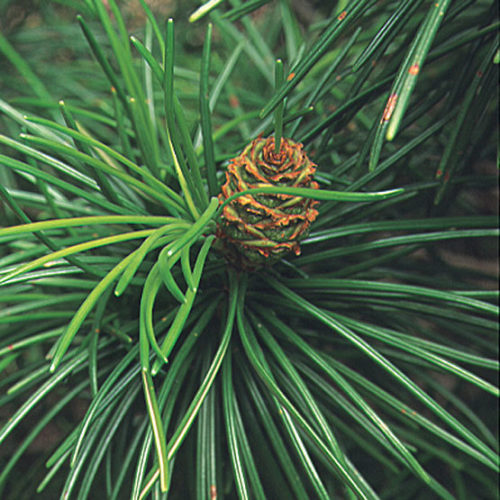
Sciadopitys verticillata (Japanese umbrella pine)

Sciadopitys verticillata Photo/Illustration: Steve Silk


Be the first to rate this plant

Plant Showcase - from our advertisers


Hardiness Zones: 1 2 3 4 5 6 7 8 9 10 11
Botanical Name: Sciadopitys verticillata Common Name: Japanese umbrella pine Genus: Sciadopitys
This glorious conifer constitutes the sole member of both its genus and plant family. It is without a peer in its beauty; on a mature specimen, its rich needles compose a sculpture of form, texture, and color that is unrivaled. The foliage develops a bronzy tint in winter. While it often grows to 30 feet in cultivation and 90 feet in the wild, its slow-growing nature inspires patience.
Noteworthy characteristics: Named for the whorls of shiny, deep-green foliage encircling its branches like the ribs of an umbrella, this evergreen stands out in any crowd.
Care: Grow in average, moist but well-drained soil in full sun with some shade at midday, or partial shade.
Propagation: Because of its slow growth it is best to purchase a sizable plant if possible. Sow seed in spring and root semi-ripe cuttings in summer.
Problems: Infrequent.
Height Over 30 ft.
Spread 15 ft. to 30 ft.
Growth Pace Slow Grower
Light Full Sun Only
Moisture Medium Moisture
Maintenance Low
Tolerance Frost Tolerant
Characteristics Interesting Bark; Showy Foliage; Showy Seed Heads
Foliage Color Evergreen
Uses Beds and Borders, Screening, Specimen Plant/ Focal Point
Style Formal Garden, Rock Garden, Woodland Garden
Seasonal Interest Winter Interest, Spring Interest, Summer Interest, Fall Interest
Type Trees

Plants you might also like

Oxydendrum arboreum Oxydendrum arboreum
(Sourwood)
Be the first to rate this plant
Hardiness Zones: 1 2 3 4 5 6 7 8 9 10 11

Sourwood, the lone species of the genus, is found in woodlands and along streams of eastern North America. This plant (named for the sour taste of its leaves) forms a pyramidal tree to 30 feet tall, with canoe-shaped, glossy leaves that turn vivid maroon, yellow, or purple in autumn. In late summer, its delicate panicles of fragrant, urn-shaped flowers spray forward, decorating the tree in white. The blossoms, which resemble lily-of-the-valley, are followed by yellowish seed capsules that turn brown and persist into winter. It makes an outstanding specimen both for a prominent position and also for a naturalized setting.

Taxodium distichum and cvs. Taxodium distichum and cvs.
(Bald cypress)
(1 user review)
Hardiness Zones: 1 2 3 4 5 6 7 8 9 10 11

Its great beauty and variety of sizes and shapes makes this deciduous conifer a candidate for extensive use. Bald cypress is a tall, conical, almost columnar tree with pale brown, shallowly fissured bark. Its bright green needles become golden in the fall. The cultivar 'Monarch of Illinois' is shaped totally unlike the typical bald cypress, but shares its delicate foliage and warm-looking, ruddy bark. It has a large, rounded crown, like a maple. With an ultimate height of about 85 feet and spread to 65 feet, it is suited to large gardens. A smaller cultivar, 'Shawnee Brave', has a narrow, pyramidal growth habit, an ultimate height of 70 feet, and a span of up to 18 feet.

no image available Pinus strobus 'Fastigiata'
(Eastern white pine)
Be the first to rate this plant
Hardiness Zones: 1 2 3 4 5 6 7 8 9 10 11

This robust evergreen tree has a narrowly columnar crown with ascending branches, slender gray-green leaves, and smooth gray bark. Tapered green female cones ripen to brown.

Acer rubrum ‘Red Sunset’ Acer rubrum ‘Red Sunset’
(Red maple, Scarlet maple)
Be the first to rate this plant
Hardiness Zones: 1 2 3 4 5 6 7 8 9 10 11

This is a rounded to open-crown deciduous tree up to 70 feet tall and 30 feet wide with early, brilliant red fall coloring.

Pseudolarix kaempferi Pseudolarix kaempferi
(Golden larch)
Be the first to rate this plant
Hardiness Zones: 1 2 3 4 5 6 7 8 9 10 11

The golden larch is a lovely deciduous conifer whose lacy foliage turns golden in autumn. Its bright green needles are slightly larger than those of the European larch. Golden larch becomes a large pyramidal tree with an ultimate height of about 50 feet in cultivation. Its broad, horizontal branches are arranged in an open growth habit. In a big garden, it makes a neat specimen that never fails to attract attention.