previous
  • Building a Compost Bin
    Building a Compost Bin
  • Slideshow: Beautiful Clematis
    Slideshow: Beautiful Clematis
  • In Pursuit of the Perfect Potting Shed
    In Pursuit of the Perfect Potting Shed
  • Fine Gardening's Tip Off!
    Fine Gardening's Tip Off!
  • Elephant's Ears
    Elephant's Ears
  • Comfortable Alfresco Dining
    Comfortable Alfresco Dining
  • Containers as Focal Points
    Containers as Focal Points
  • NEW Video Series: There's a Better Way
    NEW Video Series: There's a Better Way
  • Colorful Selections for Shade
    Colorful Selections for Shade
  • Stylish Shady Containers
    Stylish Shady Containers
  • Dwarf Citrus Trees
    Dwarf Citrus Trees
  • Fast-Growing Trees for Impatient Gardeners
    Fast-Growing Trees for Impatient Gardeners
  • Mulch for a Healthy Garden
    Mulch for a Healthy Garden
  • Plant an Easy-to-Water Strawberry Jar
    Plant an Easy-to-Water Strawberry Jar
  • Fragrant Plants for Pathways
    Fragrant Plants for Pathways
  • Designing with Curved Terraces
    Designing with Curved Terraces
  • Garden Confidential: A Plant Walks into a Bar
    Garden Confidential: A Plant Walks into a Bar
  • Save Money by Growing Your Own
    Save Money by Growing Your Own
  • Pretty in Pink
    Pretty in Pink
  • Homegrown / Homemade
    Homegrown / Homemade
  • Indeterminate or Determinate Tomatoes?
    Indeterminate or Determinate Tomatoes?
  • Thoughts From a Foreign Field
    Thoughts From a Foreign Field
  • 6 Tips for Weed Control
    6 Tips for Weed Control
  • Make a Succulent Topiary
    Make a Succulent Topiary
  • Meet Our Mini-Magazines
    Meet Our Mini-Magazines
next

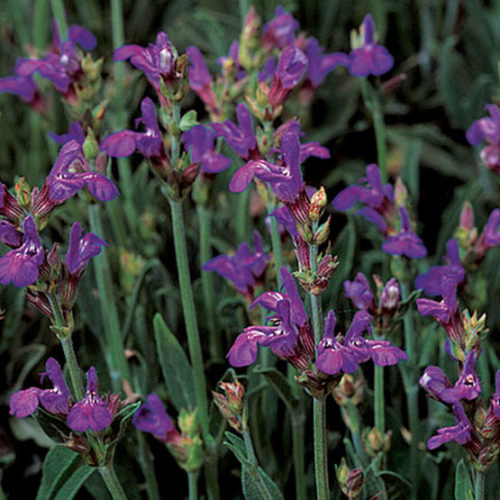
Salvia officinalis 'Minimus' (Dwarf common sage)

Salvia officinalis 'Minimus' Photo/Illustration: Courtesy of High Country Gardens


Be the first to rate this plant

Plant Showcase - from our advertisers


Hardiness Zones: 1 2 3 4 5 6 7 8 9 10 11
Botanical Name: Salvia officinalis 'Minimus' SAL-vee-ah oh-fi-shi-NAH-lis Common Name: Dwarf common sage Genus: Salvia
Dwarf common sage is a tightly compact form of the culinary common sage (S. officinalis), which is notable for its narrow, fragrant, gray-green leaves and lavender-blue, white-lined flowers in late spring or early summer. It is extremely xeric and does not self-seed. 'Minimus' grows to just 15 to 18 inches tall.
Care: Provide full sun to partial shade and most any well-drained soil. Deadheading flowers will encourage more blooms.
Propagation: Take softwood cuttings at any time or divide in early spring.
Problems: Salvias are generally trouble-free, but watch for the occasional aphid, spider mite, or whitefly.
Height 1 ft. to 3 ft.
Growth Habit Clumps
Light Full Sun to Part Shade
Moisture Adaptable
Maintenance Low
Tolerance Drought Tolerant
Characteristics Attracts Butterflies; Attracts Hummingbirds; Fragrant Foliage; Showy Flowers
Bloom Time Early Summer; Late Spring
Flower Color Blue Flower; Purple/ Lavender Flower
Uses Beds and Borders
Style Cottage Garden, Rock Garden, Xeric Bed
Seasonal Interest Spring Interest, Summer Interest
Type Perennials

Plants you might also like

Salvia × sylvestris 'May Night' Salvia × sylvestris 'May Night'
(Meadow sage)
(5 user reviews)
Hardiness Zones: 1 2 3 4 5 6 7 8 9 10 11

This drought-tolerant perennial bears deep violet-blue flower spikes in early summer and then sporadically if spent flowers are removed promptly. It forms an erect clump 2.5 feet tall by 1.5 feet wide, with wrinkled, soft hairy leaves.

no image available Salvia nemorosa
(Sage)
Be the first to rate this plant
Hardiness Zones: 1 2 3 4 5 6 7 8 9 10 11

This drought-tolerant perennial produces flower spikes in shades of violet, purple, or white to pink, with purple bracts. It blooms from early summer to autumn; reblooming is most reliable if spent flowers are promptly deadheaded. It has wrinkled leaves and forms an erect clump 3 feet tall by 2 feet wide. This species is most noted for its many S. sylvestris hybrids.

no image available Salvia × sylvestris 'Blue Hill'
(Meadow sage)
(1 user review)
Hardiness Zones: 1 2 3 4 5 6 7 8 9 10 11

This drought-tolerant perennial bears abundant pure blue flower spikes in early summer and until fall if spent flowers are removed promptly. It forms an erect clump 20 inches tall by 18 inches wide, with wrinkled, softly hairy leaves.

Salvia nemorosa 'Caradonna' Salvia nemorosa 'Caradonna'
(Sage)
(5 user reviews)
Hardiness Zones: 1 2 3 4 5 6 7 8 9 10 11

This drought-tolerant perennial is noted for its vivid indigo flowers along deep purple-black stems, which gives it a bicolor appearance. It blooms in early summer and then sporadically if spent flowers are deadheaded. It forms an upright clump, with the flower spikes rising to 2 feet in height; its wrinkled, softly hairy leaves form a mound 1 foot high. Plants spread 1 or 2 feet wide. These are some of the showiest plants for containers and mixed borders. Butterflies love them. 

Nepeta × faassenii 'Walker's Low' Nepeta × faassenii 'Walker's Low'
(Catmint)
(11 user reviews)
Hardiness Zones: 1 2 3 4 5 6 7 8 9 10 11

This mound of lavender-blue flowers and aromatic, grayish green leaves up to 2 feet tall and 3 feet wide is great as edging or in a border, herb, or rock garden. It is an easy to grow, prolific bloomer that seems to be deer resistant. It blooms the whole summer and tolerates some shade. It also looks great with roses or on walls.