OR Browse All Plants
Be the first to rate this plant
Click on a thumbnail to see a full sized image
Cooks and gardeners alike are indebted to this evergreen perennial for the unique, pungent flavor and aroma that its gray-green leaves produce. This cultivar has leaves suffused with steely-gray purple. It forms a 1.5-foot-tall and wide bush with woody stems that may be trimmed back to newly emerging growth or strong stems in spring. In early to mid-summer, it sends up lavender-purple flower spikes; it has both ornamental and culinary qualities in an herb garden. It tolerates alkaline soils, but cannot survive wet winter conditions.
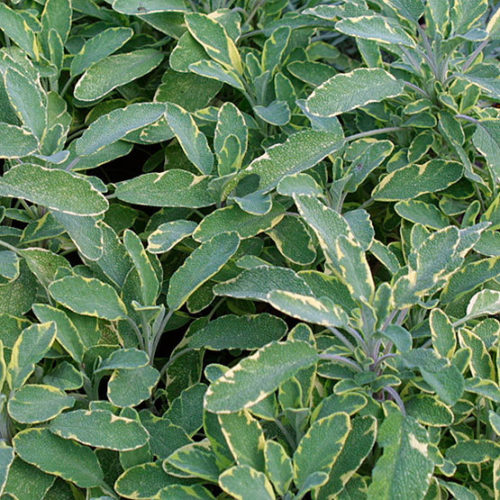
Cooks and gardeners alike are indebted to this evergreen perennial for the unique, pungent flavor and aroma that its gray-green leaves produce. This cultivar has ornamental value, too—green leaves with white margins which are suffused with pink or purple. It forms a 1- to 1.5-foot-tall and wide bush with woody stems that may be trimmed back to newly emerging growth or strong stems in spring. In early to mid-summer, it sends up lavender-purple flower spikes; it has both ornamental and culinary qualities in an herb garden. It is tolerant of alkaline soils, but cannot survive wet winter conditions.
Cooks and gardeners alike are indebted to this classic, evergreen perennial for the unique, pungent flavor and aroma that its gray-green leaves produce. It forms a 2.5-foot-tall by 3-foot-wide bush with woody stems that may be trimmed back to newly emerging growth or strong stems in spring. In early to mid-summer, it sends up lavender-purple flower spikes; it has both ornamental and culinary qualities in an herb garden. It tolerates alkaline soils, but not wet winter conditions.
Cooks and gardeners alike are indebted to this evergreen perennial for the unique, pungent flavor and aroma that its gray-green leaves produce. S. 'Berggarten' is more compact than the species, forming a 2-foot tall by 3-foot wide bush with woody stems that may be trimmed back to newly emerging growth or strong stems in spring. In early to mid-summer, it sends up purple flower spikes. It boasts attractively rounded leaves and, like the species, has both ornamental and culinary qualities in an herb garden. It tolerates alkaline soils, but not wet winter conditions.
This drought-tolerant perennial is noted for its vivid indigo flowers along deep purple-black stems, which gives it a bicolor appearance. It blooms in early summer and then sporadically if spent flowers are deadheaded. It forms an upright clump, with the flower spikes rising to 2 feet in height; its wrinkled, softly hairy leaves form a mound 1 foot high. Plants spread 1 or 2 feet wide. These are some of the showiest plants for containers and mixed borders. Butterflies love them.
Salvia officinalis 'Icterina'
Salvia officinalis 'Purpurascens'
Salvia officinalis 'Tricolor'
Salvia officinalis
Salvia officinalis 'Berggarten'
Great Plants, Vol.2Learn how to choose and use the best plant varieties for your gardenMore Info
Great Gardens, Vol. 2An insider's look at America's most beautiful gardensMore Info
Creating Beds and BordersCreating Eye-Catching Island Beds and BordersMore Info