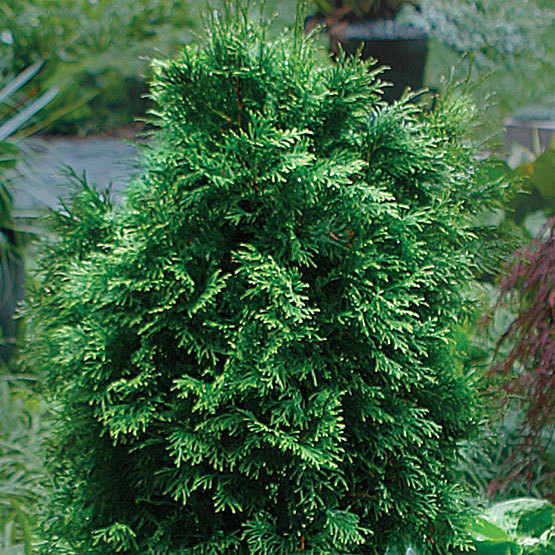
Thuja is a genus of coniferous trees from Eastern Asia and North America. They have fragrant, scaly, diamond-shaped needles and produce female and male cones on the same tree. They are suitable as specimens in lawns, for formal hedges, screening, and planted in small stands. Grow dwarf species in gravel or rock gardens and in foundation plantings. The sap may irritate skin.
Noteworthy CharacteristicsThese conifers make stately landscape specimens, large and small.
CareGrow in sunny or partially shaded sites and in a wide range of well-drained soil types. Does not like wet feet.
PropagationSow seed in late winter. Root semi-ripe cuttings in late summer.
ProblemsCaterpillars, bark beetle, weevils, mites, and scale insects are common. Butt rot, twig dieback, gray mold (Botrytis), mushroom root rot, and needle blights.