
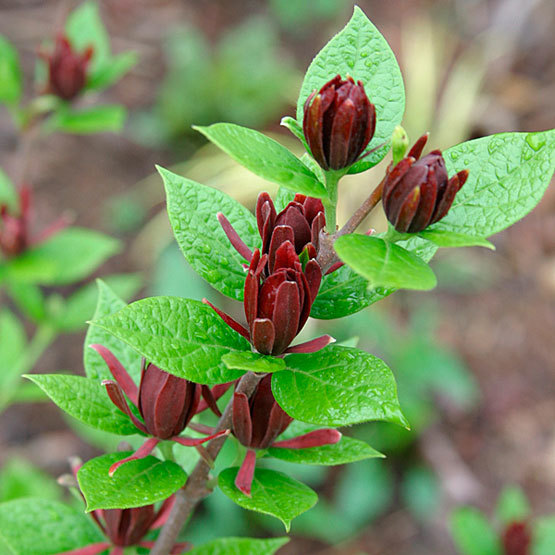
Genus Calycanthus (Allspice)

Calycanthus Calycanthus floridus Photo/Illustration: Steve Aitken
kal-ih-CAN-thus Common Name: Allspice
The genus Calycanthus is comprised of a few species of deciduous shrubs grown for their fragrant, usually red or brown flowers that look like waterlilies or magnolia flowers. They are native to woodlands and streambanks of the U.S. The foliage smells like cloves when crushed and sometimes turns yellow in the fall. Use Calycanthus in a border or as a specimen.
Noteworthy characteristics: Flowers look like waterlilies. Aromatic foliage. U.S. natives.
Care: Site in full sun and fertile, moist, humusy soil. In warm areas, plant in part shade. Prune when buds begin to swell in early spring by cutting back to a low permanent framework.
Propagation: Propagate from softwood cuttings in summer, by layering in fall, or from suckers in spring. Or, sow seed as soon as they ripen or in fall in an open frame.
Problems: Fungal leaf spots, powdery mildew, dieback.

Species, varieties and cultivars for genus Calycanthus

Calycanthus 'Venus' Calycanthus 'Venus'
('Venus' sweetshrub)
Be the first to rate this plant
Hardiness Zones: 1 2 3 4 5 6 7 8 9 10 11

This deciduous shrub to 8-10 feet tall and wide blooms from late spring through July with 3- to 4-inch-wide, white, fragrant, magnolia-like blossoms with purple centers. This shrub is somewhat deer resistant.

Calycanthus floridus Calycanthus floridus
(Carolina allspice, Strawberry shrub, Common sweetshrub)
Be the first to rate this plant
Hardiness Zones: 1 2 3 4 5 6 7 8 9 10 11

This deciduous shrub has a dense, rounded habit, growing 6 to 9 feet tall and as wide. Its unusual, waterlily-like, fragrant flowers combine the scent of strawberries, banana, and pineapple. Flowers appear in May and continuing blooming on and off into June and July. The dark green leaves and bark release a clove or camphor-like scent when crushed.


