
previous
  • Homegrown / Homemade
    Homegrown / Homemade
  • Slideshow: Beautiful Clematis
    Slideshow: Beautiful Clematis
  • Plant an Easy-to-Water Strawberry Jar
    Plant an Easy-to-Water Strawberry Jar
  • Designing with Curved Terraces
    Designing with Curved Terraces
  • NEW Video Series: There's a Better Way
    NEW Video Series: There's a Better Way
  • Plants that Spark!
    Plants that Spark!
  • Fast-Growing Trees for Impatient Gardeners
    Fast-Growing Trees for Impatient Gardeners
  • Stylish Shady Containers
    Stylish Shady Containers
  • Mulch for a Healthy Garden
    Mulch for a Healthy Garden
  • Lawn Alternatives
    Lawn Alternatives
  • Save Money by Growing Your Own
    Save Money by Growing Your Own
  • Thoughts From a Foreign Field
    Thoughts From a Foreign Field
  • In Pursuit of the Perfect Potting Shed
    In Pursuit of the Perfect Potting Shed
  • Elephant's Ears
    Elephant's Ears
  • Dwarf Citrus Trees
    Dwarf Citrus Trees
  • Fragrant Plants for Pathways
    Fragrant Plants for Pathways
  • Building a Compost Bin
    Building a Compost Bin
  • Indeterminate or Determinate Tomatoes?
    Indeterminate or Determinate Tomatoes?
  • Make a Succulent Topiary
    Make a Succulent Topiary
  • Colorful Selections for Shade
    Colorful Selections for Shade
  • Garden Confidential: A Plant Walks into a Bar
    Garden Confidential: A Plant Walks into a Bar
  • 6 Tips for Weed Control
    6 Tips for Weed Control
  • Comfortable Alfresco Dining
    Comfortable Alfresco Dining
  • Pretty in Pink
    Pretty in Pink
  • Containers as Focal Points
    Containers as Focal Points
next

Genus Aucuba

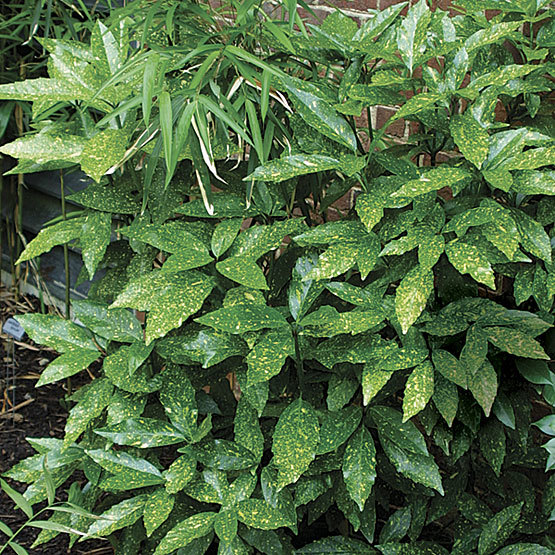
Aucuba Aucuba japonica Photo/Illustration: Jennifer Benner
ah-KEW-bah
The Aucuba genus is comprised of only a handful of species of evergreen shrubs originating from the Himalayas to East Asia. They are grown for their tolerance to tough conditions and full shade, and for their attractive leaves and large fruits. Aucuba make fine specimen plants, hedging, and screens.
Noteworthy characteristics: Bold leaves, large fruits. Tolerant of shade, dry soil, and pollution. Can also be grown as houseplants.
Care: Aucuba prefer shade where summers are very hot, but will grow in any soil (except waterlogged) in full sun or part to full shade. At the northern limit of hardiness, be sure to protect from winter sun and wind. If grown as a houseplant or outdoors in containers, water freely when in growth and fertilize monthly.
Propagation: Sow seed in containers in autumn using a cold frame, or root semi-ripe cuttings in summer.
Problems: Wet root rot, Southern blight, and fungal leaf spots may occur.

Species, varieties and cultivars for genus Aucuba

Aucuba japonica 'Variegata' Aucuba japonica 'Variegata'
(Gold-dust plant)
(4 user reviews)
Hardiness Zones: 1 2 3 4 5 6 7 8 9 10 11

The dense, glossy foliage of this evergreen plant is splattered with yellow. Gold-dust plant can be planted near nearby tree roots, and it responds well to pruning. Combine it with yellow-blooming or variegated plants for appealing color harmonies. -Debra Lee Baldwin, Regional Picks: Southern California, Fine Gardening issue #127

Aucuba japonica Aucuba japonica
(Japanese laurel)
(1 user review)
Hardiness Zones: 1 2 3 4 5 6 7 8 9 10 11

Aucuba are grown for their bold foliage, autumn fruit, and adaptability to shade, dry soil, pollution, and coastal conditions. A. japonica is a rounded, evergreen shrub with small, reddish purple flowers in spring, and red berries (on female plants) in fall. It grows to about 10 feet tall and wide. 'Crotonifolia' has leaves that look like they were speckled with yellow paint. 'Gold Dust' is female with heavy yellow speckling. 'Mr. Goldstrike' is male, more upright, and has gold-splashed leaves. Use as a hedge or specimen, in a container outdoors, or as an imposing houseplant.


