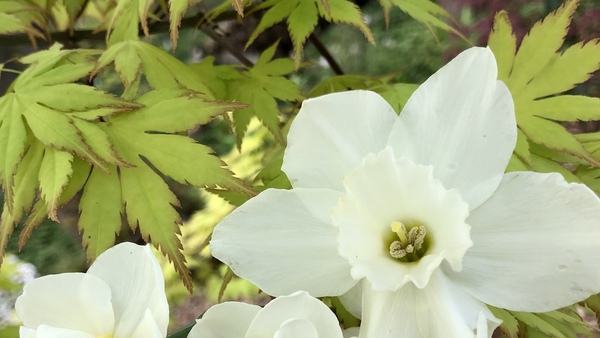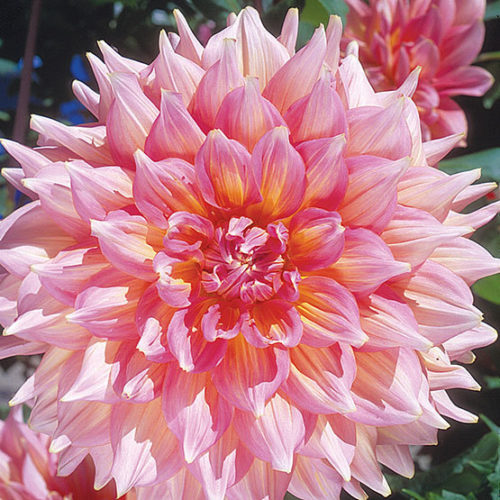
The pink-and-cream dinner-plate-sized ‘Kidd’s Climax’ of 1947 has 10-inch flowers atop 4-foot-tall plants.
Noteworthy CharacteristicsHuge blooms of a luscious blend of pink and creamy yellow. Sturdy and free-flowering.
CareFull sun and well-drained soil with plenty of organic matter. Fertilize weekly during growth. May need staking. Pinch, remove branches and buds, and deadhead to lengthen the flowering season.
PropagationIn late winter or early spring, start tubers in a greenhouse and take basal shoot cuttings. Or divide clumps into pieces, each with a shoot, and plant out after danger of frost has passed.
ProblemsAphids, stem borders, spider mites, caterpillars, earwigs, cucumber beetles, capsid bugs, flower thrips, planthoppers, slugs. Powdery mildew, impatiens necrotic spot, dahlia mosaic viruses, smut, fungal leaf spots, soft rot, crown gall, blossom blights (especially gray mold), and tomato spotted wilt virus.
- Genus : Dahlia
- Plant Width : 1 to 3 feet
- Zones : 10, 11, 9
- Plant Height : 3 to 6 feet
- Bloom Time : Early Fall, Fall, Late Summer, Summer
- Light : Full Sun
- Maintenance : High
- Moisture : Medium Moisture
- Growth Rate : Moderate
- Plant Type : Perennials
- Flower Color : Pink, Yellow
- Plant Seasonal Interest : Summer Interest