previous
  • In Pursuit of the Perfect Potting Shed
    In Pursuit of the Perfect Potting Shed
  • Thoughts From a Foreign Field
    Thoughts From a Foreign Field
  • Fragrant Plants for Pathways
    Fragrant Plants for Pathways
  • Colorful Selections for Shade
    Colorful Selections for Shade
  • Mulch for a Healthy Garden
    Mulch for a Healthy Garden
  • 6 Tips for Weed Control
    6 Tips for Weed Control
  • Homegrown / Homemade
    Homegrown / Homemade
  • Pretty in Pink
    Pretty in Pink
  • Dwarf Citrus Trees
    Dwarf Citrus Trees
  • Building a Compost Bin
    Building a Compost Bin
  • Containers as Focal Points
    Containers as Focal Points
  • Make a Succulent Topiary
    Make a Succulent Topiary
  • Comfortable Alfresco Dining
    Comfortable Alfresco Dining
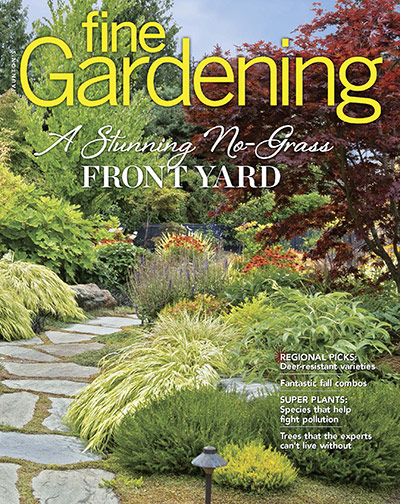
  • Lawn Alternatives
    Lawn Alternatives
  • Plants that Spark!
    Plants that Spark!
  • Designing with Curved Terraces
    Designing with Curved Terraces
  • Fast-Growing Trees for Impatient Gardeners
    Fast-Growing Trees for Impatient Gardeners
  • Elephant's Ears
    Elephant's Ears
  • Stylish Shady Containers
    Stylish Shady Containers
  • Garden Confidential: A Plant Walks into a Bar
    Garden Confidential: A Plant Walks into a Bar
  • Indeterminate or Determinate Tomatoes?
    Indeterminate or Determinate Tomatoes?
  • Slideshow: Beautiful Clematis
    Slideshow: Beautiful Clematis
  • NEW Video Series: There's a Better Way
    NEW Video Series: There's a Better Way
  • Plant an Easy-to-Water Strawberry Jar
    Plant an Easy-to-Water Strawberry Jar
  • Save Money by Growing Your Own
    Save Money by Growing Your Own
next

Browse Plants

Narrowed By:Type: Vines+ Flower Color: Purple/Lavender, White
Displaying 1 - 20 of 20 listings   Sort By: Sort
Actinidia kolomikta Actinidia kolomikta
(Variegated kiwi vine)
(1 user review)
Hardiness Zones: 1 2 3 4 5 6 7 8 9 10 11

Variegated kiwi vine is an attractive woody vine that tolerates shade. The male has lovely pink, white, and green variegated leaves and small flowers that are fragrant and cream-covered. This species needs both a male and female plant to produce its sweet, grape-sized fruit. The fruits have no fuzz, and the skin is soft and tender. Best fruit production is achieved in full sun. The cultivar 'Arctic Beauty' has smaller leaves but is hardy to Zone 3.

Asarina scandens Asarina scandens
(Figwort, Creeping snapdragon)
(2 user reviews)

A half-hardy perennial, this sophisticated climber grows to 8 feet tall. It has a profuse show of 1.5-inch indigo, violet, pink, or white flowers. It's great for the cold greenhouse or conservatory, and will often bloom until the end of the year unless there is a hard frost.

Clematis 'Ernest Markham' Clematis 'Ernest Markham'
(1 user review)
Hardiness Zones: 1 2 3 4 5 6 7 8 9 10 11

'Ernest Markham' is a vigorous, late-flowering climber with abundant small flowers in summer. Blossoms are rich magenta, 4 inches across, with blunt-tipped sepals and light chocolate anthers.

Clematis ‘Nelly Moser’ Clematis ‘Nelly Moser’
(2 user reviews)
Hardiness Zones: 1 2 3 4 5 6 7 8 9 10 11

'Nellie Moser' is easy to grow, producing large, flat flowers 6 to 8 inches in diameter with distinctive, gleaming lilac bars on each petal. This clematis blooms from May to late June, with a second, less profuse bloom in mid-August. Planted in a shady spot, the cheery pink-and-mauve-striped blossoms last for weeks instead of days.

Clematis alpina Clematis alpina
(Alpine clematis)
(1 user review)
Hardiness Zones: 1 2 3 4 5 6 7 8 9 10 11

Alpine clematis is one of the earliest clematises to bloom, in early May. It bears relatively small but delightful nodding, bell-shaped flowers, 1 to 1.5 inches in diameter, in a great variety of colors.

Clematis crispa Clematis crispa
(Marsh clematis, Blue jasmine, Curly clematis)
Be the first to rate this plant
Hardiness Zones: 1 2 3 4 5 6 7 8 9 10 11

A deciduous climber native to the southeastern United States, Clematis crispa bears lavender-blue, bell-shaped flowers with curly edges in summer. Its blooms are not profuse, but their elegant shape makes this plant a good choice for trellises, growing through shrubs, or planting in damp areas. The flowers are slightly fragrant and are followed by attractive seedheads. It also makes an unusual cut flower.

Clematis macropetala Clematis macropetala
(Downy clematis)
(1 user review)
Hardiness Zones: 1 2 3 4 5 6 7 8 9 10 11

Downy clematis is a hardy, deciduous early bloomer that can flourish in Zone 4. The species will climb to 10 feet with a little support, and it has bell-shaped, purple-blue, almost columbine-like flowers about 1 to 2 inches, sometimes up to 4 inches in diameter, that mature to fluffy, pinkish seed heads. Blooms appear in spring and early summer, sometimes followed by a second flush in late summer to early autumn

Clematis terniflora Clematis terniflora
(Sweet autumn clematis)
(7 user reviews)
Hardiness Zones: 1 2 3 4 5 6 7 8 9 10 11

This deciduous, late-flowering twining vine with deep green leaves and profuse, fragrant white flowers is easy to grow and will thrive and bloom in shade. Star-shaped blossoms are 1 inch across, appearing from late August to October and maturing to attractive, plume-like seed heads. The shiny green foliage is leathery.

no image available Clematis viticella 'Alba Luxurians'
Be the first to rate this plant
Hardiness Zones: 1 2 3 4 5 6 7 8 9 10 11

'Alba Luxurians' is a very tough, late-flowering climber with small flowers that open from midsummer to late autumn. White blossoms are sometimes faintly tinged with mauve when young, and are open, bell-shaped, single, and 2 to 3 inches across. Foliage is slightly gray-green.

Ipomoea tricolor and cvs. Ipomoea tricolor and cvs.
(Morning glory)
(4 user reviews)

Morning glory is a fast-growing, twining annual with heart-shaped light to mid-green leaves and vibrantly colored, funnel-shaped flowers to 3 inches across. Cultivars include white-colored ‘Pearly Gates’; ‘Heavenly Blue’; crimson-colored, white-throated ‘Crimson Rambler’; and ‘Flying Saucers’, a batik-looking blend of white and blue accented by a golden throat.

Lablab purpureus Lablab purpureus
(Egyptian bean, Hyacinth bean, Indian bean, Lablab)
(3 user reviews)
Hardiness Zones: 1 2 3 4 5 6 7 8 9 10 11

This vigorous perennial climber bears clusters of plum-colored flower buds that open into fragrant, pinky-purple blossoms. They age to lilac and white, giving older flowers a two-toned effect. Blooms mature to glossy, burgundy bean pods that remain colorful for several weeks.

no image available Lonicera japonica
(Japanese honeysuckle)
(1 user review)
Hardiness Zones: 1 2 3 4 5 6 7 8 9 10 11

This vigorous, woody evergreen or semi-evergreen trailing vine has dark green leaves to 3 inches long. Tubular, two-lipped, fragrant white flowers are sometimes flushed with purple, aging to yellow. Blooms appear from spring to late summer. Flowers mature to blue-black fruit.

Lonicera periclymenum ‘Harlequin’ Lonicera periclymenum ‘Harlequin’
(Common honeysuckle, Woodbine)
Be the first to rate this plant
Hardiness Zones: 1 2 3 4 5 6 7 8 9 10 11

This variegated deciduous vine has two shades of green at the center of the leaf and creamy white margins. Leaves brighten to hot pink in the fall. Pink buds and pastel pink and cream flowers are sweetly scented.

Mina lobata Mina lobata
(Spanish flag)
(2 user reviews)

Sprays of long, tubular buds spark into a fiery scarlet and fade to a pale cream on this annual climbing vine. A single flower holds tints of yellow, warm pink, orange, and red as if a watercolorist had laid down colors one layer at a time. As the bud matures, the colors wash away, leaving a pale blossom pushed open at the tip by protruding anthers. From a distance, the plant seems to be covered in hundreds of brightly lit candles. This vine also produces rich, bronzy-purple new growth which ages to a lovely deep green. The heavily indented, trilobed leaves resemble a hawk's strong wings, giving the plant the look of birds in flight. The foliage stays intact and healthy until frost. The bottom of the vine sheds its leaves as the season progresses, so disguising its bare base behind lower-growing plants is a must.

Passiflora caerulea Passiflora caerulea
(Blue passion flower)
(4 user reviews)
Hardiness Zones: 1 2 3 4 5 6 7 8 9 10 11

This plant produces 3- to 4-inch-diameter, slightly scented flowers sporadically during summer, increasing in late summer through autumn. Intricate blossoms have an outer ruffle of petals and sepals; an inner disc of filaments composed of rings of blue, white and purple; and a central “antenna.” Deeply lobed dark green leaves cover stems that grasp supports with tendrils. Blue passion flower can reach 10 feet tall in one season. The ovoid, orange-yellow fruit is edible.

Schizophragma  hydrangeoides 'Moonlight' Schizophragma  hydrangeoides 'Moonlight'
(Japanese hydrangea vine)
(1 user review)
Hardiness Zones: 1 2 3 4 5 6 7 8 9 10 11

This woody root climber has long-stalked, ovate silver-green leaves with deep-green veining. In midsummer, shimmering drops of creamy, moonlight flowers shower the foliage. Blooms are really broad, flattened heads of numerous fertile florets surrounded by large, sterile outer flowers that have just one spade-shaped petal each. Fragrance is like a mixture of apples and lilies.

Thunbergia alata Thunbergia alata
(Black-eyed Susan vine)
(3 user reviews)
Hardiness Zones: 1 2 3 4 5 6 7 8 9 10 11

This tender perennial climber is evergreen in Zones 10 and warmer. Cheerful, 1.5-inch flowers in shades of orange and yellow cover this fast-growing vine. The blossoms have a simple form: 5 petals surrounding a brownish purple center. Where grown as an annual, plants can reach 8 feet; when grown as a perennial, 20 feet.

Wisteria floribunda Wisteria floribunda
(Japanese wisteria)
(1 user review)
Hardiness Zones: 1 2 3 4 5 6 7 8 9 10 11

Dramatic clusters of blue-violet to red-violet flowers with an intoxicating fragrance grace this vigorous twining climber. Its springtime cascading flower clusters can grow to 3 feet long or more in some cultivars. Blooms typically open first at the base and last at the tip of each cluster. Trunk diameter can reach 7 to 8 inches after 20 years, and the plant can climb to 35 or more feet in height, though its size is easily contolled by pruning.

Wisteria frutescens Wisteria frutescens
(American wisteria)
Be the first to rate this plant
Hardiness Zones: 1 2 3 4 5 6 7 8 9 10 11

This North American native vine boasts abundant clusters of pale lilac-purple flowers. Though it is not as fragrant as Asian wisterias, it is easier to control because it doesn't send out long root suckers. American wisteria blooms later, from June to August, so its blossoms are less prone to being killed by a late frost. It can grow to 30 feet or more when trained to climb over an arbor, pergola, or wall. It can also be trained into a small tree or standard. 'Nivea' is a white-flowered form.

Wister­ia sinensis Wister­ia sinensis
(Chinese wisteria)
(2 user reviews)
Hardiness Zones: 1 2 3 4 5 6 7 8 9 10 11

Dramatic flowers with an intoxicating fragrance cover this vigorous twining climber. Its cascading flower clusters grow to about 1 foot in length and are borne in abundance, with each one on the plant blooming more or less simultaneously, in late spring. Each small flower is usually light blue mixed with white, but plants are also available in colors such as violets, whites, and pinks. It blooms before foliage emerges.


Displaying 1 - 20 of 20 listings   Sort By: Sort