previous
  • Pretty in Pink
    Pretty in Pink
  • In Pursuit of the Perfect Potting Shed
    In Pursuit of the Perfect Potting Shed
  • Comfortable Alfresco Dining
    Comfortable Alfresco Dining
  • Building a Compost Bin
    Building a Compost Bin
  • Fast-Growing Trees for Impatient Gardeners
    Fast-Growing Trees for Impatient Gardeners
  • Colorful Selections for Shade
    Colorful Selections for Shade
  • Make a Succulent Topiary
    Make a Succulent Topiary
  • Lawn Alternatives
    Lawn Alternatives
  • Designing with Curved Terraces
    Designing with Curved Terraces
  • NEW Video Series: There's a Better Way
    NEW Video Series: There's a Better Way
  • Homegrown / Homemade
    Homegrown / Homemade
  • 6 Tips for Weed Control
    6 Tips for Weed Control
  • Mulch for a Healthy Garden
    Mulch for a Healthy Garden
  • Dwarf Citrus Trees
    Dwarf Citrus Trees
  • Indeterminate or Determinate Tomatoes?
    Indeterminate or Determinate Tomatoes?
  • Containers as Focal Points
    Containers as Focal Points
  • Elephant's Ears
    Elephant's Ears
  • Garden Confidential: A Plant Walks into a Bar
    Garden Confidential: A Plant Walks into a Bar
  • Plants that Spark!
    Plants that Spark!
  • Thoughts From a Foreign Field
    Thoughts From a Foreign Field
  • Save Money by Growing Your Own
    Save Money by Growing Your Own
  • Fragrant Plants for Pathways
    Fragrant Plants for Pathways
  • Plant an Easy-to-Water Strawberry Jar
    Plant an Easy-to-Water Strawberry Jar
  • Slideshow: Beautiful Clematis
    Slideshow: Beautiful Clematis
  • Stylish Shady Containers
    Stylish Shady Containers
next

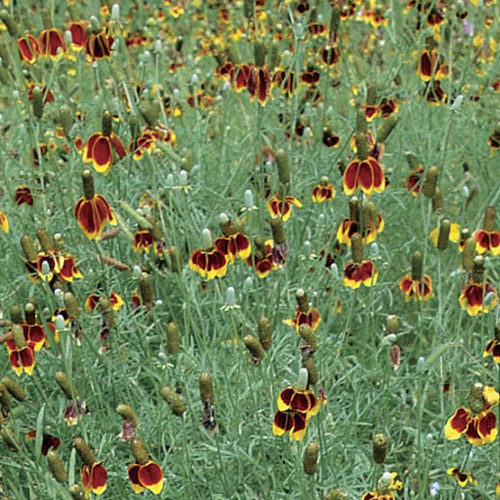
Ratibida columnifera (Mexican hat, Prairie coneflower, Long-head coneflower)

Ratibida columnifera Photo/Illustration: Todd Meier

(Based on 3 user reviews)

Rate this plant

Plant Showcase - from our advertisers


Hardiness Zones: 1 2 3 4 5 6 7 8 9 10 11
Botanical Name: Ratibida columnifera rah-TIB-ih-dah kol-um-NIF-er-ah Common Name: Mexican hat, Prairie coneflower, Long-head coneflower Synonyms: Lepachus columnifera, Rudbeckia columnifera Genus: Ratibida
This perennial coneflower, sometimes grown as an annual, has a long season of flowers on thin, branching stems. The flowers resemble small hats, with yellow reflexed ray florets and large greenish-brown columnar centers.
Noteworthy characteristics: Sombrero-shaped yellow flowers with long central cones bloom for a long time.
Care: Needs average, dry to medium, well-drained, neutral to slightly alkaline soils in full sun. Intolerant of moist heavy clays. This plant is drought resistant.
Propagation: May be grown from seed, but will not flower until the second year. Sow seed in early spring in a cold frame. Divide perennials in spring when young, before they become too woody.
Problems: Downy mildew, powdery mildew, leaf smut, and fungal spots occur occasionally.
Height 1 ft. to 3 ft.
Spread 1 ft. to 3 ft.
Growth Pace Moderate Grower
Light Full Sun Only
Moisture Dry to Medium
Maintenance Moderate
Tolerance Drought Tolerant
Characteristics Attracts Butterflies; Native; Showy Flowers
Bloom Time Fall; Summer
Flower Color Brown Flower; Yellow Flower
Uses Beds and Borders, Cut Flower, Suitable as Annual
Style Cottage Garden, Meadow Garden
Seasonal Interest Summer Interest, Fall Interest
Type Perennials

Plants you might also like

Sedum ‘Autumn Joy’ Sedum ‘Autumn Joy’
(Stonecrop)
(13 user reviews)
Hardiness Zones: 1 2 3 4 5 6 7 8 9 10 11

This plant is as dependable and adaptable as they come. Its flowers bloom from August into November; they open pink and mature to a copper befitting of autumn. It is 2 feet tall and wide, with succulent stems and leaves. 'Autumn Joy' looks great with ornamental grasses.  

Hemerocallis 'Armani' Hemerocallis 'Armani'
(Daylily)
Be the first to rate this plant
Hardiness Zones: 1 2 3 4 5 6 7 8 9 10 11

Daylilies are classic, extremely popular garden plants. They feature long, arching, strappy leaves and long stems of generally 6-petaled flowers, though double flowers are popular as well. Each flower lasts only one day, hence the plant’s common name. Daylilies come in a wide range of colors, from cream and cheery yellow to peach, orange, fiery red, deep burgundy, pink, and purple. Some have contrasting throats and "eye-zones." Daylilies are ideal for a mixed herbaceous perennial border.

Hemerocallis 'Banana Boat' Hemerocallis 'Banana Boat'
(Daylily)
Be the first to rate this plant
Hardiness Zones: 1 2 3 4 5 6 7 8 9 10 11

Daylilies are classic, extremely popular garden plants. They feature long, arching, strappy leaves and long stems of generally 6-petaled flowers, though double flowers are popular as well. Each flower lasts only one day, hence the plant’s common name. Daylilies come in a wide range of colors, from cream and cheery yellow to peach, orange, fiery red, deep burgundy, pink, and purple. Some have contrasting throats and "eye-zones." Daylilies are ideal for a mixed herbaceous perennial border.

Hemerocallis 'Blackeyed Stella' Hemerocallis 'Blackeyed Stella'
(Daylily)
Be the first to rate this plant
Hardiness Zones: 1 2 3 4 5 6 7 8 9 10 11

Daylilies are classic, extremely popular garden plants. They feature long, arching, strappy leaves and long stems of generally 6-petaled flowers, though double flowers are popular as well. Each flower lasts only one day, hence the plant’s common name. Daylilies come in a wide range of colors, from cream and cheery yellow to peach, orange, fiery red, deep burgundy, pink, and purple. Some have contrasting throats and "eye-zones." Daylilies are ideal for a mixed herbaceous perennial border.

Hemerocallis 'Catalyst' Hemerocallis 'Catalyst'
(Daylily)
Be the first to rate this plant
Hardiness Zones: 1 2 3 4 5 6 7 8 9 10 11

Daylilies are classic, extremely popular garden plants. They feature long, arching, strappy leaves and long stems of generally 6-petaled flowers, though double flowers are popular as well. Each flower lasts only one day, hence the plant’s common name. Daylilies come in a wide range of colors, from cream and cheery yellow to peach, orange, fiery red, deep burgundy, pink, and purple. Some have contrasting throats and "eye-zones." Daylilies are ideal for a mixed herbaceous perennial border.