
previous
  • Fragrant Plants for Pathways
    Fragrant Plants for Pathways
  • Building a Compost Bin
    Building a Compost Bin
  • Save Money by Growing Your Own
    Save Money by Growing Your Own
  • 6 Tips for Weed Control
    6 Tips for Weed Control
  • Make a Succulent Topiary
    Make a Succulent Topiary
  • Lawn Alternatives
    Lawn Alternatives
  • In Pursuit of the Perfect Potting Shed
    In Pursuit of the Perfect Potting Shed
  • Garden Confidential: A Plant Walks into a Bar
    Garden Confidential: A Plant Walks into a Bar
  • Elephant's Ears
    Elephant's Ears
  • Comfortable Alfresco Dining
    Comfortable Alfresco Dining
  • Containers as Focal Points
    Containers as Focal Points
  • Stylish Shady Containers
    Stylish Shady Containers
  • Homegrown / Homemade
    Homegrown / Homemade
  • Fast-Growing Trees for Impatient Gardeners
    Fast-Growing Trees for Impatient Gardeners
  • NEW Video Series: There's a Better Way
    NEW Video Series: There's a Better Way
  • Indeterminate or Determinate Tomatoes?
    Indeterminate or Determinate Tomatoes?
  • Plants that Spark!
    Plants that Spark!
  • Designing with Curved Terraces
    Designing with Curved Terraces
  • Slideshow: Beautiful Clematis
    Slideshow: Beautiful Clematis
  • Mulch for a Healthy Garden
    Mulch for a Healthy Garden
  • Colorful Selections for Shade
    Colorful Selections for Shade
  • Thoughts From a Foreign Field
    Thoughts From a Foreign Field
  • Dwarf Citrus Trees
    Dwarf Citrus Trees
  • Plant an Easy-to-Water Strawberry Jar
    Plant an Easy-to-Water Strawberry Jar
  • Pretty in Pink
    Pretty in Pink
next

Genus Viola (Pansy, Violet)

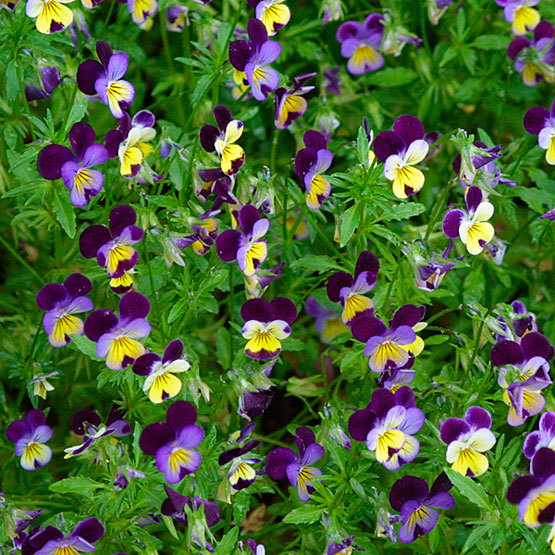
Viola Viola tricolor Photo/Illustration: Michelle Gervais
vy-OH-lah Common Name: Pansy, Violet Synonyms: Erpetion
Viola is a large genus of 500 or so species of annuals, biennials, perennials, and subshrubs from temperate areas worldwide. Violas are grown primarily for their 5-petaled flowers in every color of the rainbow. Flowers have a spurred lower petal, 2 upper petals, and 2 lateral petals. Most cultivars are classified as garden pansies, violas, or violettas, differing in habit, flower characteristics, and cultivation requirements. The Viola genus is useful in containers, as bedding, in a rock garden, or in a border.
Noteworthy characteristics: Profuse flowers over long periods.
Care: Full sun to part shade. Grow in fertile, humusy, moist but well-drained soil. Rock garden plants can grow in poor soil but they need gritty, very well-drained soil. Deadhead regularly.
Propagation: Some species can be propagated by division. Take cuttings of perennial species in spring or late summer. Sow seed in a cold frame in spring or when ripe. For garden pansies, sow seed in late winter for early spring-summer flowering, or in summer for winter flowering. Many species are short-lived, so start new plants regularly.
Problems: Slugs, snails, aphids, and violet leaf midges commonly munch on plants. Violas are also prone to mosaic viruses, downy mildew, powdery mildew, crown and root rot, rust, Botrytis, spot anthracnose, and other fungal leaf spots.

Species, varieties and cultivars for genus Viola

Viola ‘Etain’ Viola ‘Etain’
Be the first to rate this plant
Hardiness Zones: 1 2 3 4 5 6 7 8 9 10 11

A hardworking, compact perennial, ‘Etain’ violet forms well-behaved clumps and blooms from time to time from spring through fall. The attractive, fleshy, bright green foliage needs protection from slugs. -Sylvia Matlock, Regional Picks: Northwest, Fine Gardening issue #127

Viola tricolor Viola tricolor
(Heartsease, Johnny-jump-up, Love-in-idleness, Wild pansy)
(3 user reviews)
Hardiness Zones: 1 2 3 4 5 6 7 8 9 10 11

This annual, biennial, or short-lived perennial is grown for its long season of pansy flowers in shades of purple, blue, yellow, and white. Viola tricolor is pretty in containers, as edging, or as a companion for bulbs. It self-seeds readily.


