
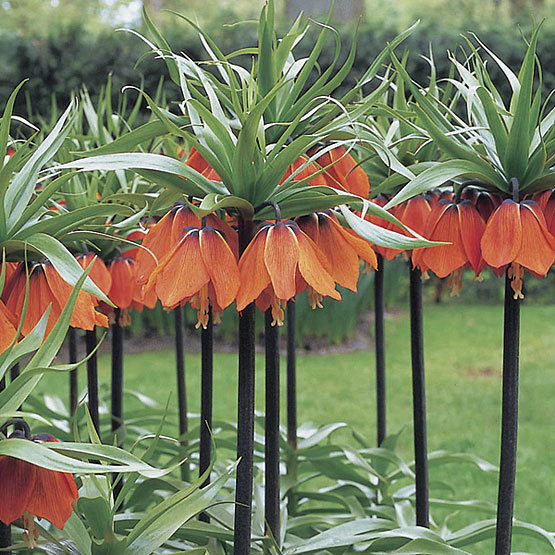
Fritillaria is a most outstanding genus of bulbous perennials with flowers that range from solitary delicate bells to stalwart vivacious clusters. Many blossoms are checkered or striped, and appear in somber hues of green, maroon, and chartreuse; still other colors are vibrant and solid. Different species of these bulbous perennials are at home in rock gardens, moist meadows, woodlands, mixed borders, or greenhouses. Some species are native to North America.
Noteworthy CharacteristicsBell-shaped, dangling flowers in an array of colors and combinations, including green and near-black.
CareMost species need well-drained soil in full sun. Plant at four times their own depth. Plant large, hollow-centered bulbs on their sides and surround with sharp sand. Under glass, water during periods of growth.
PropagationSow seed in a cold frame in fall, provide winter cold treatment, and then move to a cool greenhouse. Divide offsets in late summer.
ProblemsRust, leaf spot.




