
previous
  • Enchanting Japanese Maples
    Enchanting Japanese Maples
  • Backyard Makeover Game
    Backyard Makeover Game
  • Big Flowers from Bigleaf Hydrangeas
    Big Flowers from Bigleaf Hydrangeas
  • 10 Perennials Easily Grown from Seed
    10 Perennials Easily Grown from Seed
  • Make Your Own Hypertufa Container
    Make Your Own Hypertufa Container
  • Bold and Beautiful Zinnias
    Bold and Beautiful Zinnias
  • Variegated Plants Create Drama
    Variegated Plants Create Drama
  • Off With Their Heads: Deadheading Perennials
    Off With Their Heads: Deadheading Perennials
  • Viburnums are Versatile Shrubs
    Viburnums are Versatile Shrubs
  • How to Grow Raspberries
    How to Grow Raspberries
  • How to Start a Vegetable Garden
    How to Start a Vegetable Garden
  • 15 Deer-Resistant Plants
    15 Deer-Resistant Plants
  • Free Download: Rose Pruning and Bed Prep
    Free Download: Rose Pruning and Bed Prep
  • A gardener's checklist for early summer
    A gardener's checklist for early summer
  • All About Starting Seeds
    All About Starting Seeds
  • 25 Robust Summer Bloomers
    25 Robust Summer Bloomers
  • Garden Catalog Collector
    Garden Catalog Collector
  • Perfect Edges for Your Beds and Borders
    Perfect Edges for Your Beds and Borders
  • Video: Make a Straw-Bale Garden
    Video: Make a Straw-Bale Garden
  • Friendly Ways to Battle Garden Pests
    Friendly Ways to Battle Garden Pests
  • Find the Perfect Tomato
    Find the Perfect Tomato
  • Building a Compost Bin
    Building a Compost Bin
  • Lilacs: Time for a Fresh Look
    Lilacs: Time for a Fresh Look
  • Soil Testing is Worth the Effort
    Soil Testing is Worth the Effort
  • The Only Shrubs You Need to Grow
    The Only Shrubs You Need to Grow
next

Genus Franklinia

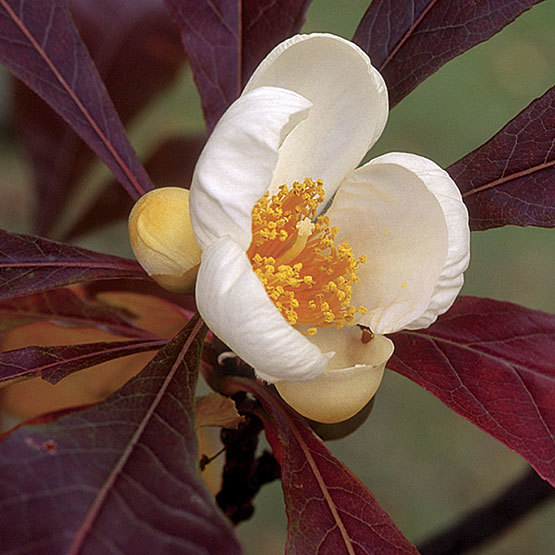
Franklinia Franklinia alatamaha Photo/Illustration: Michael Dirr
frank-LIN-ee-ah
One species, F. alatamaha, makes up this genus. It is an upright, deciduous tree with glossy, oblong leaves that turn red in autumn. Three-inch, cup-shaped, fragrant white flowers with yellow stamens bloom from late spring to early fall. This tree is wonderful as a specimen or planted in an open woodland.
Noteworthy characteristics: Native to Georgia, U.S. Thought to be extinct in the wild. Camellia-like flowers and colorful autumn foliage.
Care: Grow in full sun in moist but well-drained, acidic to neutral soil that is rich in organic matter. Prune in late winter or early spring by removing wayward shoots.
Propagation: As soon as the seed is ripe, sow at 50-64°F, or use bottom heat to root softwood cuttings in summer.
Problems: Flowers may be eaten by Japanese beetles.

Species, varieties and cultivars for genus Franklinia

Franklinia alatamaha Franklinia alatamaha
(Franklin tree)
(1 user review)
Hardiness Zones: 1 2 3 4 5 6 7 8 9 10 11

Discovered in the wild along Georgia's Altamaha River in 1765 by botanists John and William Bartram, this beautiful landscape tree is considered extinct in the wild. The Bartrams named the plant in honor of their friend Benjamin Franklin. All Franklinias today are descended from those propagated by the Bartrams in their Philadelphia garden. It is a deciduous, understory tree with an upright habit. It can be grown as a single-trunked tree or a multi-stemmed shrub. The fragrant white flowers have bushy yellow stamens and the leaves are dark green and glossy, turning orange, red, and purple in the fall. It blooms in late summer and early autumn, when few other trees are in flower. The fruit that follows is woody and spherical. Franklin tree makes a great addition to an open area of a woodland garden.


