
A couple of decades ago, lumber impregnated with chromated copper arsenate (known as CCA) was considered the answer to a gardener’s prayer. It boasted longer life than rot-resistant species like redwood, you could buy it almost anywhere, and manufacturers said the treatment chemicals, though toxic, safely stayed put in the wood. The main plus for gardeners was that the chemicals didn’t harm plants, unlike creosote and pentachlorophenol, two previously popular wood preservatives.
But then word started seeping out that those CCA chemicals weren’t so perfectly bound up after all, that some of them, in fact, migrated from the wood into the surrounding soil. And that’s when pressure-treated wood moved into the hot seat.
Are Pressure Treated Woods Safe in Garden Beds?
Is Pressure-Treated Lumber Safe to Use for Raised Beds?
Coating Pressure-Treated Wood to Make it Safer
What’s bad about pressure-treated wood?
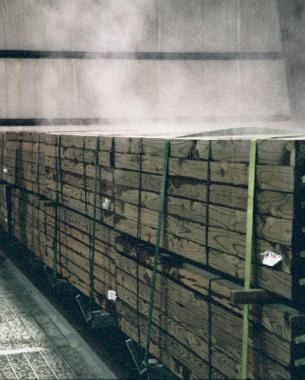
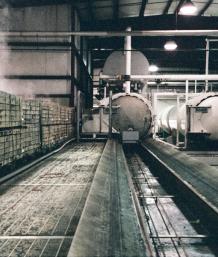
In the pressure-treating process, lumber is sealed in a tank, and air is extracted, creating a vacuum. Then a solution containing chromium, copper, and arsenic is added. Because of the vacuum, the chemicals are carried deep into the wood. Chromium is a bactericide, copper a fungicide, and arsenic an insecticide, and all arrest decay of some kind. All three are toxic, but chromium and copper don’t raise many concerns. If we don’t inhale it, chromium is not particularly harmful to us, and copper isn’t very toxic to mammals, although it is to aquatic life and fungi. It’s arsenic that is worrisome.
Arsenic is everywhere. If this gray, metal-like element is combined with oxygen, chlorine, and sulfur, it’s considered inorganic arsenic. If carbon is part of the combination, then the arsenic is organic. It’s the inorganic forms that worry people. The arsenate used in wood treatment is inorganic. Compared to organic arsenic, inorganic arsenic is much more likely to accumulate in living tissues, where it interacts with cell enzymes and impairs metabolism. Organic forms of arsenic don’t appear to do this, and are largely excreted before they can do us harm.
We’re exposed to arsenic—mostly organic forms—every day because very small amounts are present in all soil, water, and food. We typically eat 25 to 50 micrograms (a microgram is a millionth of a gram) of mostly organic arsenic a day. Low levels of arsenic are in everything we eat. The biggest source is shellfish.
Inorganic arsenic also may be present in foods due to residues in the soil from the days when arsenic was an approved pesticide. One reason root crops tend to accumulate arsenic is that minute particles of soil stick to the root’s skin, even after a brisk scrubbing. Peeling root vegetables before eating them gets rid of that arsenic. Still, there’s no need to worry about normal levels of arsenic in foods. The amount is so small it’s not harmful.
Soils contain both organic and inorganic arsenic. Background levels of arsenic in soil (amounts due to geological weathering, not to human contamination) typically range from 0.1 to upwards of 10 parts per million (ppm), and up to 40 ppm is considered tolerable, according to the U.S. Department of Agriculture. Above that level, detectable amounts start showing up in children’s urine, because kids ingest dirt.
Water contains background arsenic too, but there might also be arsenic from contamination. The current EPA limit for arsenic in drinking water is 50 parts per billion.
In large doses, inorganic arsenic is strong poison. Ingesting 1 to 3 milligrams per kilogram of body weight can be fatal. Lesser amounts can cause nausea and diarrhea, lower production of both red and white blood cells, and give you a pins-and-needles sensation in your arms and legs. Inorganic arsenic is also carcinogenic, increasing the risk of lung, skin, and other cancers.
But as USDA heavy metals expert Rufus Chaney points out, what constitutes an acute toxic dose isn’t really relevant to gardeners. What we want to avoid are chronic toxic doses, which can lead to disease. Chronic exposure means every day for a lifetime. According to the Agency for Toxic Substances and Diseases Registry (ATSDR) in Atlanta, we can ingest up to 0.3 micrograms of inorganic arsenic per kilogram of body weight per day and not be harmed. The average American woman, who weighs 132 lb. or 60 kg., would have to eat more than 18 micrograms daily all her life to see any ill effects. Before you get alarmed, remember this is inorganic arsenic we’re talking about, not the organic types predominant in our diet. And, an ATSDR spokesperson points out, 0.3 microgram is a low estimate for the maximum tolerable dose.
Testing for arsenic leaching and migration
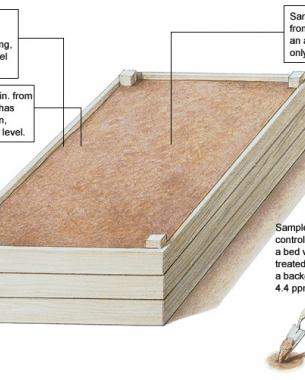
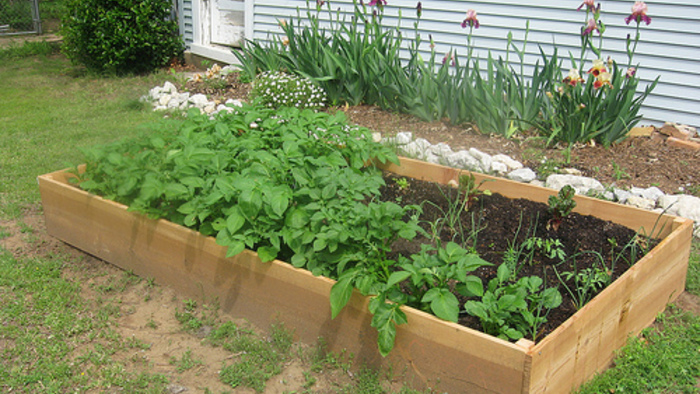
I sent soil samples from a 3-year-old CCA-framed bed to a lab for testing. I took three samples at various distances from the wood—immediately adjacent, several inches away, and in the middle of the bed. For a control, I sent soil from a bed that’s never been in contact with pressure-treated wood. Only the soil very close to the treated wood shows a higher-than-background level of arsenic.
The data on leaching
So how much arsenic leaches into the soil from CCA lumber? More to the point, how much gets taken up by vegetables? And how much winds up in the mouths of children? There have been a lot of studies looking at the first two issues, but in trying to organize the facts into meaningful information, I discovered definitive answers can be elusive. I can’t tell you whether or not you should use pressure-treated wood. What I can do is explain the results of pertinent studies and give you the information you need to decide for yourself.
CCA-treated wood does have good resistance to leaching, but there is some loss of chemicals. In a study of utility poles of varying ages, wood scientist Paul Cooper of the University of New Brunswick in Canada found uniformly high CCA retention, clearly indicating that large amounts of preservative had not leached out of the wood. There appears to be an initial surge of leaching during the first rainy season, and then the wood settles down to a slow release of small amounts, decreasing slightly over time.
All three CCA elements are more liable to leach at a pH of 3 or below, far too acidic for growing vegetables. At levels of 4 and up, pH has no effect.
Cooper has also studied compost bins made of CCA wood, and found that organic acids formed during the composting process cause more leaching. This not only brings more contaminants into the soil or compost, but also compromises the integrity of the lumber. Neither result is desirable, so Cooper does not consider pressure-treated wood suitable for making compost bins, although he doesn’t object to using it in gardens. Finished compost has a near-neutral pH, so adding compost to CCA-framed beds isn’t a problem.
Once arsenic is in the ground, it doesn’t migrate much. Where there is leaching, arsenic levels drop quickly with distance from the wood, usually reaching background levels within a few inches in raised beds.
Some people have voiced fears that leached arsenic will find its way into groundwater, but Cooper’s utility pole study found no evidence to support such concerns. Groundwater samples taken from close to the poles had very low levels of CCA components. According to Stan Lebow, a wood scientist at the USDA’s Forest Products Laboratory in Madison, Wisconsin, “The potential for any CCA chemicals getting into groundwater from garden use is pretty much zero. They just don’t move that far.”
If you use CCA lumber…
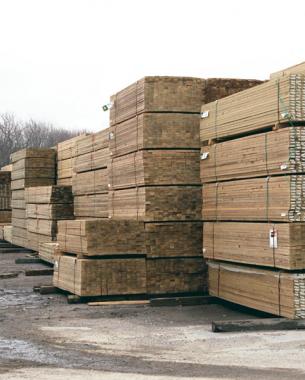
The chemicals in pressure-treated lumber are pesticides, so you should handle the wood with the same precautions as befit any potentially hazardous material.
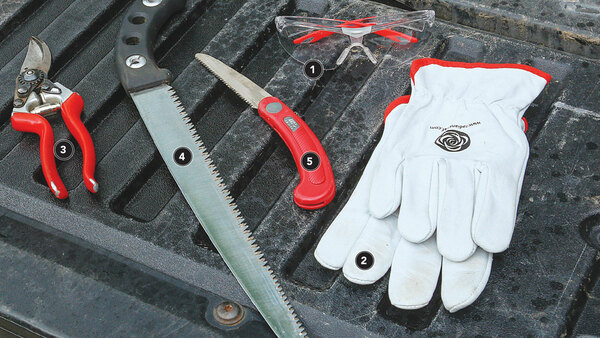
Protect yourself while working with CCA wood. Always wear gloves, eye protection, and most important, a dust mask. Long sleeves are a good idea, too. Wash yourself and your clothes afterward. Finally, clean up every speck of sawdust you can (a shop vac does the best job). Drilling and sawing over a paved surface makes dust retrieval easier. Bag up sawdust and wood scraps and send them to the landfill. Don’t consider these steps optional.
Never, ever, burn CCA-treated wood. Burning sends some of the arsenic up in smoke, which can be inhaled. The ash, too, contains high concentrations of arsenic.
There are things you can do to CCA-treated wood to minimize leaching or migration. Scrubbing the wood with detergent or power washing it will remove surface residue. If possible, let the boards weather for several months after they’ve been cut and drilled before assembling. Studies show the greatest amount of leaching occurs the first rainy season. Always predrill holes for screws, which will prevent cracks in the wood. Cracks are places where preservative can leach. Lining the inside of the bed with heavy-duty plastic before filling it will create a physical barrier to any CCA compounds moving into your soil. Painting exposed wood surfaces with water-repellent finish, paint, or stain will protect your skin if you lean or kneel on the sides. And if you have small children, it will also prevent CCA compounds moving from little hands to little mouths.
Finally, you can take advantage of arsenic’s tendency to not travel far in the soil. To keep the arsenic in place, refrain from mixing soil along the perimeter few inches of the bed with soil farther in. Avoid growing spinach and root crops, particularly carrots and radishes, close to CCA-treated wood. Consider planting a band of compact flowers along the edge of the bed.
The story on arsenic and vegetables
There have been three major studies of vegetables grown in arsenic-enhanced soils, one by E.A. Woolson (United States, 1973), one by C. Grant and A.J. Dobbs (Britain, 1977), and one headed by T.W. Speir (New Zealand, 1992). All measured arsenic’s effect on plant growth and arsenic content of the harvest.
At certain levels of concentration, arsenic interferes with plant growth, but it’s impossible to generalize about amounts. Availability to plants varies from soil to soil, and sensitivity varies from crop to crop. Beans are fairly sensitive, while carrots and tomatoes tolerate arsenic well. Very small additions of arsenic can actually increase yields. Also, there’s no correlation between a crop’s sensitivity to arsenic and the ability to absorb and translocate it to edible plant parts.
Available arsenic—meaning arsenic in a form plants can absorb—is a much more important measure than total arsenic. Typically, background arsenic is either pretty much insoluble or is tied up in a complex relationship with minerals and organic matter. For example, in the Grant and Dobbs study, soil with 24 ppm total arsenic had 7 ppm available arsenic. At 14 ppm total arsenic, available arsenic was undetectable.
Arsenic accumulates in very small amounts in vegetables, but generally in parts we don’t eat. Grant and Dobbs grew green beans, carrots, and tomatoes for their test. Crops grown in soil with 24 ppm total arsenic had the following arsenic levels in the edible parts: green beans, 0.29 ppm; carrots, 0.11 ppm; and tomatoes, 0.14 ppm. These, too, are total arsenic levels, and as Rufus Chaney pointed out, much of it would be organic. Carrots, for example, grown in soil with no added arsenic contained 0.05 ppm arsenic.
Woolson tested green and lima beans, spinach, cabbage, tomatoes, and radishes. Radishes and spinach took up the most arsenic, but even in soil with enough arsenic to reduce growth by 50%, the spinach had only about 1 ppm arsenic and the radishes about 8 ppm. After the experiment, Woolson found available arsenic in the soil had been reduced in “barely significant” amounts, indicating the plants had removed very, very small portions.
In general, plants tend to hold what arsenic they accumulate in their roots, typically in the fibrous roots. Uptake into plant tops and fruits is very small. (As always, there are exceptions. Carrots, radishes, and spinach all tend to store arsenic in their edible portions.)
For example, beets are good arsenic accumulators, but most stays in the tail-like root, not the bulbous part you eat. In Speir’s experiment, beets grown on soil with 66 ppm arsenic contained less than 10 ppm arsenic after being completely dried. To put this in perspective, at fresh weight—the way vegetables are actually eaten—that concentration would be only about 2.5 ppm. And if you remove the skin, you also remove much of that arsenic. An interesting footnote: In the Speir study, crops were grown in soil containing CCA-treated sawdust. Because sawdust has a huge proportion of surface area, it leaches chemicals at a very high rate, so in effect this is a worst-case experiment.
So is CCA-treated wood unsafe?
I went to several scientists to get their take on the data in the various reports.
Les Bourquin, a food safety specialist at Michigan State University, says, “Consumers as a whole would like to have zero risk. The classic example is, you’re safer in an airplane than you are in a car. But most people are more comfortable driving a car because that’s where they’re in control. There are some things we do in our lives that put us at much greater risk” than eating foods grown in CCA-framed beds. Bourquin feels that from a food safety standpoint, microbial contamination like E. coli 0157:H7 is of much greater concern. “Compared to microbial risks, arsenic exposure doesn’t seem a big problem.”
Rufus Chaney at the USDA agrees with Bourquin about food safety. “There’s no evidence that food safety is impaired by growing vegetables around CCA-treated wood.” According to Chaney, high levels of inorganic arsenic in soil will kill a plant before there’s enough arsenic in the plant itself for you to consider not eating it. Far more important is the risk of potential transfer of arsenic to skin and mouths, particularly for children, whose small bodies don’t tolerate arsenic as well as ours do. Chaney points out that persistent leaching, however small, means that arsenic is continually coming to the surface of the wood, where it can easily be transferred to us or our children when we touch the wood. “There’s just no way around it,” Chaney says. “For me, this is the overriding reason not to use CCA.”
ACQ, a New Alternative
Public concern over potential hazards of CCA has led the industry to look for safer, less controversial preservatives. A few years ago, one of the producers of CCA came out with a preservative touted as environmentally sound. ACQ®, which stands for alkaline copper quat, is a mix of copper and a quaternary ammonium compound, nicknamed quat. Small amounts of copper and quat do leach, but nothing in ACQ is considered hazardous by the EPA, and no ingredient is a known or suspected carcinogen. The maker, Chemical Specialties, Inc. (CSI), uses only recycled copper in ACQ. The wood is expected to last as long as CCA-treated lumber.
I first heard about ACQ four years ago, but had never found a place to buy it. Why, I wondered, was it so unavailable if it had so much to recommend it? The first version to go on the market contained no water repellent and had to be treated by the buyer to minimize cracks and warping. In late 1997, CSI came out with a version, ACQ Type D, which has a built-in water repellent. The company hopes the new formulation will be more attractive to lumber retailers and consumers. ACQ-treated wood is about 10% more expensive than CCA because it contains more copper.









Comments
Thanks
Thank you so much for publishing this! Great information and definitely going to share it with my fellow gardeners
Arsenic is no longer used in pressure treated wood. That should be stated up front. This article would be more useful to the public if it looked at the impacts of pt wood without arsenic (ie copper azole) which is the only type readily available to consumers.
AGREED was just at Menards this weekend and CCA is no longer available its AC2 now
This is not true where I live (New Zealand)
Actually, arsenic treatment (in the form of CCA) is still being used in the US for certain marine applications and for posts used in traffic barriers. While it may not be generally available for the public, it's still possible that people may acquire it unwittingly.
If you're eating traffic barriers you have bigger problems.
Please stop using the word "actually", senselessly.
Dave - Are you naturally a jackass, or did you actually take lessons to be a rude moron?
Excellent article. I really appreciate all the good info - thanks!
While the article is a few years old, the issue of chemical leeching from PTW is still a relevant concern. I commend the author on her use of solid scientific practices. Taking soil samples from an ever increasing distance from the pressure treated wood allows for an understanding of how far the preservative chemicals can migrate out in a real life applications. Extra points for a control soil sample.
I appreciate this article and would very much appreciate it if the author or someone else at Fine Gardening would look over the information to confirm everything is up to date/update anything that isn't. No need to write a whole new article, but I'd love to be able to know (6 years after it was written) the info is still accurate and would then share with others. Thanks so much!!
Log in or create an account to post a comment.
Sign up Log in