previous
  • Backyard Makeover Game
    Backyard Makeover Game
  • Cool-Season Annuals
    Cool-Season Annuals
  • Enchanting Japanese Maples
    Enchanting Japanese Maples
  • Sweetly Scented Tulips
    Sweetly Scented Tulips
  • Video: Make a Straw-Bale Garden
    Video: Make a Straw-Bale Garden
  • 15 Deer-Resistant Plants
    15 Deer-Resistant Plants
  • Design an Engaging Entryway
    Design an Engaging Entryway
  • Spectacular Spring Bloomers
    Spectacular Spring Bloomers
  • Soil Testing is Worth the Effort
    Soil Testing is Worth the Effort
  • How to Grow Raspberries
    How to Grow Raspberries
  • How to Start a Vegetable Garden
    How to Start a Vegetable Garden
  • 10 Perennials Easily Grown from Seed
    10 Perennials Easily Grown from Seed
  • A Gardener's Checklist for Early Spring
    A Gardener's Checklist for Early Spring
  • Building a Compost Bin
    Building a Compost Bin
  • The Only Shrubs You Need to Grow
    The Only Shrubs You Need to Grow
  • Make Your Own Hypertufa Container
    Make Your Own Hypertufa Container
  • Find the Perfect Tomato
    Find the Perfect Tomato
  • Friendly Ways to Battle Garden Pests
    Friendly Ways to Battle Garden Pests
  • Variegated Plants Create Drama
    Variegated Plants Create Drama
  • Celebrate Spring with Cool-Season Containers
    Celebrate Spring with Cool-Season Containers
  • Viburnums are Versatile Shrubs
    Viburnums are Versatile Shrubs
  • Perfect Edges for Your Beds and Borders
    Perfect Edges for Your Beds and Borders
  • All About Starting Seeds
    All About Starting Seeds
  • Lilacs: Time for a Fresh Look
    Lilacs: Time for a Fresh Look
  • Garden Catalog Collector
    Garden Catalog Collector
next

continued 1| 2next>View all

Pave the Way, Creatively

Turn mundane, utilitarian paving into a design element in your garden

We tend to think of paving as essentially utilitarian. After all, it's one of the most practical elements in a garden, serving as the outdoor floor beneath our feet or the path that leads us from one place to another. But that doesn't mean paving can't also be decorative.

(Click on the photos below to enlarge them.)

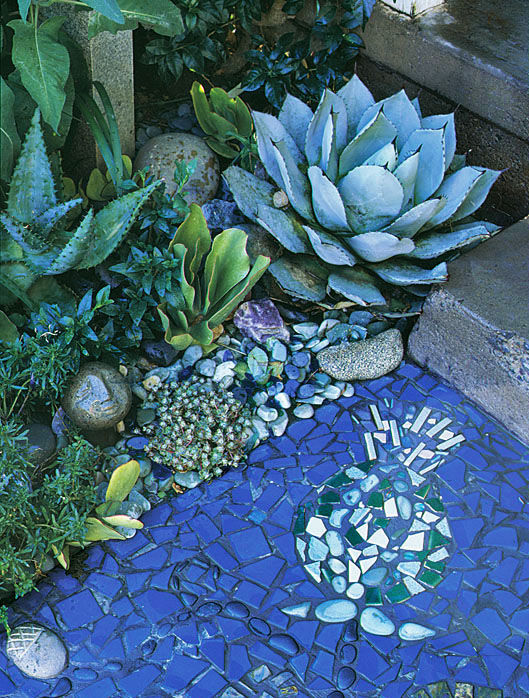
This blue-tile mosaic path leads to the front door of a cozy cottage. Bordered by pebbles, succulents, and a tiny sculpture by Marcia Donahue, the path was designed by Michelle Derviss for her garden in Novato, California. Click to enlarge image This blue-tile mosaic path leads to the front door of a cozy cottage. Bordered by pebbles, succulents, and a tiny sculpture by Marcia Donahue, the path was designed by Michelle Derviss for her garden in Novato, California. Photo/Illustration: Lee Anne White
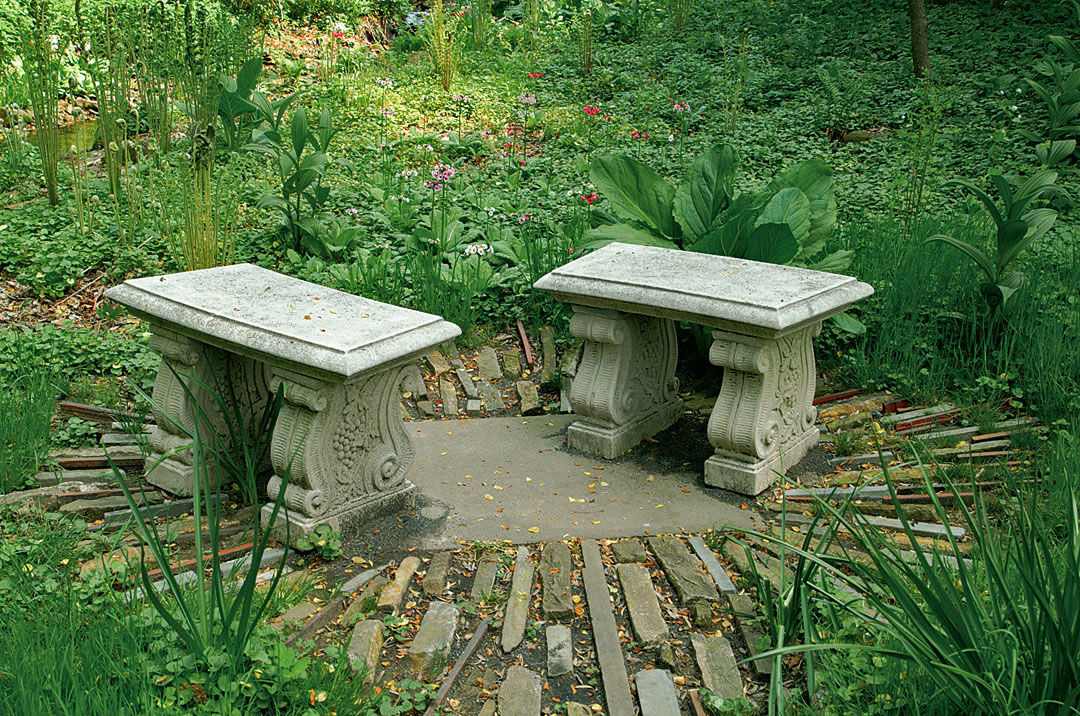
Irregular stones create a spokelike effect around a square centerpiece at Chanticleer, a public garden in Wayne, Pennsylvania. Formal benches contrast with the rustic look of the local stone. Click to enlarge image Irregular stones create a spokelike effect around a square centerpiece at Chanticleer, a public garden in Wayne, Pennsylvania. Formal benches contrast with the rustic look of the local stone. Photo/Illustration: Jennifer Brown

Some of the most inviting paths and interesting terraces I've seen combine two or more paving materials—pea gravel and cobbles, stained wood and cut stone, brick and tile, flagstone and river rock, mulch and timbers, decomposed granite and marbles. You can edge one with the other, create a repeating pattern, or mix them randomly for effect.

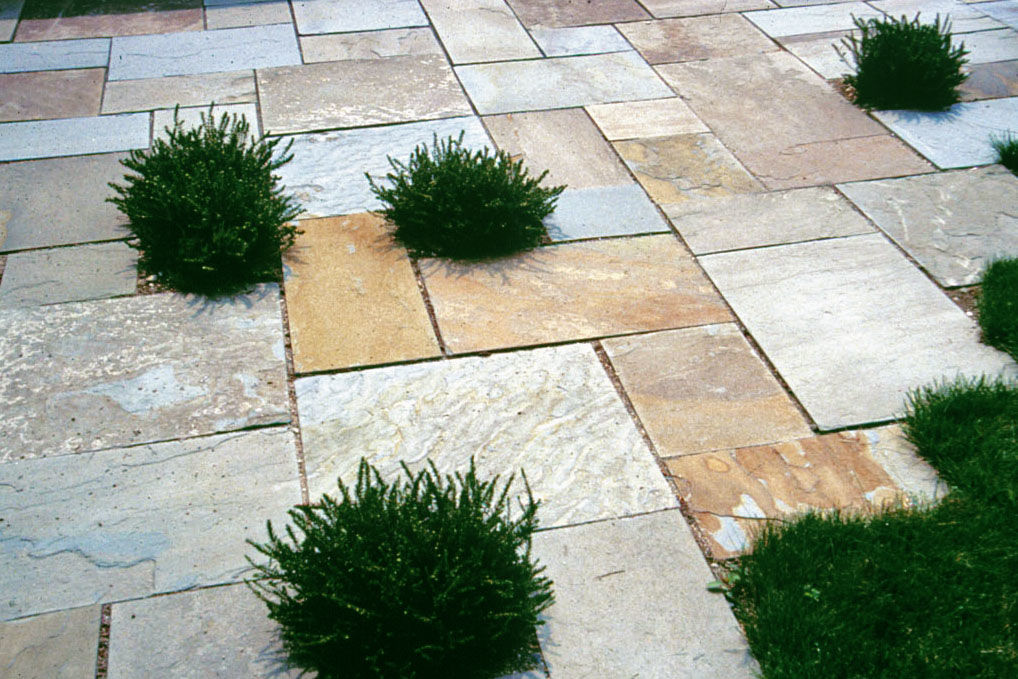
Mounds of heather break up the linearity of this bluestone terrace designed by Richard Dubé for a garden in Cape Elizabeth, Maine. Variously sized square and rectangular stones are pieced together like a puzzle, with pieces removed to make room for the plants. Click to enlarge image Mounds of heather break up the linearity of this bluestone terrace designed by Richard Dubé for a garden in Cape Elizabeth, Maine. Variously sized square and rectangular stones are pieced together like a puzzle, with pieces removed to make room for the plants. Photo/Illustration: Richard Dubé
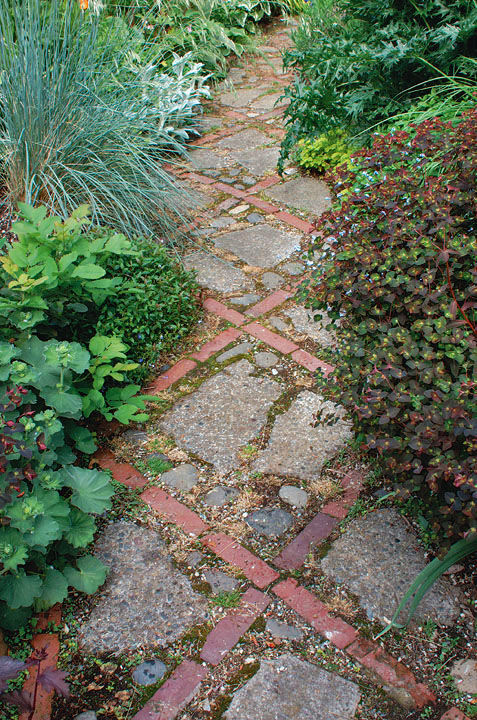
Diagonals add interest to a paving design. Tom Vetter used recycled brick to outline a crisscross pattern and combined it with stone and broken concrete. This walkway runs through a narrow garden along the side of his house in Portland, Oregon. Click to enlarge image Diagonals add interest to a paving design. Tom Vetter used recycled brick to outline a crisscross pattern and combined it with stone and broken concrete. This walkway runs through a narrow garden along the side of his house in Portland, Oregon. Photo/Illustration: Virginia Small

Of course, a single material can be used just as creatively. Bricks laid in interesting ways, with header courses and changes in pattern that make them look like throw rugs or runners, is a perfect example. Tiny round river cobbles or broken pieces of tile mortared mosaic-style is another.
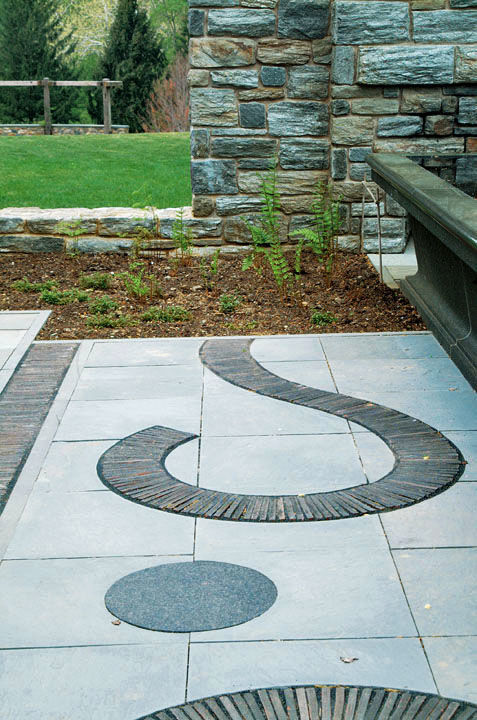
Play with patterns. This S-curve is part of a stylized "carpet" in a ruin garden at Chanticleer. The base is bluestone and the S and other embellishments are fired terra-cotta roof tiles from the house that originally stood on the site. Click to enlarge image Play with patterns. This S-curve is part of a stylized "carpet" in a ruin garden at Chanticleer. The base is bluestone and the S and other embellishments are fired terra-cotta roof tiles from the house that originally stood on the site. Photo/Illustration: Jennifer Brown

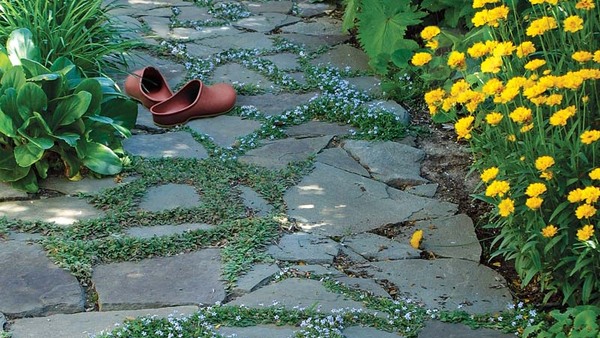
Sometimes it's a matter of mixing paving materials with plants, allowing a few plants to spill casually from their beds into an adjacent path, or placing them in the path intentionally. A grid of square stepping stones placed like a checkerboard in the lawn is always an eye-catcher. And filling the cracks between small, randomly laid pieces of irregular flagstone works well to soften paths or terraces. You can even remove occasional stones, cobbles, or bricks from existing paving to create small planting pockets for succulents and other tough plants.

We have more options for paving today than ever before. Stoneyards are filled with irregular flagstones, uniformly cut stones, boulders, cobbles, and river rocks. Brickyards stock an ever-expanding assortment of both new and old bricks, plus thin brick pavers in myriad colors. Pea gravel and decomposed granite can be found to match almost any color scheme. And precast pavers can be laid with ease to create intricate patterns.
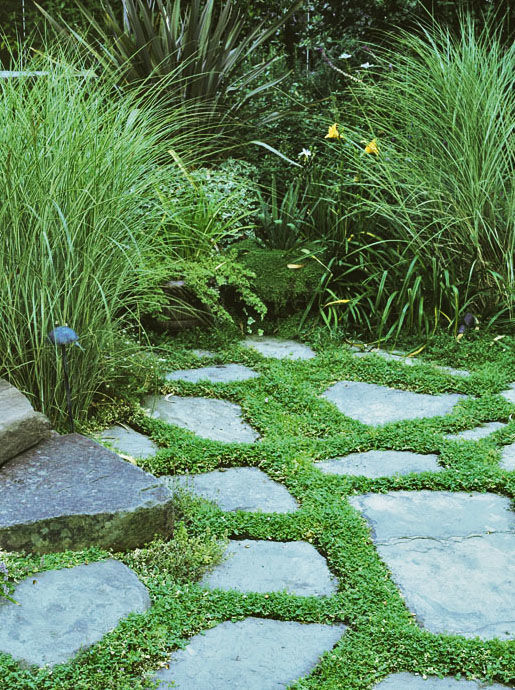
Corsican mint (Mentha requienii) softens the randomly placed dry-laid flagstones on this casual terrace designed by landscape architect Warren Simmonds of San Anselmo, California. Click to enlarge image Corsican mint (Mentha requienii) softens the randomly placed dry-laid flagstones on this casual terrace designed by landscape architect Warren Simmonds of San Anselmo, California. Photo/Illustration: Lee Anne White
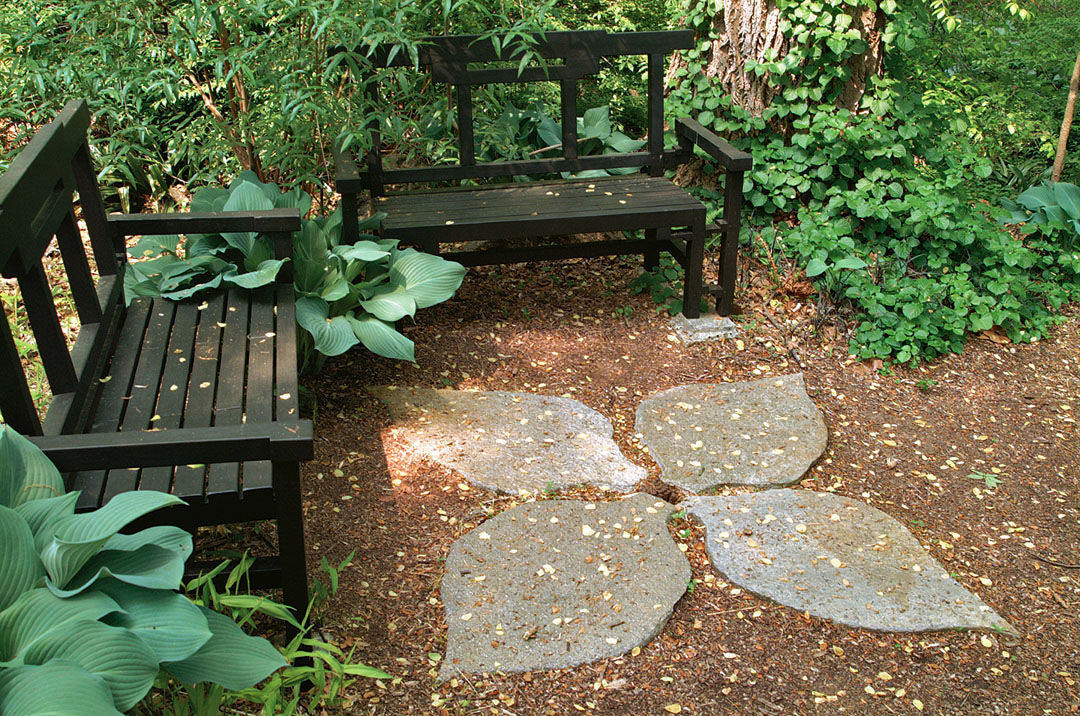
Paving stones can be cut into stylized shapes. Four stone "petals" form a dogwood blossom in a seating area in a woodland at Chanticleer that includes many dogwood trees. Click to enlarge image Paving stones can be cut into stylized shapes. Four stone "petals" form a dogwood blossom in a seating area in a woodland at Chanticleer that includes many dogwood trees. Photo/Illustration: Jennifer Brown

Even ordinary concrete can be brushed, etched, sanded, stained, and combined with aggregate. Mortar can be used as the base for one-of-a-kind mosaics made with pieces of tile, pebbles, or other materials. Of course, it's the inventive way any material is used that gives paving that extra spark.
From Fine Gardening 81 , pp. 12-14

continued 1| 2next>View all