

Six Superb Herbs for Growing in Containers
These plants can be tricky in the ground, but pot them up and watch them thrive
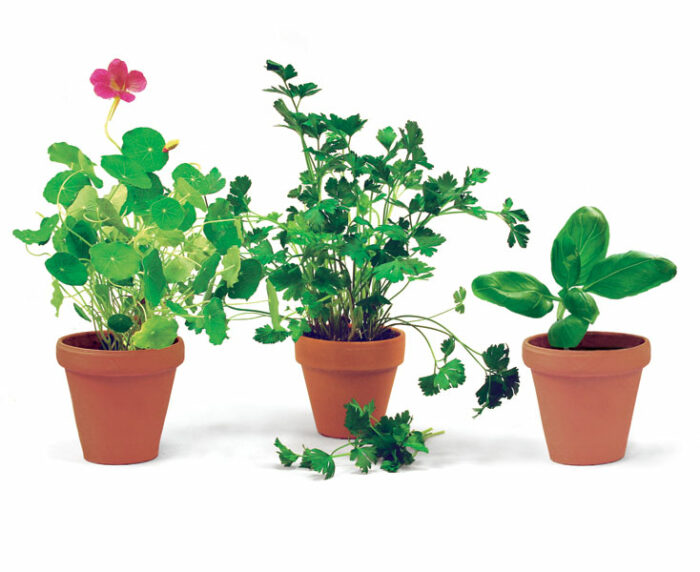
I enjoy cooking with fresh herbs, brew them in relaxing teas, and tossing them into salads, so I want my sun-loving culinary beauties close at hand. Containers are an easy way to make this happen. On summer mornings I walk right outside my kitchen door to a sunny patio full of pots, gather a few sprigs of fresh parsley, and return to the kitchen to flavor some scrambled eggs.
Aside from the food factor, I grow herbs in containers because it’s easier to adjust the soil to suit each plant, and it’s convenient for maintenance and watering. Plus, several of my favorite herbs are frost tender and, when grown in containers, can easily be moved indoors during fall.
By planting herbs of one type in a single container, I have the fun of arranging—and rearranging—them to create a pleasing garden scene. If I don’t like the effect, there’s no need to rip out plants–I just move the containers around. And when plants such as nasturtiums finish blooming, they can be moved to the back of the “garden” and others brought forward.
The plant size for herbs is smaller in containers than it is in the ground, which is why containers are perfect for aggressive spreaders. The heights given here are full-size heights; in containers, expect them to be several inches less, depending on the container size. Fertilize plants (except where noted) about every two weeks to maintain leaf production; this will yield the perfect amount of lush leaves to keep you satisfied throughout the season.
Create the right potting mix for herbs
Potted herbs do well in compost and a sterile medium of peat moss, vermiculite, and perlite, with quick- and slow-release fertilizers (compost is slow-release). For all pots, throw enough compost into each pot to allow room for adding a depth of 6 more inches of sterile medium. Sparingly mix in water-absorbing polymers; they lessen the need for watering by making the best use of available moisture.
Nasturtium and thyme need special mixes: For nasturtium, omit compost, and add extra vermiculite. Nasturtium needs light and lean soil to produce an abundance of flowers. Thyme requires sharp drainage, so you need to add grit (fine gravel or coarse sand).
Lemon thyme is at its best in tight spaces
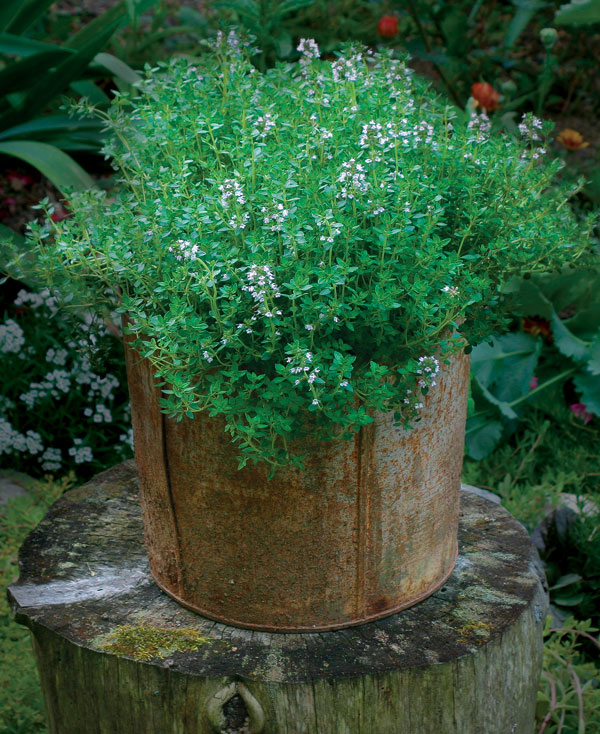
Name: Thymus × citriodorus and cvs.
Zones: 6–9
Size: 6 to 12 inches tall and 10 to 24 inches wide
Conditions: Full sun; average, well-drained soil
Lemon thyme, known for its intense lemon aroma, can be a scraggly mat in the ground; confined in a container, however, it’s an attractive, upright mound of small, pointed, glossy green leaves. As the branches grow, they spread out and trail over the container’s edge; by early summer, they produce dense heads of lilac flowers that last well over a month.
How to grow lemon thyme
Lemon thyme is best grown from plants, not seeds, and it should overwinter outdoors. The following spring, prune back to new growth. Plants eventually form hardened mats, which need to be divided or discarded. Trim plants over the growing season by cutting back stems. Lemon thyme will flower nicely if you let it, but cut back stems and fertilize afterward.
‘Alaska’ nasturtium is a colorful and tasty treat
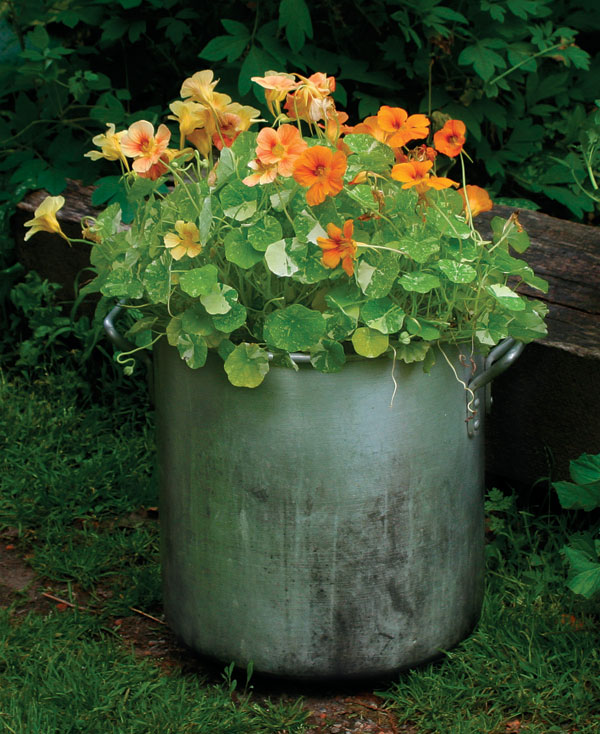
Name: Tropaeolum majus ‘Alaska’
Zones: Annual
Size: 8 to 12 inches tall and 12 to 18 inches wide
Conditions: Full sun; lean, moist, well-drained soil
Nasturtium has succulent stems that can grow in either an upright or a trailing form. Its foliage is shield-shaped and sports bright, spurred flowers in red, yellow, or orange. ‘Alaska’ nasturtium is my favorite for its cream-and-green foliage, which makes it attractive even out of bloom. The entire plant is suffused with a spicy, warm flavor that floats in the air.
How to grow nasturtium
In late spring, when temperatures warm, sow seeds outdoors directly in containers in two batches about a week apart. Two sowings will ensure a longer season of bloom. Don’t fertilize, and add a couple of handfuls of perlite to the growing medium to reduce nutrients so that plants produce more flowers than leaves. In late summer, aphids are often a problem; I cut plants back and spray with Pyola, a pyrethrum-based organic insecticide.
Lemon balm stays in check with the right container
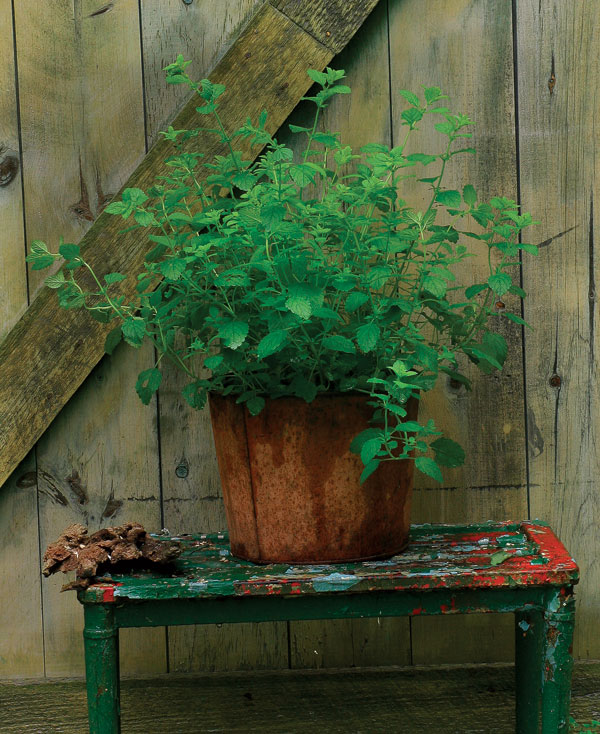
Name: Melissa officinalis and cvs.
Zones: 4–9
Size: 2 feet tall and 12 to 18 inches wide
Conditions: Full sun; average, well-drained soil
Lemon balm is an easygoing, lemon-scented herb with heart-shaped, light green leaves. A fast grower, it will quickly overtake its allotted space in a garden but is agreeable when contained in a pot. Its foliage is abundant and a pleasure to use in summer and winter. Like all members of the mint family, it is also a mild sedative.
How to grow lemon balm
Sow seeds indoors six weeks before the last frost, lightly covering them with soil. Plant out seedlings in late spring. Cut back plants throughout the growing season to keep them bushy with fresh foliage. By the end of the season, lemon balm will have developed woody stems and can overwinter in pots. It is a short-lived perennial, however, so start new plants in spring by dividing the original plant, discarding woody growth, and repotting in fresh soil.
Note: Lemon balm is considered invasive in Oregon.
‘Genovese’ basil is a must-have for flavor
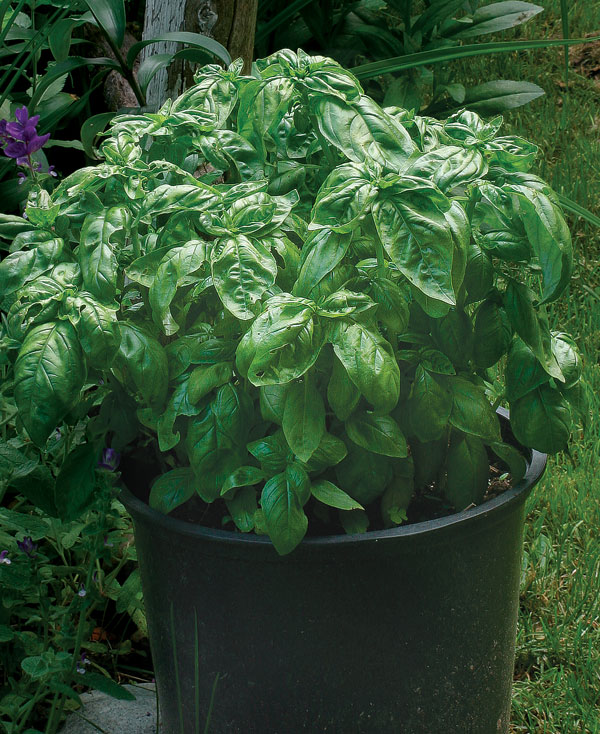
Name: Ocimum basilicum ‘Genovese’
Zones: Annual
Size: 2 feet tall and 12 to 15 inches wide
Conditions: Full sun; fertile, well-drained soil
Basil is the queen of the herb garden. Its lustrous, sweet-and-spicy leaves come in green or purple and are smooth or ruffled, and they always draw attention. I prefer green-leaved ‘Genovese’ basil for its vigor and superior sweet-clove flavor. Pair ‘Genovese’ with purple basil to achieve a flavorful display of eye-catching contrast.
How to grow basil
Basil is easy to grow and can be started directly in its permanent container. Sow seeds indoors four to six weeks before the last frost. Keep plants indoors until temperatures reach between 60°F and 70°F. In hot weather, basil will take off and want to flower, leading to sparse foliage. Keep plants bushy, and encourage fresh leaf production by cutting back stems.
Variegated pineapple mint is a sweet sensation
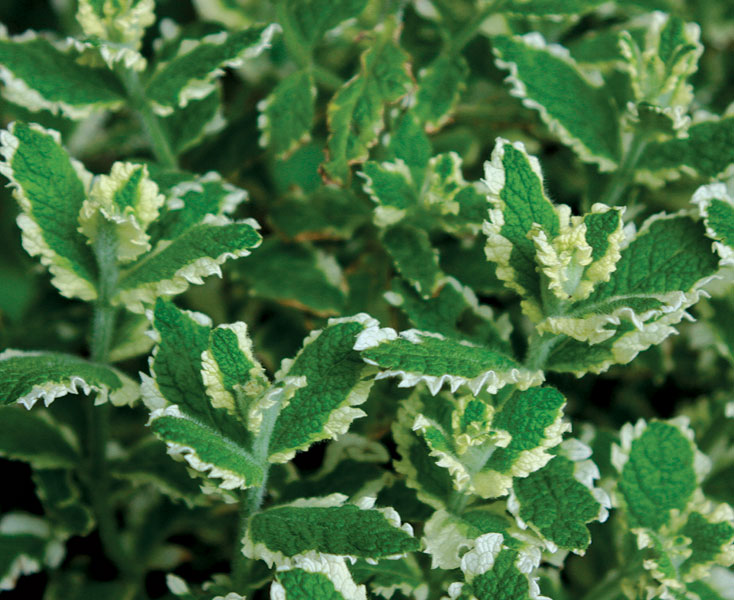
Name: Mentha suaveolens ‘Variegata’
Zones: 6–9
Size: 1 foot tall and 3 feet wide
Conditions: Full sun; fertile, moist soil
Pineapple mint has no discernible pineapple flavor but is a beautiful, spreading foliage plant with ruffled, cream-splashed green leaves that taste sweet and fruity. In the garden it takes over damp corners, but in a container it produces just enough leaves to fill out a medium-size pot.
How to grow pineapple mint
Pineapple mint is best grown from plants, not seeds, but it can easily be propagated using cuttings. To ensure a fresh supply of plants the following season, replant a few rooted clumps in a cold frame.
‘Forest Green’ parsley can take the heat
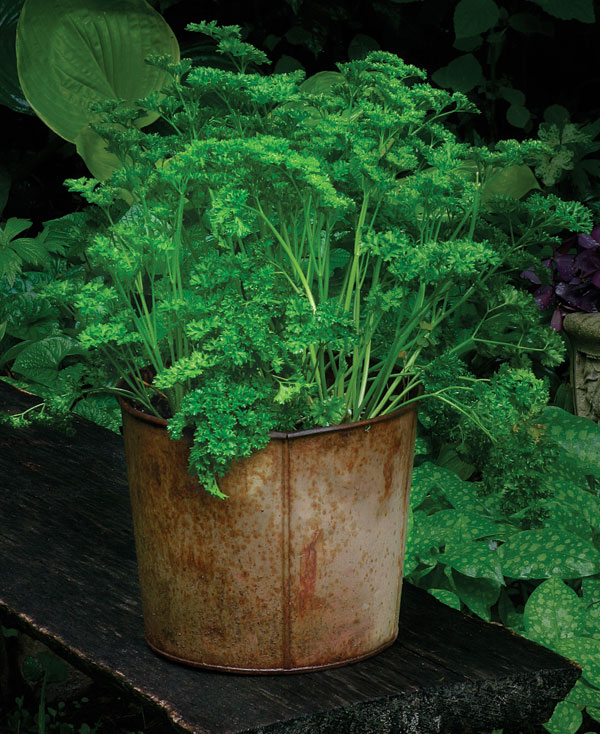
Name: Petroselinum crispum ‘Forest Green’
Zones: 5–9
Size: 12 to 18 inches tall and wide
Conditions: Full sun to partial shade; moist, well-drained soil
I love ‘Forest Green’ parsley for its arching stems of tightly curled, deep green foliage; its good disposition in hot weather; and its ability to grow back quickly after many cuts. I like to keep it close to my kitchen because it’s an important ingredient in nearly every dish, but I also consider it a beautiful plant with great value beyond its culinary use.
How to grow parsley
Seed germination is variable. Start seeds indoors by soaking them in warm water for 48 hours, 10 to 12 weeks before the last frost. Change the water once, and rinse seeds before planting them. Once planted, cover them with soil and exclude light. Late-sown seeds will provide less mature plants for overwintering indoors, but expect them to lose vigor and need replacing the following season. To keep plants vigorous the entire season, cut them back occasionally and then fertilize.



Comments
Although all herb descriptions say to grow in full sun, all areas on my property are part sun. I have never had trouble growing herbs under these conditions although they may not get as large as those grown under full sun. Another advantage of growing in pots is that they can be moved around (where practical) to take advantage of moving sun conditions.
Log in or create an account to post a comment.
Sign up Log in