
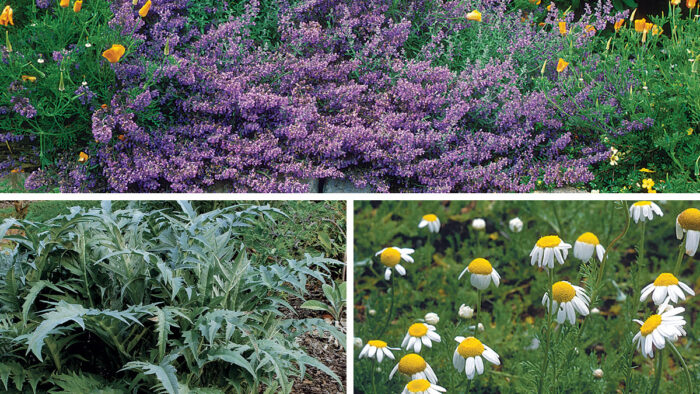
What makes an herb an herb? The term usually brings to mind plants used in cooking—like the parsley, sage, rosemary, and thyme of the popular Simon and Garfunkel song. Botanically, herb is short for herbaceous, meaning a plant that grows from a soft—not woody—stem. Historically, however, the word herb refers to plants that are useful to people by way of their flavor, fragrance, or medicinal properties, no matter what type of stem they grow from.
When I first became interested in growing herbs, I was fascinated by all of their traditional uses, but as I continued to cultivate them, I came to value herbs for their ornamental attributes, too. By experimenting with herbs in decorative garden settings, I found that their exquisite foliage and flowers can blend artfully with other annuals, biennials, and perennials.
Although I could name many herbs that are as beautiful as they are useful, I’ve narrowed my list to 10 top performers. These plants needn’t be confined to designated herb gardens, but can be used to fill in cracks and crevices, to wander along bed edges, and to punctuate perennial borders.
1. Silver thyme softens hard edges
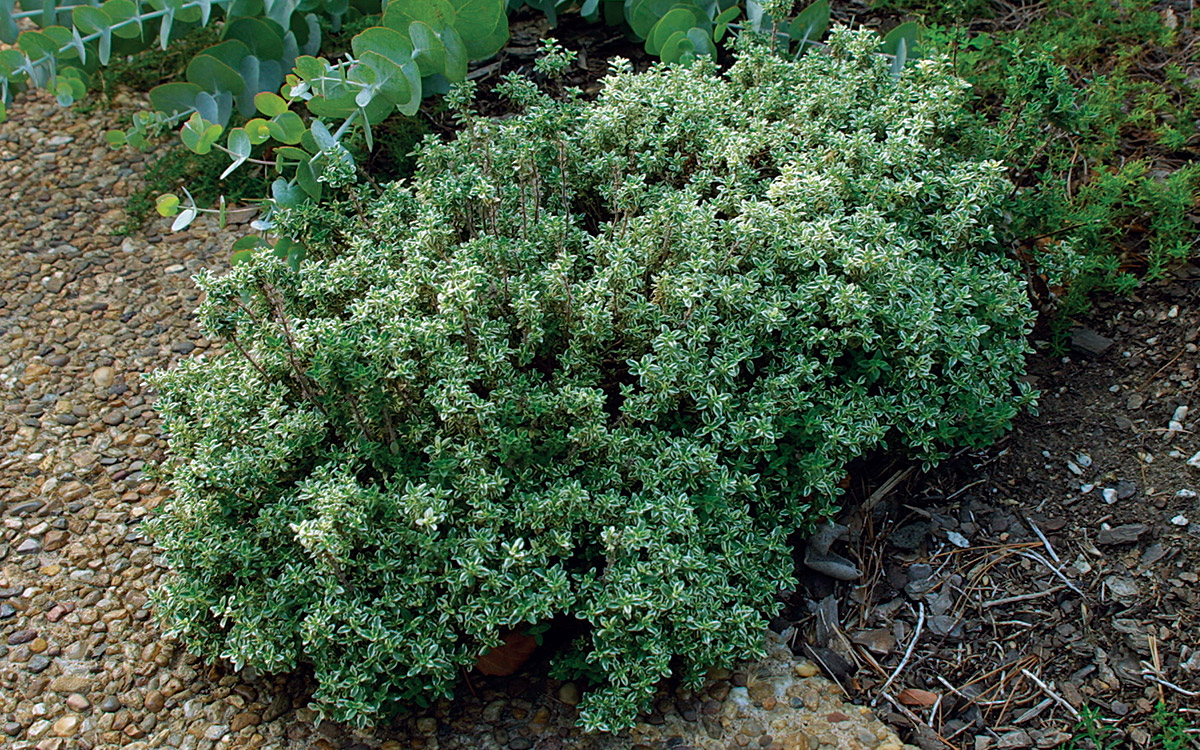
Name: Thymus vulgaris ‘Argenteus’
Blossom color: lavender-pink
Bloom time: summer
Plant size: 12 inches tall
Zones: 4 to 9
Silver thyme is a wonderful herb to grow in cracks and crevices. This evergreen grows up to 12 inches tall and has small lavender-pink blossoms in summer. Its fragrant, silver-edged leaves create a bushy and abundant texture that can be used to soften hard edges or to dapple a pathway. It is also attractive spilling from containers. Silver thyme thrives in sunny situations and, like other thymes, prefers sandy soil. Applying a mulch layer of light-colored gravel or chicken grit to reflect heat up to the plant doesn’t hurt either. Silver thyme, which can be harvested year-round in mild climates, is delicious with seafood and vegetables, in sauces, and as a tea.
More reading: How to grow thyme
2. Ornamental oregano blooms for a long time
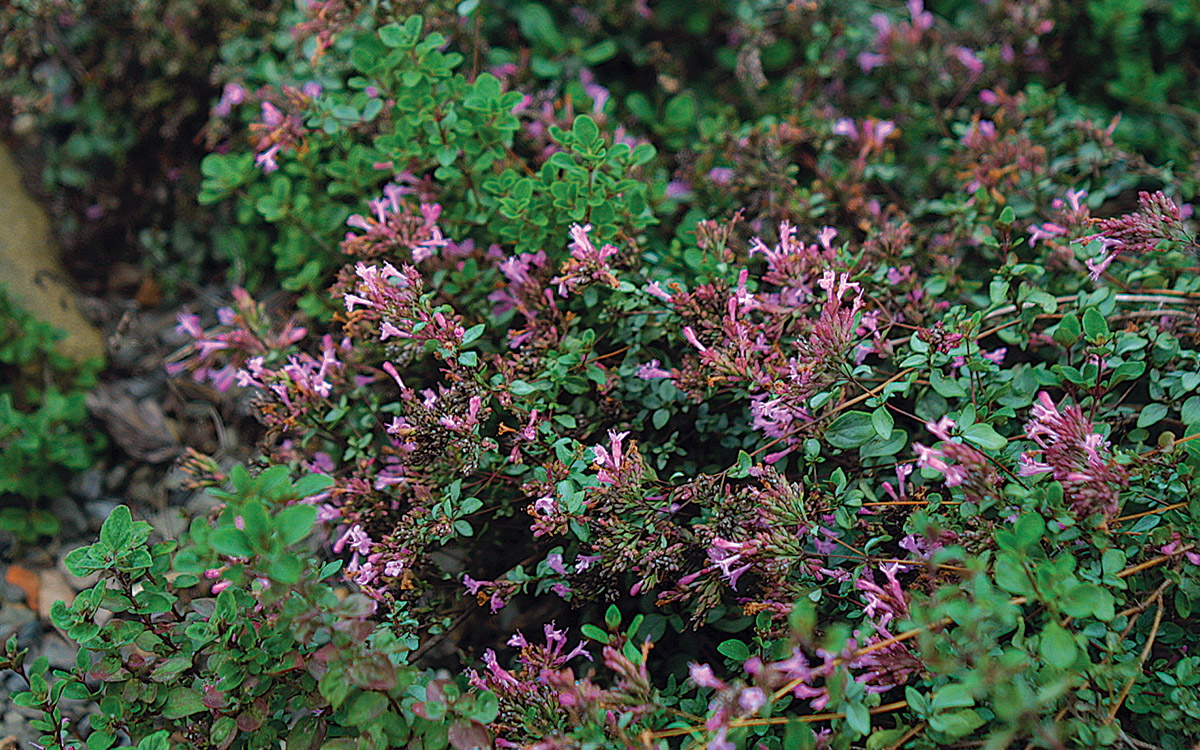
Name: Origanum laevigatum
Blossom color: purplish-pink
Bloom time: summer
Plant size: 2 feet tall
Zones: 7 to 10
An excellent herb that grows well in stone walls, this 24-inch-tall creeping perennial is native to Turkey and Cypress, where it can be found growing in rocky terrain. Its dark-green leaves have a rich purple tint, and its purplish-pink flower clusters appear from late spring through autumn. Some of its cultivars are also gardenworthy. ‘Herrenhausen’ (Zones 5–8) is a beautiful selection that displays masses of showy pink flowers with maroon bracts on purplish stems. ‘Hopleys’ (Zones 7–10) is taller (up to 36 inches) with large, long-blooming, deep-pink flowers. It’s a vigorous grower and more tolerant of heat than ‘Herrenhausen’. These ornamentals are not good for cooking, but their flowers are lovely when dried.
3. Roman chamomile self-sows
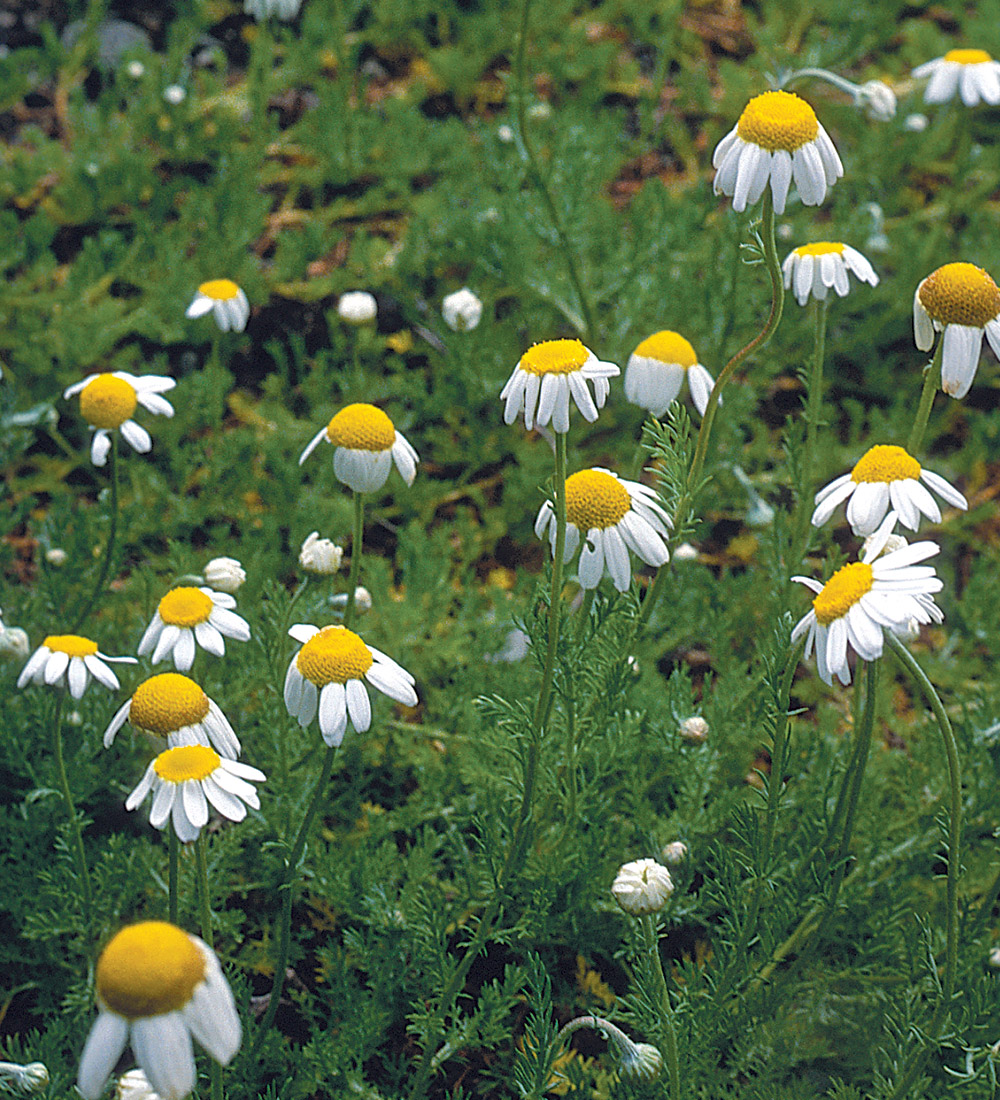
Name: Chamaemelum nobile
Blossom color: white
Bloom time: summer
Plant size: 12 inches tall
Zones: 6 to 9
For me, it’s always a joy to walk on the aromatic leaves of Roman chamomile planted in between paving stones. Its threadlike leaves fill the air with a pleasing apple-pineapple scent. This delightful herb reveals its white, daisylike blooms in summer. Although it spreads like a ground cover, it tends to be patchy. I find it works best in places where it can jump around and self-sow. A hardy perennial, Roman chamomile thrives in moist, rich soil and grows to 12 inches tall. Its young leaves and flowers can be gathered to make a calming tea.
‘Treneague’ (Zones 6–9) is a worthy cultivar, valued because it does not flower. It makes an attractive chamomile lawn, but unfortunately is less vigorous than the flowering species. The cultivar ‘Flore Pleno’ (Zones 6–9) has white double flowers that are showier than those of the species.
4. ‘Berggarten’ sage boasts dusty-green, shapely leaves
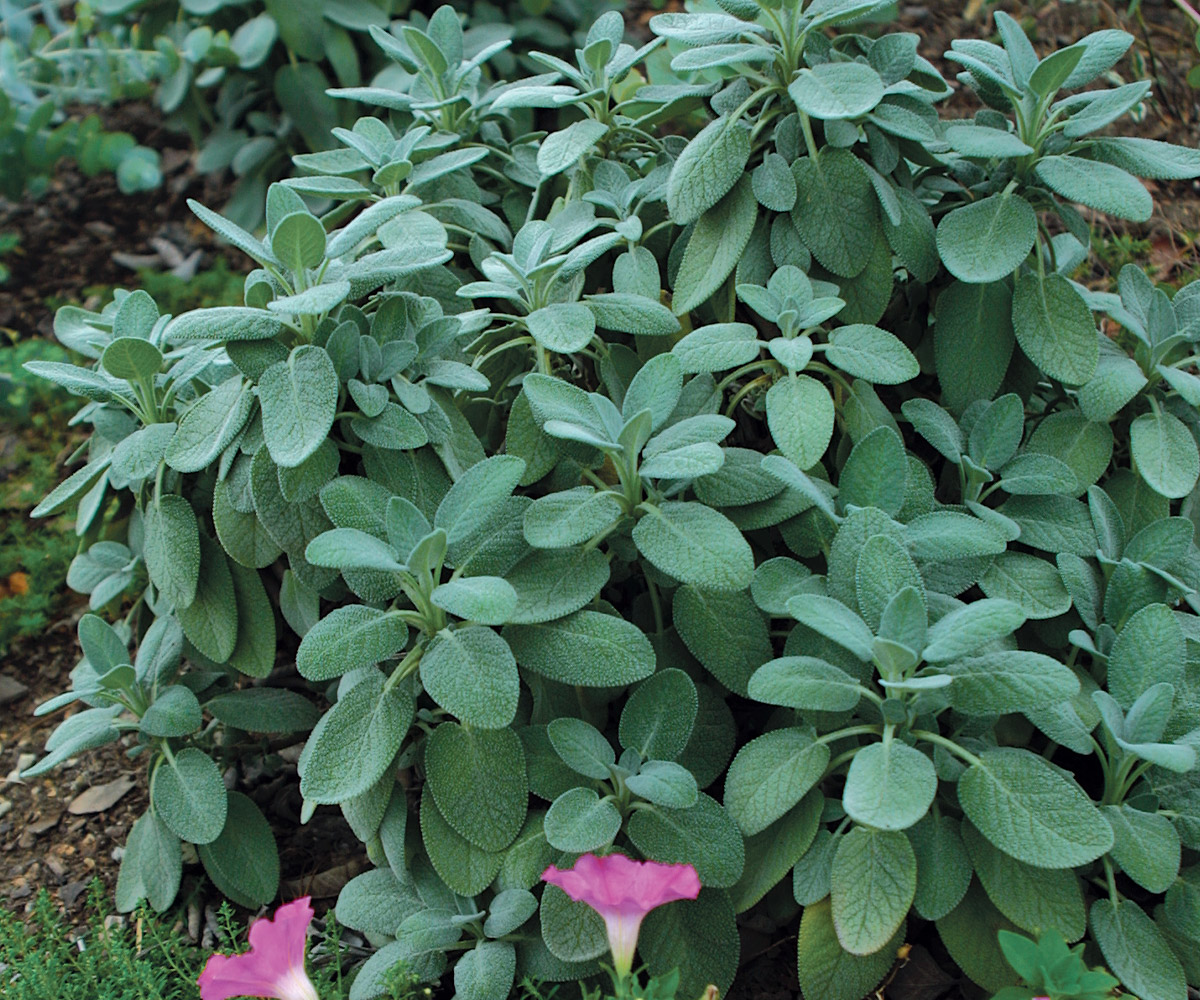
Name: Salvia officinalis ‘Berggarten’
Blossom color: violet-blue
Bloom time: early summer
Plant size: 2 feet tall
Zones: 5 to 8
Foliage can take a garden through the seasons. One of the most beautiful foliage herbs, originally from Germany, is ‘Berggarten’ sage, which has a shapely, compact habit and large rounded leaves. At 2 feet tall, it’s perfect for planting at the corners of beds and along walkways. I have seen ‘Berggarten’ sage successfully used to offset the soft-pink blossoms of ‘Bonica’ rose (Rosa ‘Bonica’, Zones 4–9). Its dusty-green leaves provide a pleasing background for its own violet-blue blooms in early summer. Sage leaves are sometimes used medicinally as a tea to treat lung and throat maladies. In cooking, its leaves complement strong-flavored meats and add zest to stuffing and potato dishes.
More reading: How to grow sage
5. Catmint can be pruned for repeat blooms
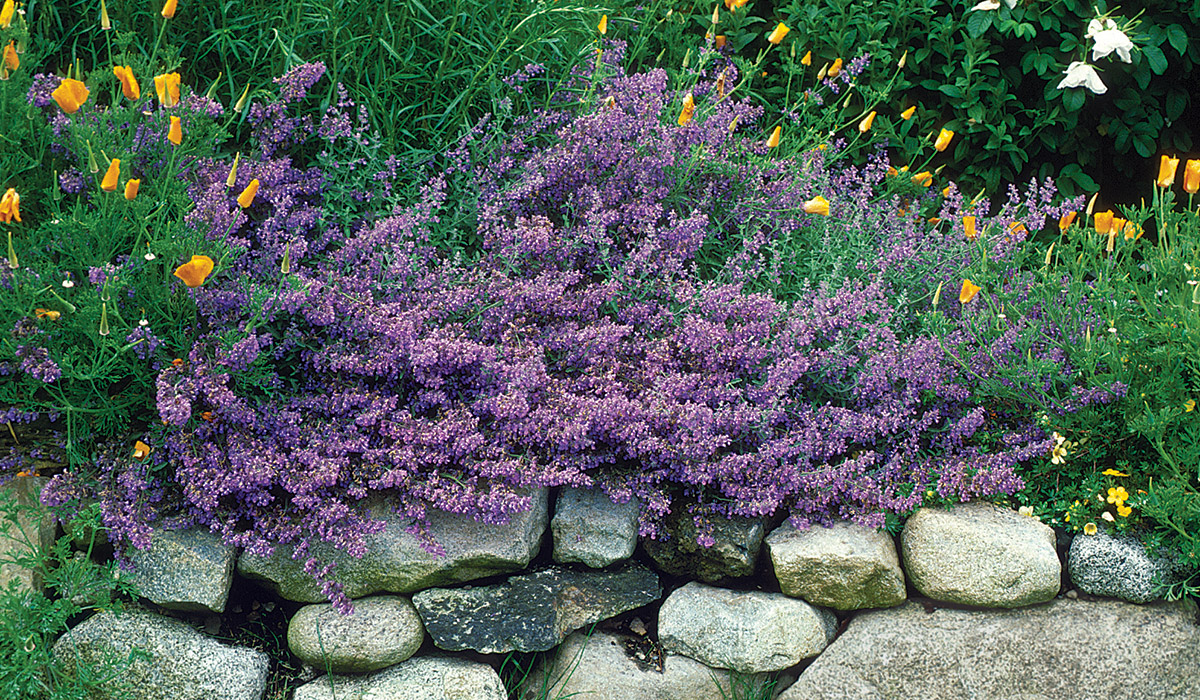
Name: Nepeta × faassenii
Blossom color: lavender-blue
Bloom time: summer
Plant size: 18 inches tall
Zones: 4 to 8
Another outstanding herb I use on the outskirts of plantings is catmint. With its smallish gray-green leaves, arching habit, and lavender-blue flowers in summer, it can soften and adorn the edges of beds. In particular, its 18-inch-tall form blends well with the deep-pink flowers of ‘Flower Carpet’ rose (Rosa ‘Flower Carpet’, Zones 5–9) and the silver foliage of artemisias (Artemisia spp. and cvs., Zones 3–9). I cut my catmint foliage back after flowering to encourage repeat blooms and to prevent the plant from looking straggly.
This catmint has few medicinal or culinary attributes, but it does make a lovely cut flower. It is often irresistible to cats, so you may find a euphoric feline friend lying in the center of your plants from time to time.
6. ‘Salem’ rosemary makes a good hedging plant
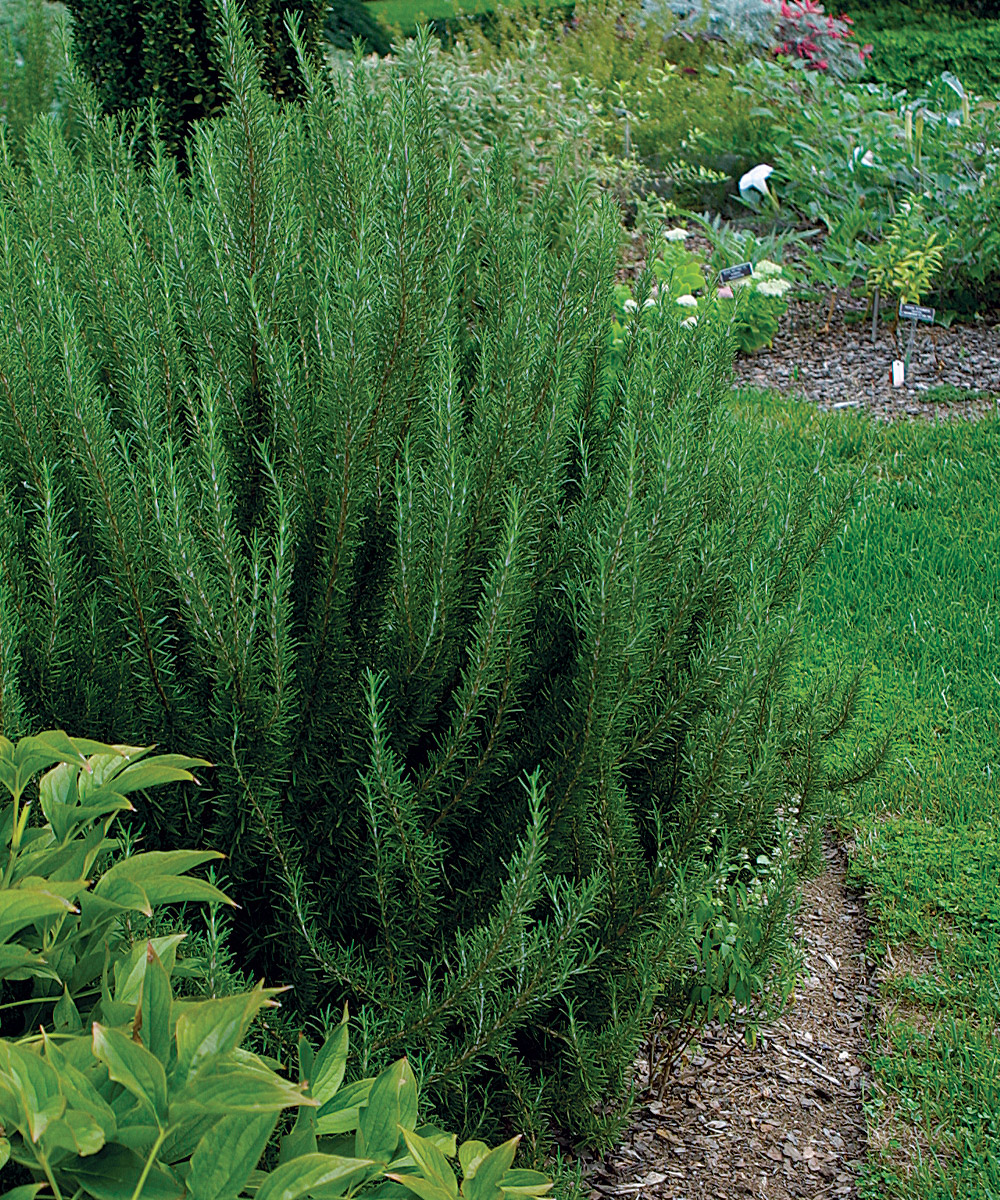
Name: Rosmarinus officinalis ‘Salem’
Blossom color: blue
Bloom time: early spring
Plant size: 2 feet tall
Zones: 7 to 10
Evergreen ‘Salem’ rosemary is another excellent foliage plant. Its shiny, green, needlelike leaves weave through beds like a thread in a tapestry, and it bears small blue flowers in early spring. This herb makes an excellent hedging plant or accent at the edge of borders or in containers. ‘Salem’ reaches up to 2 feet tall, but it takes well to pruning throughout the growing season. It is hardy in Zones 7 to 10, though many gardeners in Zone 7 choose to grow this plant against a south wall for additional warmth and extra winter protection. Like other Mediterranean rosemaries, ‘Salem’ needs full sun, a moderately fertile soil, and plenty of drainage. It’s best to propagate new plants by cuttings so they stay true to type.
Loved for its strong, pinelike flavor and fragrance, rosemary is often included, fresh or dry, in foods that are prepared by long simmering, like soups and stews. The tips of rosemary are frequently used in herbal bouquets.
More reading: How to grow rosemary
7. Cardoon offers bold texture
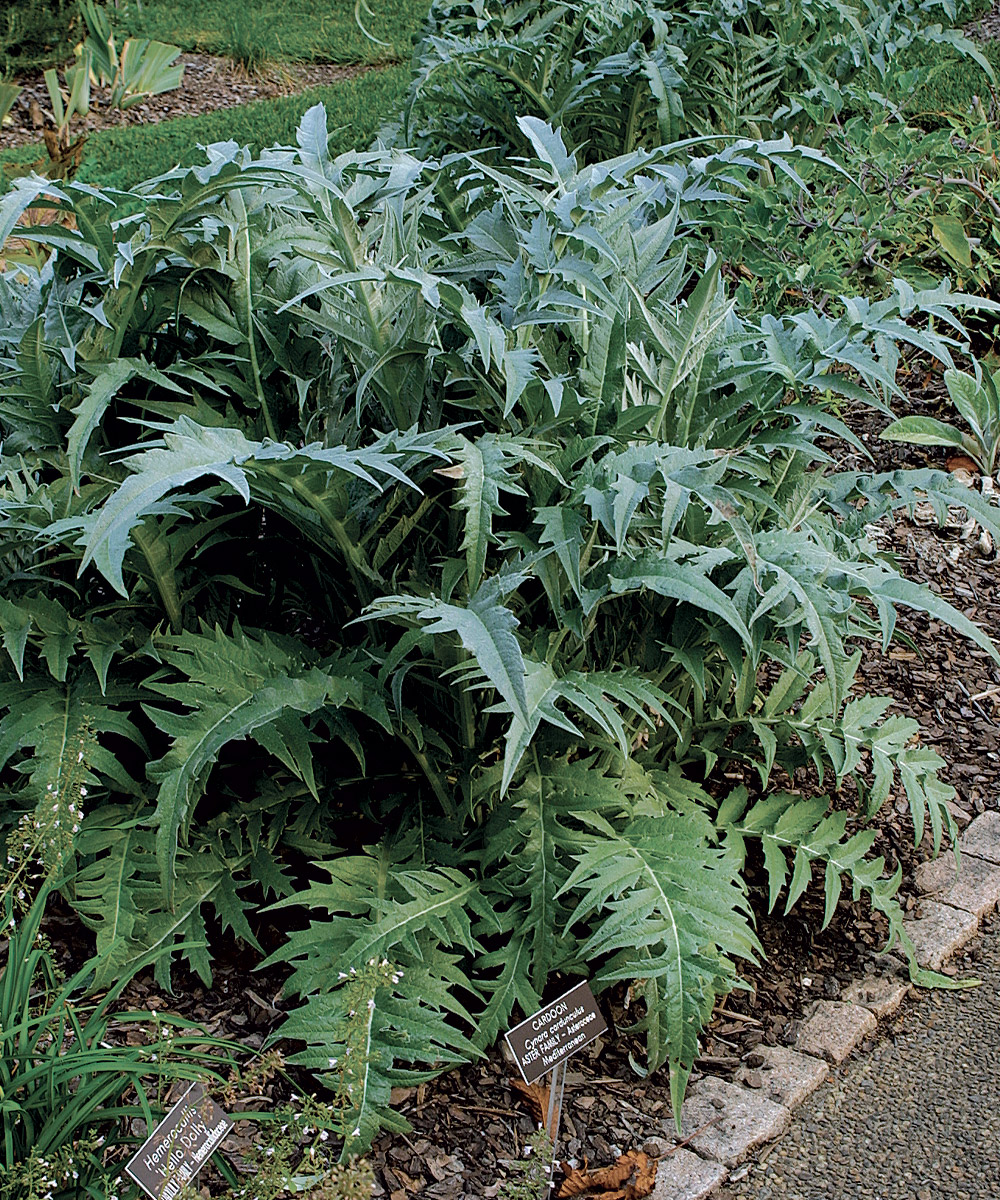
Name: Cynara cardunculus
Blossom color: purple
Bloom time: midsummer
Plant size: 5 feet tall
Zones: 7 to 9
For a plant with bold texture, cardoon is the best herb I know. Its gray-green arching leaves and statuesque frame give rise to its round, purple, thistle-like flowers in midsummer. In its glory, cardoon reaches 5 feet tall and 4 feet wide and is perfect in a mixed border. The magnificent flower heads can be cut and dried for floral arrangements. As an edible plant, its leaf stalks and midribs are tasty when blanched, while the unopened flower heads can be boiled and eaten, like those of its close cousin the artichoke.
Native to the well-drained, sunny slopes of the southwest Mediterranean, cardoon will overwinter in Zone 7 but grows as a short-lived perennial in Zones 8 and 9. It can easily be grown from seed and, if it started early enough, will produce flowers in the first year.
9. Sweet cicely tolerates shade
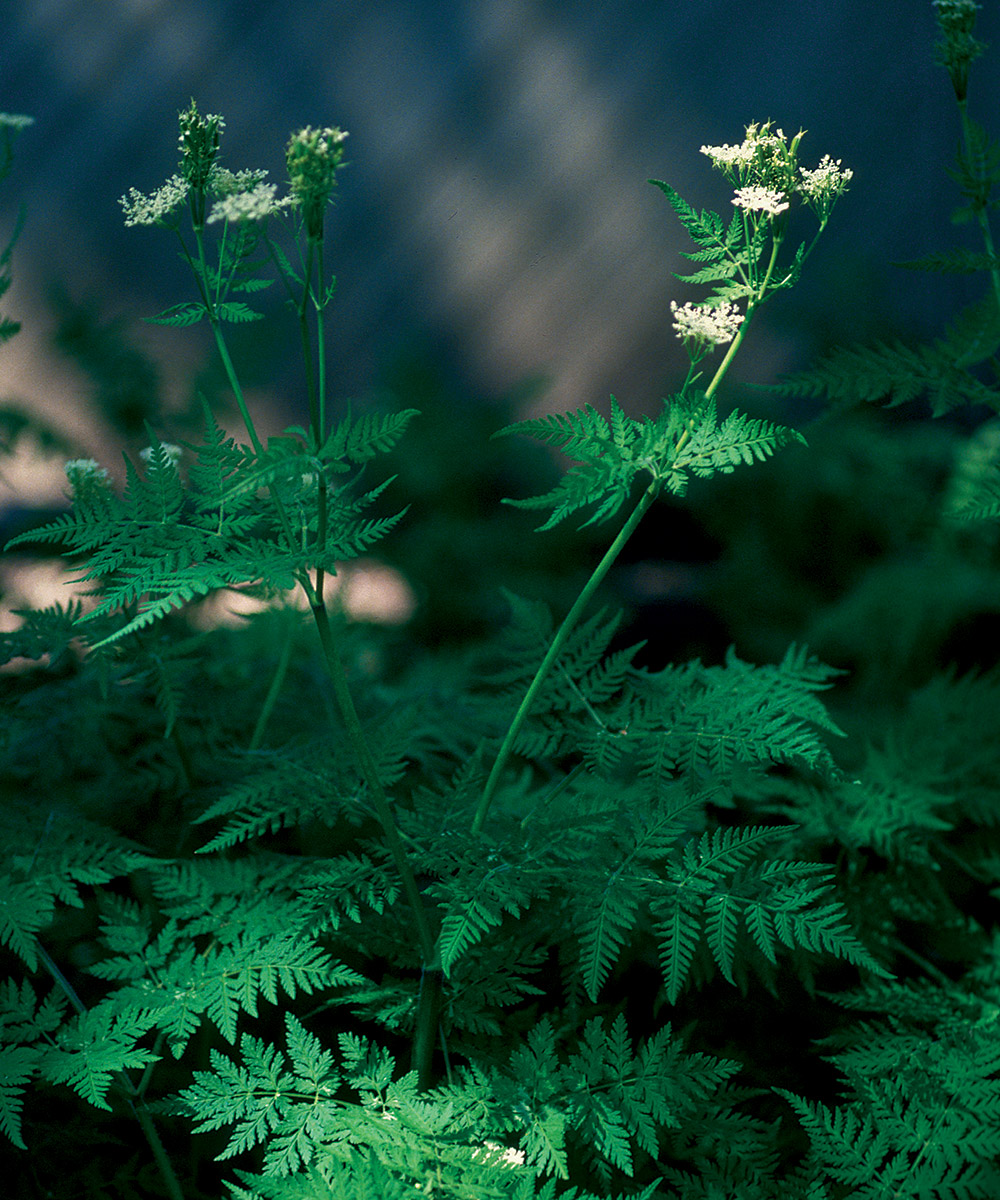
Name: Myrrhis odorata
Blossom color: white
Bloom time: late spring
Plant size: 2 to 4 feet tall
Zones: 3 to 7
Since it’s so rare to find a shade-tolerant herb, sweet cicely definitely makes my list of favorites. This elegant fernlike herb has a mounding form with bright-green leaves. In late spring, it is topped with star-shaped white flowers that are followed by shiny, ridged, brown seeds. It grows best in full to partial shade in rich, moist soil. It can be grown from seed and usually reaches between 2 and 4 feet tall. Sweet cicely is at home in woodland gardens, in shade borders, and as a ground cover. The leaves and seeds have a sweet anise flavor and are often used to sweeten desserts, especially those made with fruit. Don’t confuse this plant with those in the genus Osmorhiza, which are also commonly called sweet cicely. The plants of this genus generally have larger leaves and less-showy flowers.
9. ‘Tutti Frutti’ anise hyssop attracts bees
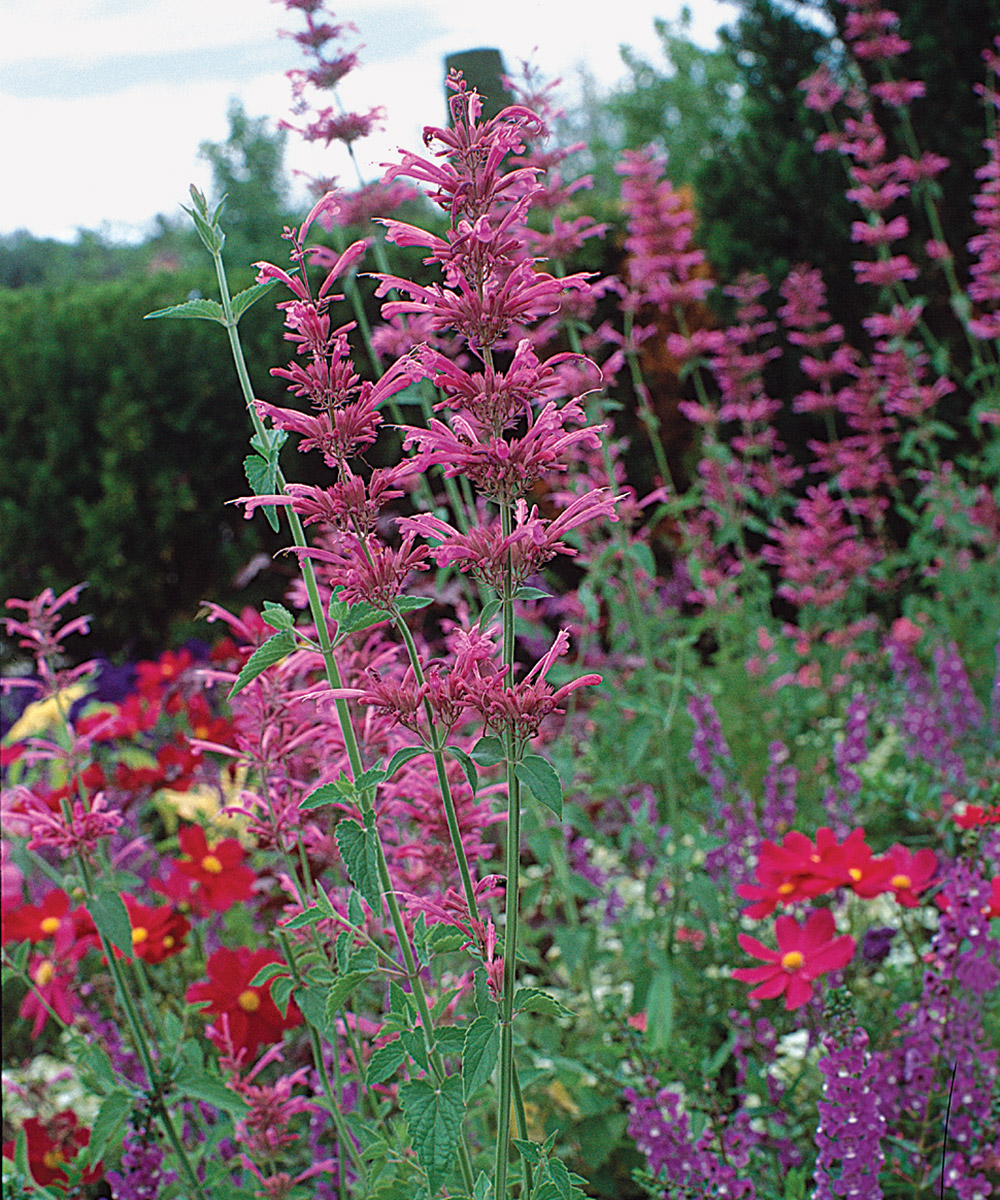
Name: Agastache ‘Tutti Frutti’
Blossom color: raspberry-red
Bloom time: late summer
Plant size: 2 to 6 feet tall
Zones: 6 to 10
Another herb that attracts a great deal of attention in the border is ‘Tutti Frutti’ anise hyssop. Its stunning raspberry-red flower spikes reach up to a foot long and offer appealing color in late summer. Plants stand 2 to 6 feet tall with gray-green toothed leaves. ‘Tutti Frutti’ prefers full-sun and well-drained soil. Its individual flowers are delicious, with a taste like sweet anise, and are fantastic when added to salad. Like other agastaches, this cultivar is great for attracting welcome insects, especially bees, to your garden.
10. Garlic chives have starry white flowers
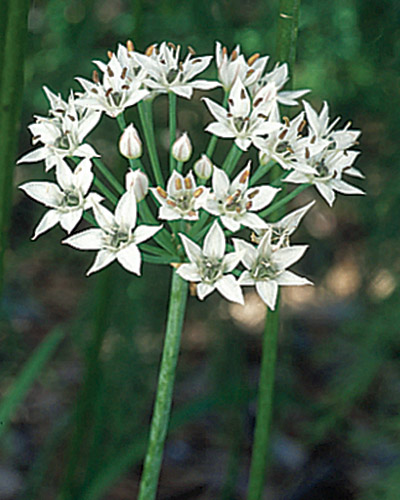
Name: Allium tuberosum
Blossom color: white
Bloom time: late summer
Plant size: 18 inches tall
Zones: 4 to 8
A superb companion for ‘Tutti Frutti’ is the gorgeous perennial herb garlic chives. It’s hard to miss this plant in late summer when its lovely starry-white flowers are in full bloom. After it flowers, cut the attractive seed heads back to prevent vigorous seedlings from sprouting up everywhere. The seed heads are great for decorative use indoors, while the flat, garlic-flavored leaves can be harvested throughout the growing season to add to soups, sauces, and dips.
Native to southeast China, garlic chives like sunny locations with fertile, sandy soil. At 18 inches tall, this herb blends well with other neighbors, like the annual flowering tobacco (Nicotiana × sanderae), ‘Autumn Joy’ sedum (Sedum ‘Autumn Joy’, Zones 3–10), and coneflower (Echinacea purpurea, Zones 3–9).
More reading: How to grow chives






Comments
Log in or create an account to post a comment.
Sign up Log in