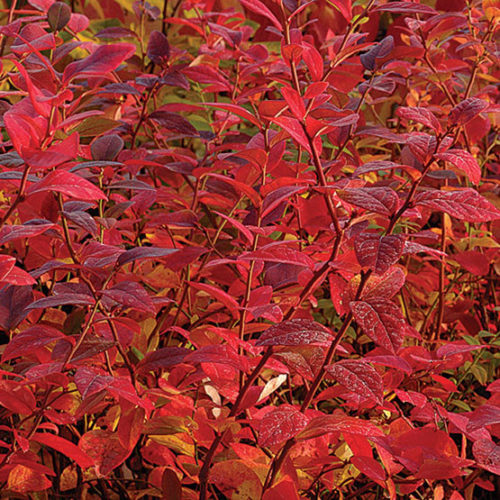
Vaccinium corymbosum (Highbush blueberry)

Vaccinium corymbosum Photo/Illustration: William Cullina


Be the first to rate this plant

Plant Showcase - from our advertisers


Hardiness Zones: 1 2 3 4 5 6 7 8 9 10 11
Botanical Name: Vaccinium corymbosum vak-SIN-ee-um kor-im-BO-sum Common Name: Highbush blueberry Genus: Vacinnium
Highbush blueberry provides four seasons of fanfare, starting with twisted, peeling stems in winter; profuse white or pink blossoms in spring; savory blue fruit in summer; and long-lasting foliage the color of a rich red wine in fall. The maroon to scarlet fall shades are effective for a solid month or more, as the leaves (especially in full sun) are reluctant to fall. The best fruit set occurs when you plant at least two cultivars that will bloom concurrently to ensure cross-pollination.
Noteworthy characteristics: Prefers acidic soil.
Care: Full to partial sun and moist to moderately dry soil. Prefers acidic conditions.
Problems: Infrequent.
Height 6 ft. to 10 ft.
Spread 6 ft. to 10 ft.
Growth Habit Clumps
Light Full Sun to Part Shade
Moisture Dry to Medium
Maintenance Low
Characteristics Attracts Birds; Attracts Butterflies; Interesting Bark; Native; Showy Fall Foliage; Showy Flowers
Bloom Time Early Spring; Late Spring; Spring
Flower Color Pink Flower; White Flower
Uses , Beds and Borders, Hedge, Waterside
Style , Shade, Woodland Garden
Seasonal Interest , Winter Interest, Spring Interest, Summer Interest, Fall Interest
Type ,Shrubs

Plants you might also like

Cornus racemosa 'Emerald' Cornus racemosa 'Emerald'
(Snow Lace® gray dogwood)
Be the first to rate this plant
Hardiness Zones: 1 2 3 4 5 6 7 8 9 10 11

This native shrub dogwood is more compact than the species with semiglossy, emerald green foliage and showy, white fruit. Purple fall leaf color and rosy pink pedicels make this gray dogwood a fine choice for the woodland edge. Its silvery gray bark in winter adds interest into another season. White flowers in the spring add to the list of what it offers. Plant this dogwood in the landscape where it will be seen in the fall and winter. It rarely suckers.

Rosa 'Blanc Double de Coubert' Rosa 'Blanc Double de Coubert'
(Hedgehog rose, Ramanas rose, Japanese rose, Sea tomato)
(1 user review)
Hardiness Zones: 1 2 3 4 5 6 7 8 9 10 11

The white of this rose has a purity of color that is without equal. It produces semi-double, very fragrant flowers from spring to fall, which are sometimes followed by orange hips. It grows to 6 feet high and wide.   

Viburnum prunifolium Viburnum prunifolium
(Blackhaw Viburnum)
Be the first to rate this plant
Hardiness Zones: 1 2 3 4 5 6 7 8 9 10 11

Blackhaw Viburnum is a large shrub or small tree with clusters of creamy white flowers followed by pink-rose berries, which birds love to eat. Its distinctive bronze-green foliage on reddish purple stems turns blue-black in the fall. Blackhaw grows to 12 to 15 feet high and 8 to12 feet wide.

no image available Cornus alba
(Red-twig dogwood)
Be the first to rate this plant
Hardiness Zones: 1 2 3 4 5 6 7 8 9 10 11

These showy shrubs have two distinct phases of garden interest. In winter, they display boldly colorful bark—red, yellow, or orange—on twiggy stems to make a striking scene. In spring, the stems lose their vivid color and produce bright green, gold, or variegated foliage that accents the garden through the fall. Twig and leaf color vary acording to the cultivar.

Rosa 'Frau Dagmar Hastrup' Rosa 'Frau Dagmar Hastrup'
(Hedgehog rose, Ramanas rose, Japanese rose, Sea tomato)
(1 user review)
Hardiness Zones: 1 2 3 4 5 6 7 8 9 10 11

This choice rose has single, gently cupped light-pink flowers that exude an intense, clove-scented perfume. It blooms in spring and sporadically throughout the season, and produces red hips. In autumn, the foliage turns deep maroon, which changes to yellow tinged with coppery highlights. It grows to 3 to 4 feet high and wide.