previous
  • Plants that Spark!
    Plants that Spark!
  • Make a Succulent Topiary
    Make a Succulent Topiary
  • Plant an Easy-to-Water Strawberry Jar
    Plant an Easy-to-Water Strawberry Jar
  • Thoughts From a Foreign Field
    Thoughts From a Foreign Field
  • Garden Confidential: A Plant Walks into a Bar
    Garden Confidential: A Plant Walks into a Bar
  • Pretty in Pink
    Pretty in Pink
  • Homegrown / Homemade
    Homegrown / Homemade
  • Lawn Alternatives
    Lawn Alternatives
  • Indeterminate or Determinate Tomatoes?
    Indeterminate or Determinate Tomatoes?
  • Containers as Focal Points
    Containers as Focal Points
  • Elephant's Ears
    Elephant's Ears
  • Mulch for a Healthy Garden
    Mulch for a Healthy Garden
  • In Pursuit of the Perfect Potting Shed
    In Pursuit of the Perfect Potting Shed
  • Slideshow: Beautiful Clematis
    Slideshow: Beautiful Clematis
  • Save Money by Growing Your Own
    Save Money by Growing Your Own
  • Designing with Curved Terraces
    Designing with Curved Terraces
  • Fragrant Plants for Pathways
    Fragrant Plants for Pathways
  • Dwarf Citrus Trees
    Dwarf Citrus Trees
  • NEW Video Series: There's a Better Way
    NEW Video Series: There's a Better Way
  • Colorful Selections for Shade
    Colorful Selections for Shade
  • Fast-Growing Trees for Impatient Gardeners
    Fast-Growing Trees for Impatient Gardeners
  • Building a Compost Bin
    Building a Compost Bin
  • 6 Tips for Weed Control
    6 Tips for Weed Control
  • Comfortable Alfresco Dining
    Comfortable Alfresco Dining
  • Stylish Shady Containers
    Stylish Shady Containers
next

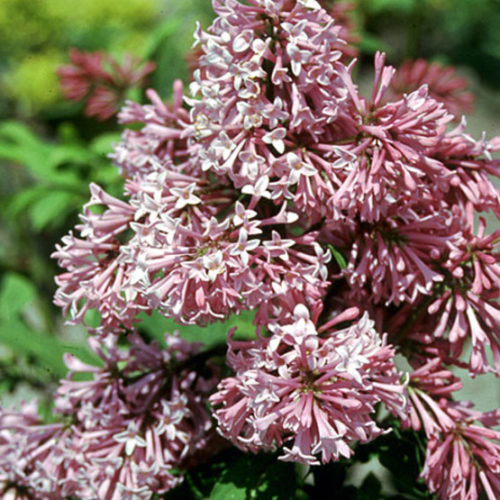
Syringa × prestoniae 'Miss Canada' (Preston lilac)

Syringa × prestoniae 'Miss Canada' Photo/Illustration: Courtesy of Spring Meadow Nursery


Be the first to rate this plant

Plant Showcase - from our advertisers


Hardiness Zones: 1 2 3 4 5 6 7 8 9 10 11
Botanical Name: Syringa × prestoniae 'Miss Canada' Common Name: Preston lilac Synonyms: S. 'Miss Canada' Genus: Syringa
This hardy, late-flowering hybrid bears perfumed rose-pink buds opening to pink flowers. It forms a shrub 10 feet high by 8 feet wide.
Care: Grow in reasonably fertile, well-drained soil in full sun; prefers neutral to slightly alkaline soil. Promptly deadhead spent blossoms to produce more robust blooms for the following year. Prune lightly in late winter or early spring to maintain a healthy framework, remembering that most species form flowers the previous season. Plant in areas with good air circulation to thwart disease. Because lilacs are fire retardant, they can be considered for planting near homes that are susceptible to wildfires. Most lilacs require a period of chilling dormancy.
Propagation: Take softwood cuttings or layer in early summer; graft in winter; bud in summer.
Problems: Powdery mildew, dieback, leafroll virus, mycoplasma-like organisms (MLO), root knot nematode, Verticillium wilt, witches' broom, bacterial leaf spot, anthracnose, borers, scale, caterpillars.
Height 6 ft. to 10 ft.
Spread 6 ft. to 10 ft.
Growth Habit Spreads
Growth Pace Moderate Grower
Light Full Sun to Part Shade
Moisture Medium Moisture
Maintenance Low
Characteristics Attracts Butterflies; Attracts Hummingbirds; Fragrant Flowers; Showy Flowers
Bloom Time Spring
Flower Color Pink Flower
Uses Beds and Borders, Cut Flower, Flowering Tree, Hedge, Naturalizing, Roadside, Screening
Style Cottage Garden
Seasonal Interest Spring Interest
Type Shrubs

Plants you might also like

Rosa 'Charles Albanel' Rosa 'Charles Albanel'
(Hedgehog rose, Ramanas rose, Japanese rose, Sea tomato)
Be the first to rate this plant
Hardiness Zones: 1 2 3 4 5 6 7 8 9 10 11

This spreading rose grows to only 2 feet tall, making it an ideal groundcover for a steep bank or roadside. It produces fragrant, double, deep-pink blossoms from spring to fall.  

Rosa 'Frau Dagmar Hastrup' Rosa 'Frau Dagmar Hastrup'
(Hedgehog rose, Ramanas rose, Japanese rose, Sea tomato)
(1 user review)
Hardiness Zones: 1 2 3 4 5 6 7 8 9 10 11

This choice rose has single, gently cupped light-pink flowers that exude an intense, clove-scented perfume. It blooms in spring and sporadically throughout the season, and produces red hips. In autumn, the foliage turns deep maroon, which changes to yellow tinged with coppery highlights. It grows to 3 to 4 feet high and wide.   

Rosa rugosa var. alba Rosa rugosa var. alba
(Hedgehog rose, Ramanas rose, Japanese rose, Sea tomato)
Be the first to rate this plant
Hardiness Zones: 1 2 3 4 5 6 7 8 9 10 11

This variety has single, papery white blossoms that open from light pink buds and have contrasting yellow stamens. The heavily-scented flowers are followed by reddish-orange hips. It grows up to 6 feet high.

no image available Cornus alba
(Redtwig dogwood)
Be the first to rate this plant
Hardiness Zones: 1 2 3 4 5 6 7 8 9 10 11

These showy shrubs have two distinct phases of garden interest. In winter, they display boldly colorful bark—red, yellow, or orange—on twiggy stems to make a striking scene. In spring, the stems lose their vivid color and produce bright green, gold, or variegated foliage that accents the garden through the fall. Twig and leaf color vary according to the cultivar.

Rosa rugosa 'Foxi' Rosa rugosa 'Foxi'
('Foxi' rugosa rose)
Be the first to rate this plant
Hardiness Zones: 1 2 3 4 5 6 7 8 9 10 11

Large, open, semi-double pink flowers with yellow stamens and an intoxicating scent make 'Foxi' an outstanding rugosa rose. The relatively small height of the shrub makes the blossoms appear larger. This is a relatively new rugosa rose. -Suzanne Verrier, No muss, no fuss rugosa roses, Fine Gardening issue #121