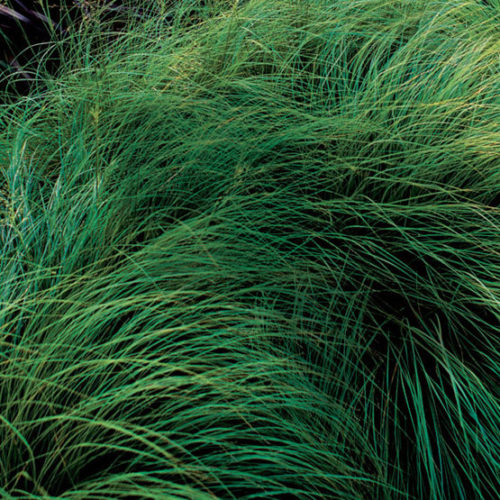
Sporobolus heterolepsis (Prairie dropseed)

Sporobolus heterolepsis Photo/Illustration: Saxon Holt


Be the first to rate this plant

Hardiness Zones: 1 2 3 4 5 6 7 8 9 10 11
Botanical Name: Sporobolus heterolepsis spoor-OB-oh-lus het-er-oh-LEP-siss Common Name: Prairie dropseed Genus: Sporobolus
The finely textured, green leaves of this slow-growing, clump-forming perennial turn golden yellow in autumn. It bears cloudy panicles of fragrant, pale-pink to tawny flowers 5 to 10 inches long in late summer, reaching 3 feet tall.
Noteworthy characteristics: Native of western North America. Good dried flower. Heat and drought tolerant. The flowers smell like coriander.
Care: Grow in any well-drained soil in full sun. These plants prefer dry and rocky, but are tolerant of a wide range of soils.
Propagation: Sow seed in situ in spring or fall. Divide in spring or fall.
Problems: Root rot, rust, seed smut, leaf spots
Height 1 ft. to 3 ft.
Spread 1 ft. to 3 ft.
Growth Habit Clumps
Growth Pace Slow Grower
Light Full Sun Only
Moisture Adaptable
Maintenance Low
Tolerance Deer Tolerant;Drought Tolerant;Frost Tolerant
Characteristics Fragrant Flowers; Fragrant Foliage; Native; Self Seeds; Showy Flowers; Showy Foliage; Showy Seed Heads
Bloom Time Summer
Flower Color Brown Flower; Pink Flower
Uses Ground Covers, Dried Flower, Naturalizing, Roadside
Style Meadow Garden
Seasonal Interest Winter Interest, Summer Interest, Fall Interest
Type Grasses

Plants you might also like

no image available Panicum amarum 'Dewey Blue'
(Bitter switchgrass, Switchgrass)
Be the first to rate this plant
Hardiness Zones: 1 2 3 4 5 6 7 8 9 10 11

A stunning, native dune grass, 'Dewey Blue' is perfect for coastal areas as well as inland gardens. Heat, drought, and humidity won't faze its noticeably graceful habit. This grass has exceptional blue foliage and a vigorous constitution. Airy, light beige flowers emerge in late summer and fall, persisting well into winter for a long season of interest. 'Dewey Blue' grows 4 to 5 feet tall and almost as wide.

Schizachyrium scoparium Schizachyrium scoparium
(Little bluestem, Prairie beard grass)
Be the first to rate this plant
Hardiness Zones: 1 2 3 4 5 6 7 8 9 10 11

Little bluestem is a tidy, finely textured clumping grass with a blue-green summer color. Its silvery seed heads rise to a height of nearly 2 feet in late summer and are at their best when backlit in the morning or afternoon sun. In fall, the grass turns a rosy rust color that lasts all winter.

Festuca mairei Festuca mairei
(Atlas fescue)
Be the first to rate this plant
Hardiness Zones: 1 2 3 4 5 6 7 8 9 10 11

This sturdy groundcover is fast becoming one of the most dependable grasses for creating drought-tolerant meadows. Clumping evergreen foliage is a rich khaki green and grows in an arching clump. The flowers, while noticeable, are not showy. Atlas fescue is at its best in groups and grows in all but hot, humid, and low desert climates.

Sorghastrum nutans 'Indian Steel' Sorghastrum nutans 'Indian Steel'
(Indian grass)
Be the first to rate this plant
Hardiness Zones: 1 2 3 4 5 6 7 8 9 10 11

This vase-shaped indian grass produces golden yellow plumes, giving 'Indian Steel' a refined appearance. Each flower spike has tiny, bright yellow pollen sacs that stand out on the darker seed heads. From early spring to fall, the foliage is metallic blue, mellowing to a copper-tan after the first frost.

Carex divulsa Carex divulsa
(Berkeley sedge)
Be the first to rate this plant
Hardiness Zones: 1 2 3 4 5 6 7 8 9 10 11

This sedge is one of the most adaptable of the ground-cover grasses. Its ability to look the same in sun or shade makes it a valuable asset in plantings that go in and out of full sun. Berkeley sedge is a good solution for areas under stress where lawn grasses often fail. The flowers are not particularly noteworthy.