previous
  • Plant an Easy-to-Water Strawberry Jar
    Plant an Easy-to-Water Strawberry Jar
  • Dwarf Citrus Trees
    Dwarf Citrus Trees
  • Mulch for a Healthy Garden
    Mulch for a Healthy Garden
  • Comfortable Alfresco Dining
    Comfortable Alfresco Dining
  • Save Money by Growing Your Own
    Save Money by Growing Your Own
  • Containers as Focal Points
    Containers as Focal Points
  • Plants that Spark!
    Plants that Spark!
  • Make a Succulent Topiary
    Make a Succulent Topiary
  • NEW Video Series: There's a Better Way
    NEW Video Series: There's a Better Way
  • Garden Confidential: A Plant Walks into a Bar
    Garden Confidential: A Plant Walks into a Bar
  • Fragrant Plants for Pathways
    Fragrant Plants for Pathways
  • Homegrown / Homemade
    Homegrown / Homemade
  • 6 Tips for Weed Control
    6 Tips for Weed Control
  • In Pursuit of the Perfect Potting Shed
    In Pursuit of the Perfect Potting Shed
  • Pretty in Pink
    Pretty in Pink
  • Building a Compost Bin
    Building a Compost Bin
  • Thoughts From a Foreign Field
    Thoughts From a Foreign Field
  • Fast-Growing Trees for Impatient Gardeners
    Fast-Growing Trees for Impatient Gardeners
  • Lawn Alternatives
    Lawn Alternatives
  • Stylish Shady Containers
    Stylish Shady Containers
  • Elephant's Ears
    Elephant's Ears
  • Colorful Selections for Shade
    Colorful Selections for Shade
  • Designing with Curved Terraces
    Designing with Curved Terraces
  • Indeterminate or Determinate Tomatoes?
    Indeterminate or Determinate Tomatoes?
  • Slideshow: Beautiful Clematis
    Slideshow: Beautiful Clematis
next

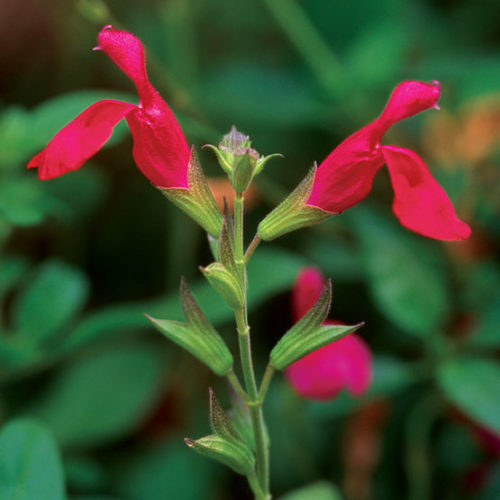
Salvia 'Maraschino' ('Maraschino' bush sage)

Salvia 'Maraschino' Photo/Illustration: Bill Johnson

(Based on 2 user reviews)

Rate this plant

Plant Showcase - from our advertisers


Hardiness Zones: 1 2 3 4 5 6 7 8 9 10 11
Botanical Name: Salvia 'Maraschino' SAL-vee-ah Common Name: 'Maraschino' bush sage Genus: Salvia
'Maraschino' bush sage is a superb Salvia that is irresistible to hummingbirds and gardeners alike. Even after dying back to the ground in winter in the cooler zones, this plant comes back in full force each spring, reaching its full height and covering itself with cherry red blooms by midsummer. The flowers bloom nonstop through the first hard frost, and the leaves are sweetly fragrant. Plants do best when given afternoon shade. 'Maraschino' grows to 3 feet tall.
Care: Provide afternoon shade and well-drained soil.
Propagation: Divide in early spring, or take cuttings of newer growth anytime.
Problems: Infrequent. Occasionally, aphids, spider mites, and whiteflies may bother plants.
Height 1 ft. to 3 ft.
Spread 6 in. to 12 in.
Growth Habit Clumps
Light Full Sun to Part Shade
Moisture Dry to Medium
Maintenance Low
Characteristics Attracts Hummingbirds; Fragrant Foliage; Showy Flowers
Bloom Time Early Fall; Fall; Late Summer; Summer
Flower Color Red Flower
Uses Beds and Borders
Style Cottage Garden, Rock Garden
Seasonal Interest Summer Interest, Fall Interest
Type Perennials,Shrubs

Plants you might also like

Melampodium leucanthum Melampodium leucanthum
(Blackfoot daisy)
(1 user review)
Hardiness Zones: 1 2 3 4 5 6 7 8 9 10 11

A native perennial shrub that grows to about 2 feet tall and wide and covers itself the whole season with honey-scented, white and yellow daisy flowers. The foliage is typical of the aster family. Plant en masse in a well-drained border or use in a rock garden. Blackfoot daisy can be short-lived.

Vitex agnus-castus var. latifolia Vitex agnus-castus var. latifolia
(Chaste tree)
(2 user reviews)
Hardiness Zones: 1 2 3 4 5 6 7 8 9 10 11

Chaste tree is a southern favorite beginning to gain favor across the country. Whether left to grow as a large, multistemmed shrub or cut back annually for a more compact look, this selection is a winner. Fine, lacy leaves are glossy and green. Bright blue flower panicles begin to form in early summer and continue through the heat of the season and into fall. This is a reasonably cold-hardy, deer-resistant woody plant, and while V. agnus-castus is typically considered a Zone 7 plant, the variety latifolia can be grown in Zone 6 and even in southern areas of Zone 5.

no image available Nerium oleander ‘Little Red’
('Little Red' oleander)
(1 user review)
Hardiness Zones: 1 2 3 4 5 6 7 8 9 10 11

'Little Red' is a dwarf selection of oleander, which is a large evergreen shrub. Its flowers are deep red and bloom all summer long. This plant is tough and drought-tolerant.

Euphorbia antisyphilitica Euphorbia antisyphilitica
(Candelilla)
(1 user review)
Hardiness Zones: 1 2 3 4 5 6 7 8 9 10 11

Candelilla forms an upright clump of slender, waxy gray-green stems. Inconspicuous leaves appear on new growth but quickly drop with the first dry spell. Tiny flowers of cream and rosy pink periodically hug the upper portion of the stems throughout the warm season, particularly in response to rain. Candelilla is perfect for narrow planting strips because its stems grow straight up in tight bundles.

Sedum ‘Autumn Joy’ Sedum ‘Autumn Joy’
(Stonecrop)
(13 user reviews)
Hardiness Zones: 1 2 3 4 5 6 7 8 9 10 11

This plant is as dependable and adaptable as they come. Its flowers bloom from August into November; they open pink and mature to a copper befitting of autumn. It is 2 feet tall and wide, with succulent stems and leaves. 'Autumn Joy' looks great with ornamental grasses.