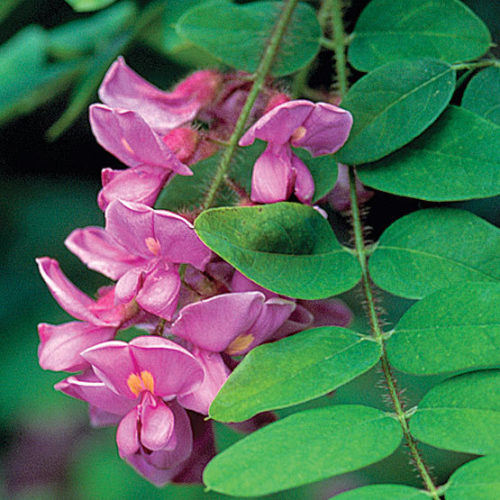
Robinia hispida (Rose acacia, Bristly locust)

Robinia hispida Photo/Illustration: David Cavagnaro


Be the first to rate this plant

Plant Showcase - from our advertisers


Hardiness Zones: 1 2 3 4 5 6 7 8 9 10 11
Botanical Name:Robinia hispida roe-BIN-ee-ah HISS-pih-dah Common Name: Rose acacia, Bristly locust Genus: Robinia
This showy flowering shrub grows to 8 feet tall and wide and features dark green, compound pinnate leaves on bristly stems and pendant clusters of fragrant, pea-like, rose-pink flowers that are attractive to bees and butterflies in late spring and early summer. The flowers are occasionally followed by bristly, reddish-brown seed pods. Native to the southeastern United States, this aggressive shrub spreads by suckers and is considered invasive in Michigan, New Jersey, Ohio, Pennsylvania, and Washington. All parts of this plant are at least mildly poisonous.
Care: Provide full sun and fertile, moist, well-drained soil in USDA Hardiness Zones 6 to 11. Will tolerate poor, dry soils. Protect from damaging winds. Prune wayward and crossing stems in late summer or early fall.
Propagation:

 Sow seed in fall or root hardwood cuttings in spring.


Problems:

 Borers, scale insects, leafminers, cankers, powdery mildew, and Verticillium wilt can be problems.


Height 6 ft. to 10 ft.
Spread 6 ft. to 10 ft.
Growth Habit Runs;Spreads
Growth Pace Invasive/Aggressive Grower;Moderate Grower
Light Full Sun Only
Moisture Adaptable;Dry to Medium;Medium Moisture
Maintenance Moderate
Characteristics Attracts Butterflies; Fragrant Flowers; Native; Showy Flowers; Showy Foliage; Showy Seed Heads
Bloom Time Early Summer; Late Spring; Spring; Summer
Flower Color Pink Flower
Uses , Sun, Poisonous, Spring Interest
Type ,Shrubs,Natives

Plants you might also like

Heteromeles arbutifolia Heteromeles arbutifolia
(Toyon, Christmas berry, California holly)
Be the first to rate this plant
Hardiness Zones: 1 2 3 4 5 6 7 8 9 10 11

This evergreen, California-native shrub grows to 20 feet tall and wide and produces abundant clusters of tiny white flowers in early summer, which attract beneficial insects that help control pests. This is followed by bright red berries that feed wildlife in fall and winter. The only species of its genus, Toyon is closely related to the genus Photinia.

Hydrangea quercifolia Hydrangea quercifolia
(Oakleaf hydrangea)
(2 user reviews)
Hardiness Zones: 1 2 3 4 5 6 7 8 9 10 11

Oakleaf hydrangeas originated along the sandy streams of the southeastern United States, and they are more drought tolerant than many other hydrangeas. Their matte green leaves are coarsely textured and deeply lobed, and in fall they turn red and purple. White flower heads form in spring, and as summer draws to a close they turn shades of pink, green, and ecru.

Fouquieria splendens Fouquieria splendens
(Ocotillo)
Be the first to rate this plant
Hardiness Zones: 1 2 3 4 5 6 7 8 9 10 11

This southwestern native shrub grows to 20 feet tall and 15 feet wide and sports long, dull, spiny stems that green up and leaf out after a rain, followed by long, scarlet flowers that attract hummingbirds.When dry conditions return, ocotillo drops its leaves again. This cycle can replay several times a season. Great as a surprising specimen or forbidding hedge.

Aesculus parviflora var. serotina 'Rogers' Aesculus parviflora var. serotina 'Rogers'
('Rogers' bottlebrush buckeye)
Be the first to rate this plant
Hardiness Zones: 1 2 3 4 5 6 7 8 9 10 11

This is a suckering, deciduous shrub grown for it's white, bottlebrush-like flowers in early summer. The flowers are considerably longer than those of the species at up to 30 inches, and emerge a couple of weeks later. The shrub grows to 10 feet tall and 15 feet wide and prefers full sun to partial shade and moist, well-drained soil. Its layers of broad leaves turn gold in fall.Suitable for a medium to large garden.

Fothergilla 'Blue Shadow' Fothergilla 'Blue Shadow'
(Dwarf Fothergilla, Dwarf Witch Alder )
Be the first to rate this plant
Hardiness Zones: 1 2 3 4 5 6 7 8 9 10 11

These shrubs are beautiful, compact, and easy to grow, making them obvious choices for mixed borders, foundation plantings, and naturalizing. The fragrant, bottlebrush flowers are petalless and sweetly-scented.