previous
  • Building a Compost Bin
    Building a Compost Bin
  • Make a Succulent Topiary
    Make a Succulent Topiary
  • 6 Tips for Weed Control
    6 Tips for Weed Control
  • Mulch for a Healthy Garden
    Mulch for a Healthy Garden
  • Fragrant Plants for Pathways
    Fragrant Plants for Pathways
  • In Pursuit of the Perfect Potting Shed
    In Pursuit of the Perfect Potting Shed
  • Designing with Curved Terraces
    Designing with Curved Terraces
  • NEW Video Series: There's a Better Way
    NEW Video Series: There's a Better Way
  • Fast-Growing Trees for Impatient Gardeners
    Fast-Growing Trees for Impatient Gardeners
  • Garden Confidential: A Plant Walks into a Bar
    Garden Confidential: A Plant Walks into a Bar
  • Plants that Spark!
    Plants that Spark!
  • Stylish Shady Containers
    Stylish Shady Containers
  • Homegrown / Homemade
    Homegrown / Homemade
  • Colorful Selections for Shade
    Colorful Selections for Shade
  • Save Money by Growing Your Own
    Save Money by Growing Your Own
  • Comfortable Alfresco Dining
    Comfortable Alfresco Dining
  • Slideshow: Beautiful Clematis
    Slideshow: Beautiful Clematis
  • Plant an Easy-to-Water Strawberry Jar
    Plant an Easy-to-Water Strawberry Jar
  • Lawn Alternatives
    Lawn Alternatives
  • Containers as Focal Points
    Containers as Focal Points
  • Thoughts From a Foreign Field
    Thoughts From a Foreign Field
  • Indeterminate or Determinate Tomatoes?
    Indeterminate or Determinate Tomatoes?
  • Dwarf Citrus Trees
    Dwarf Citrus Trees
  • Elephant's Ears
    Elephant's Ears
  • Pretty in Pink
    Pretty in Pink
next

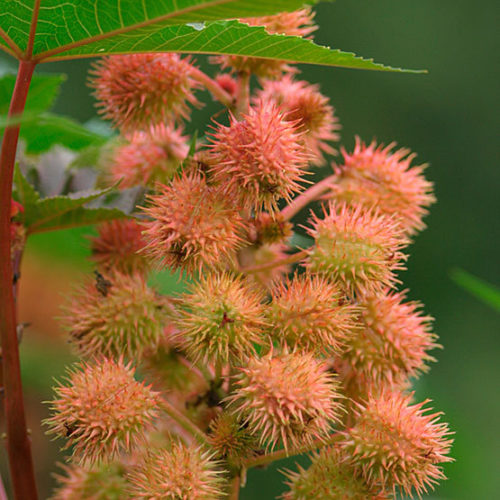
Ricinus communis 'Carmencita' (Castor bean)

Ricinus communis ‘Carmencita’ Photo/Illustration: Jennifer Benner


Be the first to rate this plant

Plant Showcase - from our advertisers


Hardiness Zones: 1 2 3 4 5 6 7 8 9 10 11
Botanical Name: Ricinus communis 'Carmencita' RY-sin-us kom-YEW-nis Common Name: Castor bean Genus: Ricinus
'Carmencita' castor bean is a shrub, usually grown as an annual, that grows to 6 to 10 feet and is well branched, with dark bronze-red foliage and bright red female flowers. Grow in a cool greenhouse or use as a specimen foliage plant in the summer outdoors.
Noteworthy characteristics: All parts are highly toxic if ingested, particularly the seeds.
Care: Needs rich, well-drained soil in full sun to perform well. Stake in exposed sites. Under glass, grow in full light and water freely, except in winter.
Propagation: Soak seed for 24 hours before sowing in late spring, in pots at 70°F. Plant out or pot on into larger pots before they become root-bound to prevent premature flower production. Plant in the garden after the threat of frost has passed.
Problems: Spider mites, gray mold, seedling blight, charcoal rot, bacterial wilt, bacterial leaf spot.
Height 6 ft. to 10 ft.
Growth Pace Fast Grower
Light Full Sun Only
Moisture Medium Moisture
Maintenance Moderate
Characteristics Showy Foliage
Bloom Time Summer
Foliage Color Colorful/Burgundy Foliage
Flower Color Red Flower
Uses Beds and Borders, Container, Indoor Plant, Specimen Plant/ Focal Point, Suitable as Annual
Seasonal Interest Summer Interest
Type Shrubs

Plants you might also like

Nicotiana glauca Nicotiana glauca
(Tree tobacco)
(1 user review)
Hardiness Zones: 1 2 3 4 5 6 7 8 9 10 11

Tree tobacco bears fleshy, almost succulent, saucer-sized leaves colored a lovely silvery blue. This tender perennial can be easily grown from seed as an annual and, in a single season, makes the incredible leap from a dust mote of seed to a skyscraping specimen 10 or more feet tall. Plants are a little rangy, but plenty of pinching helps keep tree tobacco at a size suited to a more modest perennial border. The plant bears yellow flowers if given a long enough growing season.

Plectranthus argentatus Plectranthus argentatus
(Silver spurflower)
Be the first to rate this plant
Hardiness Zones: 1 2 3 4 5 6 7 8 9 10 11

Grown mainly for its velvety gray succulent leaves, this Australian native shrub can reach 3 feet high and wide.

Melianthus major Melianthus major
(Honey bush)
(2 user reviews)
Hardiness Zones: 1 2 3 4 5 6 7 8 9 10 11

Honey bush has attractive, 12- to 20-inch-long pinnate leaves with sharply toothed silver-green leaflets. It bears spike-like racemes of oddly scented brownish crimson to brick-red flowers from late spring to midsummer.

Brugmansia suaveolens Brugmansia suaveolens
(Angels' trumpet)
(2 user reviews)
Hardiness Zones: 1 2 3 4 5 6 7 8 9 10 11

Few plants evoke tropicalia quite like the Brugmansias, with their voluminous tubular flowers that drip from imposing shrubs or small trees. They look fantastic in containers or plunged into a border, and the dramatic display persists from late spring until autumn. In cooler climates, they may be brought under glass or cut back and held dormant in a cool basement.  All parts are highly toxic if ingested.

Brugmansia 'Charles Grimaldi' Brugmansia 'Charles Grimaldi'
(Gold angels' trumpets)
(2 user reviews)
Hardiness Zones: 1 2 3 4 5 6 7 8 9 10 11

Foot-long blossoms are nocturnally fragrant, and pour out from narrow calyces of light yellow, to terminate in fluted, reflexed openings the hues of golden summer squash.