Polygonatum humile (Solomon's seal)

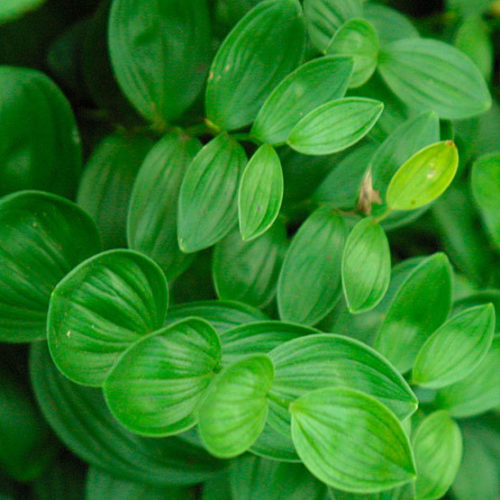
Polygonatum humile Photo/Illustration: Jennifer Benner


Be the first to rate this plant

Hardiness Zones: 1 2 3 4 5 6 7 8 9 10 11
Botanical Name: Polygonatum humile pol-ig-on-AY-tum HEW-mih-lee Common Name: Solomon's seal Genus: Polygonatum
Polygonatum humile is an upright, rhizomatous perennial native to eastern Europe and western Asia. Ovate leaves are arranged alternately on the stems. Pendent, tubular white flowers hang like little bells from the leaf axils, followed by round bluish-black fruit. Grow in a shady border, rock garden, or woodland.
Noteworthy characteristics: Pendent, tubular white flowers in late spring. Grows in full shade.
Care: Full or partial shade and fertile, organically rich, moist but well-drained soil.
Propagation: Divide in autumn or when growth begins in spring (take care not to damage young shoots). Sow seed in a cold frame in autumn.  
Problems: Slugs and sawfly larvae.
Height 6 in. to 12 in.
Spread 1 ft. to 3 ft.
Growth Habit Runs
Growth Pace Moderate Grower
Light Part Shade to Full Shade
Moisture Medium Moisture
Maintenance Moderate
Bloom Time Late Spring; Spring
Flower Color White Flower
Uses Beds and Borders
Style Rock Garden, Woodland Garden
Seasonal Interest Spring Interest, Summer Interest
Type Perennials

Plants you might also like

Polygonatum odoratum Polygonatum odoratum
(Fragrant Solomon’s seal, Solomon’s seal)
(1 user review)
Hardiness Zones: 1 2 3 4 5 6 7 8 9 10 11

From late spring to early summer, this species bears pendent, green-tipped white flowers along arching stems. These mature into spherical black fruit in autumn, when the foliage turns yellow.

Polygonatum odoratum 'Variegatum' Polygonatum odoratum 'Variegatum'
(Variegated fragrant Solomon's seal)
Be the first to rate this plant
Hardiness Zones: 1 2 3 4 5 6 7 8 9 10 11

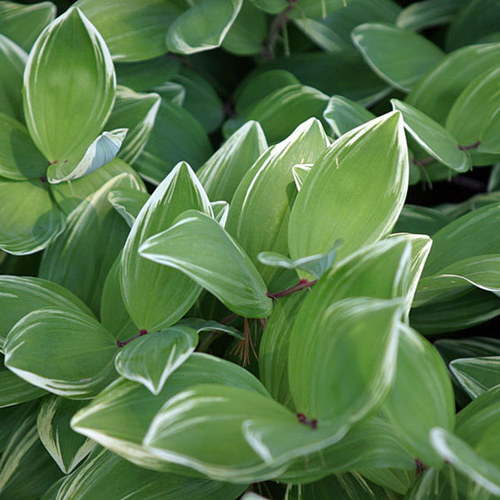
There is seldom seen a more graceful shade plant than variegated Solomon’s seal. Narrow, pure white streaks are artfully painted along the margins of the leaves, which appear on arched burgundy stems. This plant has three-season appeal, with striking foliage in the spring; fragrant, bell-like white blooms in May and June; and a brilliant golden hue in fall. This plant forms large colonies of long, arching, 2- to 3-foot-tall stems of soft green leaves edged in creamy white. From late spring to early summer, this species bears white flowers that mature into spherical black fruit in autumn, when the foliage turns yellow. 

Pulmonaria saccharata 'Mrs. Moon' Pulmonaria saccharata 'Mrs. Moon'
(Bethlehem sage, lungwort)
Be the first to rate this plant
Hardiness Zones: 1 2 3 4 5 6 7 8 9 10 11

This plant looks like someone splattered silver paint on it. Each leaf forms a long, prickly haired lance (some showing a pale green underside). Overlapping occurs as the plant expands, creating a lazy pattern of swirls. In spring, clusters of silky pink flowers fade to a soft blue that complements the plant’s bluish undertones.

Epimedium stellulatum 'Wudang Star' Epimedium stellulatum 'Wudang Star'
(1 user review)
Hardiness Zones: 1 2 3 4 5 6 7 8 9 10 11

'Wudang Star' is a clump-forming, evergreen perennial with spiny, glossy foliage. New leaves emerge with bronzy pink edges before turning green in summer. Loose spikes of star-shaped white flowers, borne in spring, have prominent yellow stamens.

Podophyllum peltatum Podophyllum peltatum
(American mandrake, Mayapple)
Be the first to rate this plant
Hardiness Zones: 1 2 3 4 5 6 7 8 9 10 11

Mayapple is a rhizomatous, native woodland perennial with leaves in the shape of an umbrella. They may form large colonies. In spring, white or pale pink waxy flowers are mostly hidden under the leaves. The greenish "mayapple" follows and is often eaten by wildlife. When fully ripe, the fruits may be used to make preserves or jellies, but they are toxic when unripe. Leaves and roots are poisonous. Plants often go dormant in the summer. Grow in a woodland garden.