previous
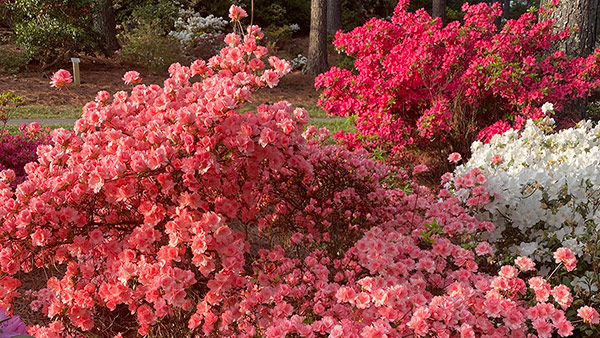
  • Colorful Selections for Shade
    Colorful Selections for Shade
  • NEW Video Series: There's a Better Way
    NEW Video Series: There's a Better Way
  • Mulch for a Healthy Garden
    Mulch for a Healthy Garden
  • Indeterminate or Determinate Tomatoes?
    Indeterminate or Determinate Tomatoes?
  • Save Money by Growing Your Own
    Save Money by Growing Your Own
  • Plant an Easy-to-Water Strawberry Jar
    Plant an Easy-to-Water Strawberry Jar
  • Dwarf Citrus Trees
    Dwarf Citrus Trees
  • Slideshow: Beautiful Clematis
    Slideshow: Beautiful Clematis
  • Elephant's Ears
    Elephant's Ears
  • Thoughts From a Foreign Field
    Thoughts From a Foreign Field
  • Garden Confidential: A Plant Walks into a Bar
    Garden Confidential: A Plant Walks into a Bar
  • In Pursuit of the Perfect Potting Shed
    In Pursuit of the Perfect Potting Shed
  • Make a Succulent Topiary
    Make a Succulent Topiary
  • Comfortable Alfresco Dining
    Comfortable Alfresco Dining
  • Designing with Curved Terraces
    Designing with Curved Terraces
  • Fast-Growing Trees for Impatient Gardeners
    Fast-Growing Trees for Impatient Gardeners
  • Lawn Alternatives
    Lawn Alternatives
  • Building a Compost Bin
    Building a Compost Bin
  • 6 Tips for Weed Control
    6 Tips for Weed Control
  • Homegrown / Homemade
    Homegrown / Homemade
  • Stylish Shady Containers
    Stylish Shady Containers
  • Containers as Focal Points
    Containers as Focal Points
  • Fragrant Plants for Pathways
    Fragrant Plants for Pathways
  • Plants that Spark!
    Plants that Spark!
  • Pretty in Pink
    Pretty in Pink
next

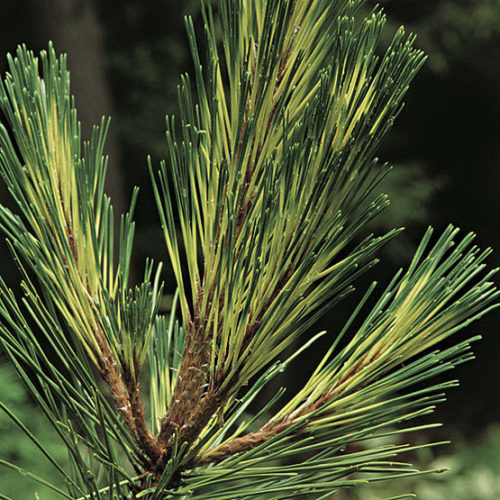
Pinus densiflora 'Oculus Draconis' (Dragon's-eye Japanese red pine)

Pinus densiflora 'Oculus Draconis' Photo/Illustration: Steve Silk


Be the first to rate this plant

Plant Showcase - from our advertisers


Hardiness Zones: 1 2 3 4 5 6 7 8 9 10 11
Botanical Name: Pinus densiflora 'Oculus Draconis' PY-nus den-sih-FLOOR-ah Common Name: Dragon's-eye Japanese red pine Genus: Pinus
This pine's needles are marked with bands of yellow and green. The buttery yellow variegation on the 3- to 5-inch needles is present year-round, but intensifies as summer turns to fall and persists into winter. The scaly, fissured bark is lovely, ranging in color from gray to rich rusty orange. This is a graceful tree when mature, with an irregular branching habit and tilted trunk.
Noteworthy characteristics: Combines well with deep-green conifers or any other dark background. Use as a specimen tree, or for shelter or windbreaks. May look floppy and ungainly in its youth. Grows only about 6 inches a year.
Care: Grow in any well-drained soil in full sun to part shade.
Propagation: Graft in late winter.
Problems: Common pests include sawfly, caterpillars, scale insects, mealybugs, miners, and borers. Blister rust, butt rot, blights, pitch canker, cone rusts, tar spot, and brown cubical rot.
Height Over 30 ft.
Spread 15 ft. to 30 ft.
Growth Pace Slow Grower
Light Full Sun to Part Shade
Moisture Adaptable
Characteristics Interesting Bark; Showy Foliage
Foliage Color Evergreen
Uses Hedge, Specimen Plant/ Focal Point
Seasonal Interest Winter Interest, Spring Interest, Summer Interest, Fall Interest
Type Trees

Plants you might also like

no image available Pinus strobus 'Fastigiata'
(Eastern white pine)
Be the first to rate this plant
Hardiness Zones: 1 2 3 4 5 6 7 8 9 10 11

This robust evergreen tree has a narrowly columnar crown with ascending branches, slender gray-green leaves, and smooth gray bark. Tapered green female cones ripen to brown.

Tsuga canadensis 'Pendula' Tsuga canadensis 'Pendula'
(Sargent's weeping hemlock, Eastern hemlock)
Be the first to rate this plant
Hardiness Zones: 1 2 3 4 5 6 7 8 9 10 11

This hemlock cultivar makes a very beautiful specimen, slowly forming a 10- to 15-foot-tall and 30-foot-wide, multi-layered mound of greenery. Its horizontally speading branches are covered with smaller weeping branches clothed in short, dark green needles. It looks great growing over a rock wall, in a rock garden, or by water. Its size may be controlled by regular clipping.

Parrotia persica Parrotia persica
(Persian parrotia tree, Persian ironweed)
(3 user reviews)
Hardiness Zones: 1 2 3 4 5 6 7 8 9 10 11

Parrotia persica has one of the most beautiful foliage displays, in addition to year-round eye appeal and ease of maintenance. Reddish-purple when unfolding in spring, the leaves are a lustrous dark green in summer, and yellow to orange or scarlet in fall. Leaves hold their color for a long period. Older branches and trunks develop an exfoliating gray, green, white, and brown color that is a welcome asset in the winter garden. It grows successfully in Zones 4 to 8, tolerates sun and partial shade, and is easy to transplant. Often, vegetatively propogated forms offer more reliable fall color.

Tsuga canadensis Tsuga canadensis
(Canada hemlock)
Be the first to rate this plant
Hardiness Zones: 1 2 3 4 5 6 7 8 9 10 11

This North American native grows to 70 feet tall, with a broadly pyramidal outline. It has deeply furrowed bark, small, oval cones, and slightly drooping branchlets with finely textured needles. It is suitable to a wide variety of uses, such as hedging or screening, and group or specimen plantings. It has given rise to a number of notable cultivars.

Chamaecyparis obtusa 'Aurea' Chamaecyparis obtusa 'Aurea'
(Hinoki cypress)
Be the first to rate this plant
Hardiness Zones: 1 2 3 4 5 6 7 8 9 10 11

Hinoki cypress is a conical, evergreen, coniferous tree with leaves that are actually minute scales on tiny branches in the form of fans. The outer foliage of 'Aurea' is golden and the inner is green. Growth can be slow. Use as a specimen or use several as screening.