previous
  • Make a Succulent Topiary
    Make a Succulent Topiary
  • Containers as Focal Points
    Containers as Focal Points
  • Fragrant Plants for Pathways
    Fragrant Plants for Pathways
  • Lawn Alternatives
    Lawn Alternatives
  • Comfortable Alfresco Dining
    Comfortable Alfresco Dining
  • Designing with Curved Terraces
    Designing with Curved Terraces
  • Stylish Shady Containers
    Stylish Shady Containers
  • Building a Compost Bin
    Building a Compost Bin
  • Colorful Selections for Shade
    Colorful Selections for Shade
  • In Pursuit of the Perfect Potting Shed
    In Pursuit of the Perfect Potting Shed
  • Plant an Easy-to-Water Strawberry Jar
    Plant an Easy-to-Water Strawberry Jar
  • Save Money by Growing Your Own
    Save Money by Growing Your Own
  • Fast-Growing Trees for Impatient Gardeners
    Fast-Growing Trees for Impatient Gardeners
  • Homegrown / Homemade
    Homegrown / Homemade
  • 6 Tips for Weed Control
    6 Tips for Weed Control
  • Slideshow: Beautiful Clematis
    Slideshow: Beautiful Clematis
  • Garden Confidential: A Plant Walks into a Bar
    Garden Confidential: A Plant Walks into a Bar
  • Elephant's Ears
    Elephant's Ears
  • Thoughts From a Foreign Field
    Thoughts From a Foreign Field
  • Mulch for a Healthy Garden
    Mulch for a Healthy Garden
  • Plants that Spark!
    Plants that Spark!
  • NEW Video Series: There's a Better Way
    NEW Video Series: There's a Better Way
  • Pretty in Pink
    Pretty in Pink
  • Indeterminate or Determinate Tomatoes?
    Indeterminate or Determinate Tomatoes?
  • Dwarf Citrus Trees
    Dwarf Citrus Trees
next

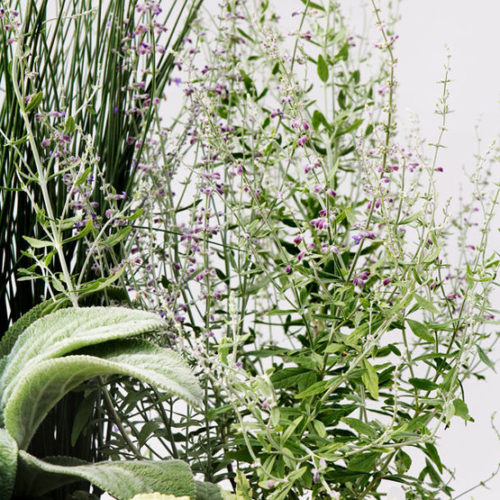
Perovskia atriplicifolia (Russian sage)

Perovskia atriplicifolia Photo/Illustration: Santa Rosa Gardens


Be the first to rate this plant

Plant Showcase - from our advertisers


Hardiness Zones: 1 2 3 4 5 6 7 8 9 10 11
Botanical Name: Perovskia atriplicifolia per-OV-skee-ah at-trih-pliss-ih-FOE-lee-ah Common Name: Russian sage Genus: Perovskia
The light, lavender-blue flowers, which attract butterflies to the garden, bloom in July, and often last throughout September. Russian sage is a particularly striking plant when grown along with white, yellow, or orange flowered perennials. Tones down bright yellow in the garden as well. Its silver-gray, deeply cut foliage and stiff stems are striking in the winter. -Santa Rosa Gardens
Care: Easy to grow in average, well-drained soil. Tolerates dry, alkaline soil and coastal conditions. Drought tolerant. Tends to sprawl or flop.
Propagation: Root softwood cuttings in late spring, or semi-ripe cuttings in summer
Problems: Infrequent.
Height 1 ft. to 3 ft.
Spread 1 ft. to 3 ft.
Light Full Sun Only
Moisture Dry to Medium
Maintenance Low
Tolerance Drought Tolerant
Characteristics Fragrant Foliage; Showy Flowers
Bloom Time Summer
Foliage Color Silver/Grey
Flower Color Purple/ Lavender Flower
Uses Beds and Borders
Seasonal Interest Summer Interest, Fall Interest
Type Perennials

Plants you might also like

Nepeta × faassenii 'Walker's Low' Nepeta × faassenii 'Walker's Low'
(Catmint)
(11 user reviews)
Hardiness Zones: 1 2 3 4 5 6 7 8 9 10 11

This mound of lavender-blue flowers and aromatic, grayish green leaves up to 2 feet tall and 3 feet wide is great as edging or in a border, herb, or rock garden. It is an easy to grow, prolific bloomer that seems to be deer resistant. It blooms the whole summer and tolerates some shade. It also looks great with roses or on walls.

Agastache foeniculum Agastache foeniculum
(Anise hyssop)
(2 user reviews)
Hardiness Zones: 1 2 3 4 5 6 7 8 9 10 11

A classic plant for both herb gardens and borders, anise hyssop is composed of erect branches of mint-and-licorice-scented, medium green leaves ending in fuzzy spikes of small lavender flowers. The plant grows to 3 to 5 feet tall and 1 foot wide and reseeds freely. The flowers are edible and are charming crumbled into salads. The flowers are highly attractive to bees, butterflies, and hummingbirds.

Salvia pratensis Salvia pratensis
(Meadow clary)
Be the first to rate this plant
Hardiness Zones: 1 2 3 4 5 6 7 8 9 10 11

This woody-stemmed perennial produces sticky spikes of deep violet or, rarely, white to pink flowers. It blooms from early summer to autumn; reblooming is most reliable if spent flowers are deadheaded promptly. It has wrinkled leaves and forms an upright clump 3 feet tall by 1 foot wide. This salvia is most noted for its many hybirds with S. nemerosa.  

Ratibida columnifera Ratibida columnifera
(Mexican hat, Prairie coneflower, Long-head coneflower)
(3 user reviews)
Hardiness Zones: 1 2 3 4 5 6 7 8 9 10 11

This perennial coneflower, sometimes grown as an annual, has a long season of flowers on thin, branching stems. The flowers resemble small hats, with yellow reflexed ray florets and large greenish-brown columnar centers.

Hemerocallis 'Happy Returns' Hemerocallis 'Happy Returns'
(Daylily)
(15 user reviews)
Hardiness Zones: 1 2 3 4 5 6 7 8 9 10 11

This pale-yellow-flowered daylily distinguishes itself with its profuse bloom and compact size (only 16 inches tall), making it good for containers and the borders. It is an early season bloomer with circular flowers that open in late afternoon and last through the night.