previous
  • 6 Tips for Weed Control
    6 Tips for Weed Control
  • Fragrant Plants for Pathways
    Fragrant Plants for Pathways
  • Building a Compost Bin
    Building a Compost Bin
  • Comfortable Alfresco Dining
    Comfortable Alfresco Dining
  • Mulch for a Healthy Garden
    Mulch for a Healthy Garden
  • Indeterminate or Determinate Tomatoes?
    Indeterminate or Determinate Tomatoes?
  • Plants that Spark!
    Plants that Spark!
  • Pretty in Pink
    Pretty in Pink
  • Dwarf Citrus Trees
    Dwarf Citrus Trees
  • Colorful Selections for Shade
    Colorful Selections for Shade
  • Garden Confidential: A Plant Walks into a Bar
    Garden Confidential: A Plant Walks into a Bar
  • Homegrown / Homemade
    Homegrown / Homemade
  • Containers as Focal Points
    Containers as Focal Points
  • In Pursuit of the Perfect Potting Shed
    In Pursuit of the Perfect Potting Shed
  • Fast-Growing Trees for Impatient Gardeners
    Fast-Growing Trees for Impatient Gardeners
  • Designing with Curved Terraces
    Designing with Curved Terraces
  • Slideshow: Beautiful Clematis
    Slideshow: Beautiful Clematis
  • Thoughts From a Foreign Field
    Thoughts From a Foreign Field
  • Stylish Shady Containers
    Stylish Shady Containers
  • Plant an Easy-to-Water Strawberry Jar
    Plant an Easy-to-Water Strawberry Jar
  • NEW Video Series: There's a Better Way
    NEW Video Series: There's a Better Way
  • Lawn Alternatives
    Lawn Alternatives
  • Make a Succulent Topiary
    Make a Succulent Topiary
  • Save Money by Growing Your Own
    Save Money by Growing Your Own
  • Elephant's Ears
    Elephant's Ears
next

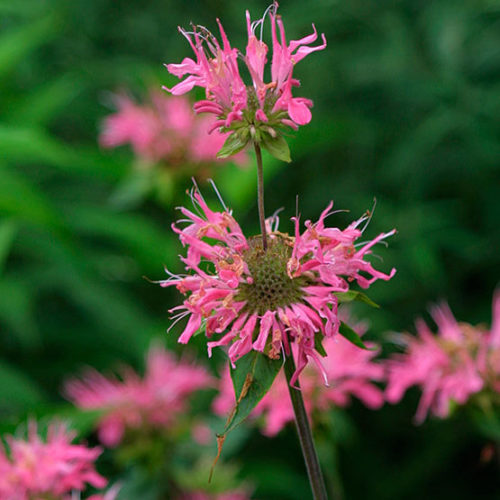
Monarda didyma (Bee balm, Bergamot, Oswego tea)

Monarda didyma Monarda didyma 'Marshall's Delight' Photo/Illustration: Michelle Gervais

(Based on 2 user reviews)

Rate this plant

Plant Showcase - from our advertisers


Hardiness Zones: 1 2 3 4 5 6 7 8 9 10 11
Botanical Name: Monarda didyma moe-NAR-dah DID-ih-mah Common Name: Bee balm, Bergamot, Oswego tea Genus: Monarda
Bee balm, a clump-forming perennial, bears minty-scented scarlet, pink, or purple flowers in midsummer on branching, square stems. Leaves are aromatic as well. This native of eastern North America attracts hummingbirds and butterflies.
Noteworthy characteristics: Likes wet soil. U.S. native. Good plant for a wildlife garden.
Care: Grow in moderately fertile, moist but well-drained soil.
Propagation: Divide clumps in spring. Root basal cuttings in spring.
Problems: Powdery mildew, rust, and leaf spot.
Height 1 ft. to 3 ft.
Spread 1 ft. to 3 ft.
Growth Pace Moderate Grower
Light Full Sun to Part Shade
Moisture Medium Moisture
Maintenance Low
Characteristics Attracts Butterflies; Attracts Hummingbirds; Native; Showy Flowers
Bloom Time Late Summer; Summer
Flower Color Pink Flower
Uses Beds and Borders
Seasonal Interest Summer Interest
Type Perennials

Plants you might also like

Sedum ‘Autumn Joy’ Sedum ‘Autumn Joy’
(Stonecrop)
(13 user reviews)
Hardiness Zones: 1 2 3 4 5 6 7 8 9 10 11

This plant is as dependable and adaptable as they come. Its flowers bloom from August into November; they open pink and mature to a copper befitting of autumn. It is 2 feet tall and wide, with succulent stems and leaves. 'Autumn Joy' looks great with ornamental grasses.  

Nepeta × faassenii 'Walker's Low' Nepeta × faassenii 'Walker's Low'
(Catmint)
(11 user reviews)
Hardiness Zones: 1 2 3 4 5 6 7 8 9 10 11

This mound of lavender-blue flowers and aromatic, grayish green leaves up to 2 feet tall and 3 feet wide is great as edging or in a border, herb, or rock garden. It is an easy to grow, prolific bloomer that seems to be deer resistant. It blooms the whole summer and tolerates some shade. It also looks great with roses or on walls.

Agastache foeniculum Agastache foeniculum
(Anise hyssop)
(2 user reviews)
Hardiness Zones: 1 2 3 4 5 6 7 8 9 10 11

A classic plant for both herb gardens and borders, anise hyssop is composed of erect branches of mint-and-licorice-scented, medium green leaves ending in fuzzy spikes of small lavender flowers. The plant grows to 3 to 5 feet tall and 1 foot wide and reseeds freely. The flowers are edible and are charming crumbled into salads. The flowers are highly attractive to bees, butterflies, and hummingbirds.

Melampodium leucanthum Melampodium leucanthum
(Blackfoot daisy)
(1 user review)
Hardiness Zones: 1 2 3 4 5 6 7 8 9 10 11

A native perennial shrub that grows to about 2 feet tall and wide and covers itself the whole season with honey-scented, white and yellow daisy flowers. The foliage is typical of the aster family. Plant en masse in a well-drained border or use in a rock garden. Blackfoot daisy can be short-lived.

no image available Geranium maculatum
(Spotted geranium)
(1 user review)
Hardiness Zones: 1 2 3 4 5 6 7 8 9 10 11

This upright plant bears cupped flowers 1.5 inches across in variable hues of pale to bright pink from late spring to midsummer.