Molinia caerulea ssp. arundinacea 'Sky Racer' (Tall purple moor grass)

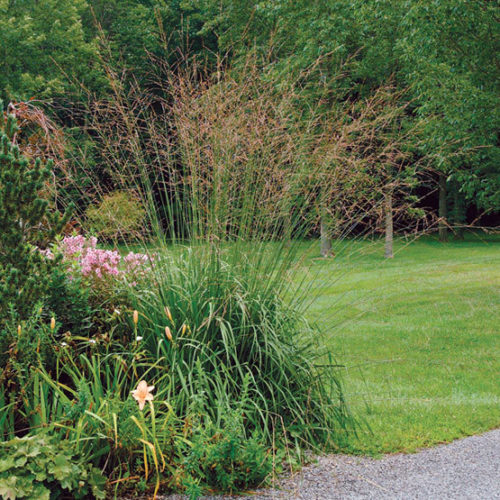
Molinia caerulea ssp. arundinacea 'Skyracer' Photo/Illustration: Todd Meier


Be the first to rate this plant

Plant Showcase - from our advertisers


Hardiness Zones: 1 2 3 4 5 6 7 8 9 10 11
Botanical Name: Molinia caerulea ssp. arundinacea 'Sky Racer' moe-LIN-ee-ah sir-EW-lee-ah subspecies ah-run-din-AY-see-ah Common Name: Tall purple moor grass Genus: Molinia
'Skyracer' grows to about 3 feet wide and 2 to 3 feet wide, and in late summer to early fall, sends up delicate panicles to a height of 6 or 7 feet. This finely-textured ornamental grass is great for areas where you need height but don't have space for a wider, heavier plant. It works well in a sunny border but make sure you site it so you can see it closeup. Expect outstanding yellow color in fall.
Care: Cut it back in late autumn, early winter, or spring; or let the stems break off on their own. Divide in spring as needed. It tolerates low soil fertility and acid or alkaline conditions.
Propagation:

Divide in spring.


Problems:

Infrequent.


Height 1 ft. to 3 ft.;3 ft. to 6 ft.
Spread 1 ft. to 3 ft.
Growth Habit Clumps
Growth Pace Fast Grower
Light Full Sun to Part Shade
Moisture Dry to Medium
Maintenance Moderate
Characteristics Showy Fall Foliage; Showy Foliage

Bloom Time Early Fall; Fall; Late Summer; Summer
Uses , Beds and Borders, Texture, Foliage, Screening, Specimen Plant/ Focal Point
Style , Woodland Garden
Seasonal Interest , Summer Interest, Fall Interest
Type ,Grasses

Plants you might also like

Sorghastrum nutans 'Indian Steel' Sorghastrum nutans 'Indian Steel'
(Indian grass)
Be the first to rate this plant
Hardiness Zones: 1 2 3 4 5 6 7 8 9 10 11

Golden yellow plumes and a vase-like form give 'Indian Steel' a refined look. On the flower spikes, bright yellow pollen sacs stand out against the darker seed heads. Metallic blue foliage morphs to a coppery tan shade after frost. 'Indian Steel' tolerates a range of soil types, including heavy clay.

Panicum virgatum 'Ruby Ribbons' Panicum virgatum 'Ruby Ribbons'
(Switch Grass)
Be the first to rate this plant
Hardiness Zones: 1 2 3 4 5 6 7 8 9 10 11

Panicum Ruby Ribbons’ soft blue-green foliage emerges in the spring on upright, clumping plants. The foliage takes on a wine-red color in early summer, which intensifies as the season progresses. Flower heads appear in late summer, followed by ornamental seed heads, which, if left uncut, provide long-lasting winter interest.

Panicum virgatum 'Prairie Fire' Panicum virgatum 'Prairie Fire'
(‘Prairie Fire’ red switchgrass)
(1 user review)
Hardiness Zones: 1 2 3 4 5 6 7 8 9 10 11

'Prairie Fire' is a distinctly red form of switchgrass. Blue-green spring foliage turns shades of deep red by early summer and butter yellow in late fall. The grass persists into winter. 'Prairie Fire' has a fibrous root system that grows to more than 10 feet deep, making it drought tolerant.

Sporobolus wrightii Sporobolus wrightii
(Wright's dropseed)
(1 user review)
Hardiness Zones: 1 2 3 4 5 6 7 8 9 10 11

Largely untried in the northern states, Wright's dropseed is a great new grass that is becoming a substitute in southern gardens for unwieldy pampas grass (Cortaderia selloana). Heat and drought tolerant, its gray-green foliage sports airy clouds of flowers atop tall stems in summer. This grass is good as a single specimen or in a group as a showy backdrop.

Chasmanthium latifolium Chasmanthium latifolium
(Northern sea oats, Spangle grass, Wild oats)
(2 user reviews)
Hardiness Zones: 1 2 3 4 5 6 7 8 9 10 11

Northern sea oats is a loosely tufted, clump-forming grass with lance-shaped, arching mid-green foliage that turns yellow in winter. Summer brings highly decorative oat-like panicles of flat, green flowerheads that shimmer and rustle in the wind, aging to bronze by late summer.