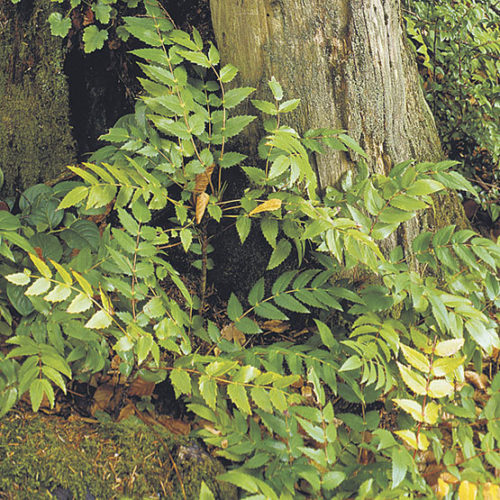
Mahonia nervosa (Longleaf Oregon grape)

Mahonia nervosa Photo/Illustration: David McDonald


Be the first to rate this plant

Hardiness Zones: 1 2 3 4 5 6 7 8 9 10 11
Botanical Name: Mahonia nervosa mah-HOE-nee-ah ner-VOE-sah Common Name: Longleaf Oregon grape Genus: Mahonia
A 2-foot-high evergreen shrub native to the woods and woodland edges of the Pacific Northwest, mahonia gives a shady area three seasons of interest. Erect racemes covered with clear yellow flowers rise from the plant's leaf axils or from the main stem tip in spring. In contrast to these upright blooms are long, elegant, compound leaves made up of leaflets with spiny edges. In fall, some leaves turn a lovely wine-red. During summer, clusters of berries mature to dark blue with a powdery whitish coating.
Noteworthy characteristics: Spreads very slowly by stolons. Three seasons of interest. Grows in shade.
Care: Grows very slowly by stolons, so plant close to the density you want to achieve. Needs slightly acidic soil rich in organic matter and shelter from severe weather, especially desiccating winter winds. Does not tolerate soggy conditions, but thrives in dry shade once established.
Propagation: Sow seed outdoors in autumn or as soon as ripe, stratifying them to enhance germination rates. Root semi-ripe or leaf-bud cuttings from late summer to autumn.
Problems: Rust, leaf spots, galls, scale insects, and whiteflies can be problems.
Height 1 ft. to 3 ft.
Spread 1 ft. to 3 ft.
Growth Habit Spreads
Growth Pace Slow Grower
Light Part Shade to Full Shade
Moisture Medium Moisture
Maintenance Moderate
Characteristics Native; Showy Flowers; Showy Foliage; Showy Fruit
Bloom Time Spring
Foliage Color Evergreen
Flower Color Yellow Flower
Uses Beds and Borders
Style Woodland Garden
Seasonal Interest Spring Interest, Summer Interest, Fall Interest
Type Shrubs

Plants you might also like

Ephedra equisetina Ephedra equisetina
(Bluestem joint fir)
Be the first to rate this plant
Hardiness Zones: 1 2 3 4 5 6 7 8 9 10 11

A member of the conifer clan, Ephedra equisetina is commonly called bluestem joint fir due to its finely textured blue stems. In spring, it features a conspicuous froth of yellow blooms that are often followed by red berries. It is perfect for naturalized areas since it reliably spreads.

Rosa 'Charles Albanel' Rosa 'Charles Albanel'
(Hedgehog rose, Ramanas rose, Japanese rose, Sea tomato)
Be the first to rate this plant
Hardiness Zones: 1 2 3 4 5 6 7 8 9 10 11

This spreading rose grows to only 2 feet tall, making it an ideal groundcover for a steep bank or roadside. It produces fragrant, double, deep-pink blossoms from spring to fall.  

Rosa 'Fair Bianca' Rosa 'Fair Bianca'
(English shrub rose)
Be the first to rate this plant
Hardiness Zones: 1 2 3 4 5 6 7 8 9 10 11

This David Austin rose grows to only 2.5 feet tall. It produces beautifully cupped, double white flowers with petals densely arranged in the center. It is strongly scented.

Rosa 'Graham Thomas' Rosa 'Graham Thomas'
(English shrub rose)
(1 user review)
Hardiness Zones: 1 2 3 4 5 6 7 8 9 10 11

This notable rose has quartered-rosette, double blossoms of rich yellow. It produces arching stems to 5 feet or more, making it an ideal candidate for training up a low structure.

Rosa ‘China Doll’ Rosa ‘China Doll’
(Polyantha rose, Sweetheart rose)
Be the first to rate this plant
Hardiness Zones: 1 2 3 4 5 6 7 8 9 10 11

This dwarf rose grows to only 18 inches tall, and covers itself all season long with large clusters of lightly scented vibrant pink flowers.