previous
  • Slideshow: Beautiful Clematis
    Slideshow: Beautiful Clematis
  • Plant an Easy-to-Water Strawberry Jar
    Plant an Easy-to-Water Strawberry Jar
  • Designing with Curved Terraces
    Designing with Curved Terraces
  • 6 Tips for Weed Control
    6 Tips for Weed Control
  • Pretty in Pink
    Pretty in Pink
  • Make a Succulent Topiary
    Make a Succulent Topiary
  • Save Money by Growing Your Own
    Save Money by Growing Your Own
  • Containers as Focal Points
    Containers as Focal Points
  • Comfortable Alfresco Dining
    Comfortable Alfresco Dining
  • Plants that Spark!
    Plants that Spark!
  • In Pursuit of the Perfect Potting Shed
    In Pursuit of the Perfect Potting Shed
  • Indeterminate or Determinate Tomatoes?
    Indeterminate or Determinate Tomatoes?
  • Fast-Growing Trees for Impatient Gardeners
    Fast-Growing Trees for Impatient Gardeners
  • Mulch for a Healthy Garden
    Mulch for a Healthy Garden
  • NEW Video Series: There's a Better Way
    NEW Video Series: There's a Better Way
  • Fragrant Plants for Pathways
    Fragrant Plants for Pathways
  • Elephant's Ears
    Elephant's Ears
  • Homegrown / Homemade
    Homegrown / Homemade
  • Lawn Alternatives
    Lawn Alternatives
  • Colorful Selections for Shade
    Colorful Selections for Shade
  • Dwarf Citrus Trees
    Dwarf Citrus Trees
  • Garden Confidential: A Plant Walks into a Bar
    Garden Confidential: A Plant Walks into a Bar
  • Thoughts From a Foreign Field
    Thoughts From a Foreign Field
  • Stylish Shady Containers
    Stylish Shady Containers
  • Building a Compost Bin
    Building a Compost Bin
next

Genus Zinnia

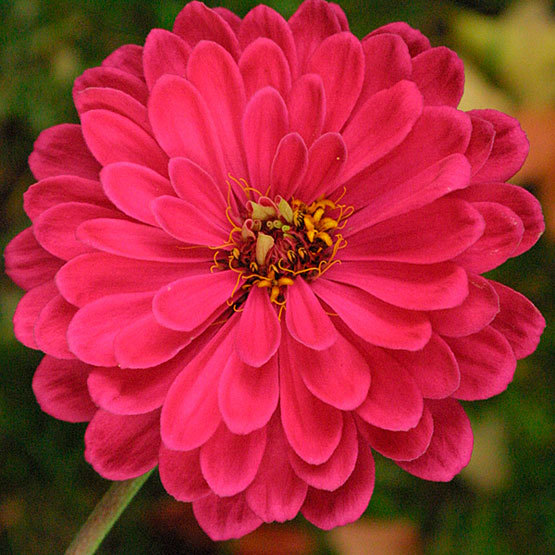
Zinnia Zinnia elegans Photo/Illustration: Jennifer Benner
ZIN-ee-ah
The genus Zinnia includes 20 species of annuals, perennials, and shrubs, some of which are mainstays of the summer garden. They are native mainly to Mexico, but some species are found in the southwestern U.S. and Central and South America. Their familiar flowers are daisy-like and sit on long stems. Some flowerheads are classified as dahlia-flowered and others as cactus-flowered. Zinnias are useful in beds and borders, in cutting gardens, as edging, and in window boxes and other containers.
Noteworthy characteristics: Colorful, daisy-like flowers in white or shades of yellow, orange, red, purple, lilac, and even green.
Care: Zinnias need full sun and fertile, humus-rich, well-drained soil. Deadhead regularly.
Propagation: Sow seed indoors at 55° to 64°F in early spring, or in the garden in late spring. For a longer flowering display, sow seeds in succession.
Problems: Bacterial and fungal spots, powdery mildew, bacterial wilt, Southern blight, and stem rots are common. Caterpillars, mealybugs, and spider mites also cause problems.

Species, varieties and cultivars for genus Zinnia

Zinnia elegans Zinnia elegans
(Zinnia)
Be the first to rate this plant

This upright, 30-inch-tall, bushy annual cloaks itself all summer in purple blossoms up to 2 inches across. But more important, it is the forebear of scores of varieties that can be found in almost any place you can buy seeds. There's the Whirligig Series, the California Giants, the Profusion Series, the State Fair Series—the list goes on and on.

no image available Zinnia elegans 'Dreamland Series'
(Bedding zinnia)
Be the first to rate this plant

This annual series is comprised of dwarf, compact plants, 10 to 12 inches tall and half as wide. They bloom all summer with fully double blossoms, to 4 inches wide, in apricot, ivory, red, yellow, pink, and many shades in between.

Zinnia grandiflora Zinnia grandiflora
(Prairie zinnia)
(1 user review)
Hardiness Zones: 1 2 3 4 5 6 7 8 9 10 11

This native perennial wildflower of the American Southwest bears a profusion of bright yellow to golden yellow flowers atop 4-inch high plants that spread to 15 inches wide. They bloom from late summer into fall. 

Zinnia Profusion Series Zinnia Profusion Series
(2 user reviews)

The needlelike leaves of these Profusion Series zinnas lend a soft textural feel that contrasts nicely with the glowing hot colors of the flowers. The vibrant flowers are about 2 inches in diameter, and the plants grow to just 12 to 15 inches tall and wide. Use them en masse in borders and beds, or plant them in containers. -Julia Jones, Designing with annuals, Fine Gardening issue #120