
previous
  • All About Starting Seeds
    All About Starting Seeds
  • Viburnums are Versatile Shrubs
    Viburnums are Versatile Shrubs
  • The Only Shrubs You Need to Grow
    The Only Shrubs You Need to Grow
  • Big Flowers from Bigleaf Hydrangeas
    Big Flowers from Bigleaf Hydrangeas
  • How to Grow Raspberries
    How to Grow Raspberries
  • Variegated Plants Create Drama
    Variegated Plants Create Drama
  • Enchanting Japanese Maples
    Enchanting Japanese Maples
  • Lilacs: Time for a Fresh Look
    Lilacs: Time for a Fresh Look
  • Video: Make a Straw-Bale Garden
    Video: Make a Straw-Bale Garden
  • How to Start a Vegetable Garden
    How to Start a Vegetable Garden
  • Perfect Edges for Your Beds and Borders
    Perfect Edges for Your Beds and Borders
  • Bold and Beautiful Zinnias
    Bold and Beautiful Zinnias
  • Make Your Own Hypertufa Container
    Make Your Own Hypertufa Container
  • A gardener's checklist for early summer
    A gardener's checklist for early summer
  • Garden Catalog Collector
    Garden Catalog Collector
  • 25 Robust Summer Bloomers
    25 Robust Summer Bloomers
  • Building a Compost Bin
    Building a Compost Bin
  • 10 Perennials Easily Grown from Seed
    10 Perennials Easily Grown from Seed
  • Off With Their Heads: Deadheading Perennials
    Off With Their Heads: Deadheading Perennials
  • Find the Perfect Tomato
    Find the Perfect Tomato
  • Backyard Makeover Game
    Backyard Makeover Game
  • Friendly Ways to Battle Garden Pests
    Friendly Ways to Battle Garden Pests
  • 15 Deer-Resistant Plants
    15 Deer-Resistant Plants
  • Soil Testing is Worth the Effort
    Soil Testing is Worth the Effort
  • Free Download: Rose Pruning and Bed Prep
    Free Download: Rose Pruning and Bed Prep
next

Genus Stewartia

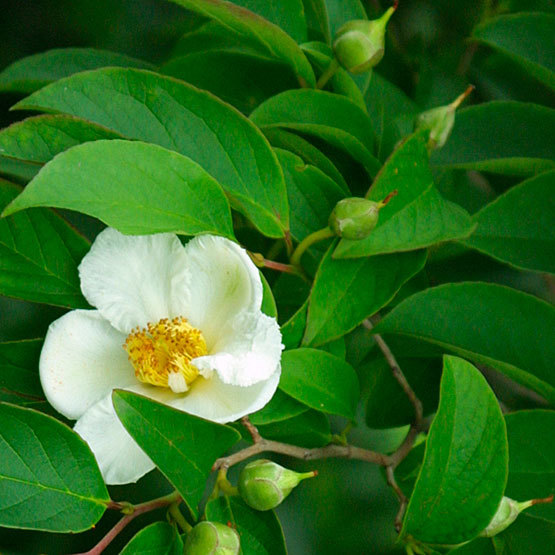
Stewartia Stewartia pseudocamellia Photo/Illustration: Steve Aitken
stew-AR-tee-ah Synonyms: Stuartia
The genus Stewartia includes deciduous or evergreen trees and shrubs in 15 to 20 species hailing from woodlands in East Asia and the southeastern U.S. Rarely bothered by pests or diseases, they are grown for their attractive peeling bark, their pretty leaf color in autumn, and their cup-shaped white flowers. They make beautiful specimens.
Noteworthy characteristics: Peeling bark. Good fall color. Cup-shaped white flowers.
Care: Grow in moist but well-drained, humusy, neutral to acidic soil of moderate fertility in full sun or dappled shade. Choose a site sheltered from strong winds. Older plants resent being transplanted.
Propagation: Plants can be layered in autumn, or propagated from greenwood cuttings in early summer or semi-ripe cuttings in midsummer to late summer. Sow seed in a cold frame in autumn.
Problems: Infrequent.

Species, varieties and cultivars for genus Stewartia

Stewartia pseudocamellia Stewartia pseudocamellia
(Japanese stewartia)
Be the first to rate this plant
Hardiness Zones: 1 2 3 4 5 6 7 8 9 10 11

A multi-stemmed, deciduous tree with a rounded columnar form, stewartia features stunning bark that exfoliates in strips of gray, orange, and reddish brown once the trunk attains a diameter of 2 to 3 inches. Serrated foliage emerges bronzy purple in spring, develops into a dark green by summer, and turns red or orange in the fall. In midsummer, "glamorous" white camellia-like flowers open in random succession and are followed by pointed brown seed pods, which are persistent but not very ornamental.


